Contractor Tools and Equipment Insurance in California
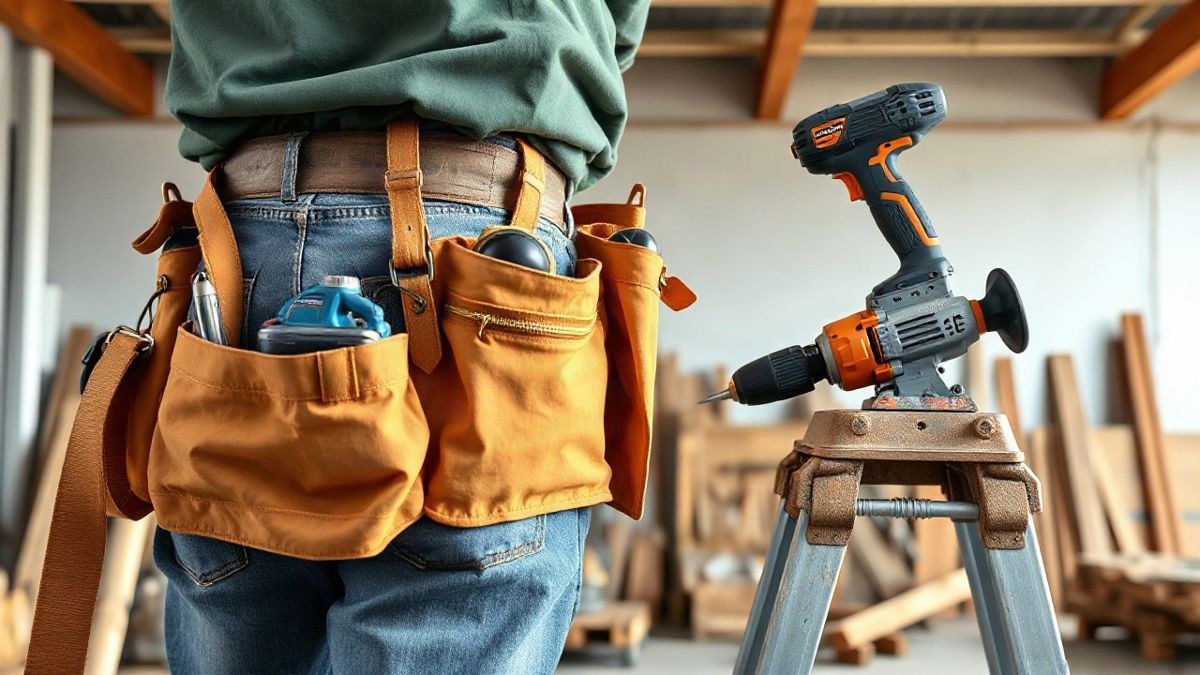
Tools stolen from the truck or the job site are your property. General liability pays the other person. The auto policy is written for the truck. Call 209-670-1556. Se habla español.
Tools stolen from the truck or the job site are your property. General liability pays the other person. The auto policy is written for the truck. Call 209-670-1556. Se habla español.
General liability pays for injury or property damage you cause to someone else. It does not replace your own compressor, nail guns, or the tools stolen from the truck. A hurt visitor, or damage your work did to a customer's floor, is the general-liability conversation. Missing tools are a property conversation, and general liability is not that form.
A customer who trips over a cord, or a floor a crew scars, is the loss general liability is built to address. The air compressor locked in the truck overnight is your property. Replacing it is not a liability payment to someone else. Insurance City Agency, LLC, CA Lic #6003045, writes contractor policies from Stockton, San Jose, and San Rafael, and by phone at 209-670-1556. The contractor insurance hub is the product page. The general contractor guide is the wider policy conversation. Tools are the slice this page covers.
A personal auto policy and a commercial auto policy are written for the vehicle and for liability from driving it. Tools and a locked job box in the bed are property in the truck, and auto forms commonly leave that property to another policy. Read the personal-property wording on the auto policy you actually have before you treat a theft as an auto claim.
Open the auto form and look for a personal-property or tools sentence. Some forms say the insurer will not pay for tools, equipment, or other personal property in the vehicle. Some say a small amount, and then stop. The sentence on the policy you hold is the one that matters. A comprehensive claim for a broken windshield is not a claim for the laser level that was behind the seat. The difference between a personal auto policy and a business-use truck is on the commercial auto versus personal business use page. How a contract reads a liability limit on that truck is on the combined single limit page. Neither of those pages replaces a tools form.
Tools and equipment callback. Leave a name and a phone number. A licensed agent at Insurance City Agency, LLC, CA Lic #6003045, will call about tools, a tool floater, or contractor's equipment in California. Or call 209-670-1556.
A tools and equipment policy, often called inland marine, a tool floater, or contractor's equipment, insures property that moves. The tools ride in the truck, sit on the job site, and come home at night. That is a different promise from a policy that only describes a building at one address. The form names the property, the limit, and where coverage applies.
Definition. Inland marine, in this trade, means coverage for property that does not stay at one address. A tool floater and a contractor's equipment form are the names companies print on that idea. The truck is the vehicle. The compressor, the scaffold, the laser, and the locked job box are the property that moves with the work. Commercial property, by contrast, describes a shop, a yard, or another premises on the declarations. A saw that lives on a bench at the shop and a saw that rides to a different job every morning are two locations. The form has to match the one you actually use.
If the business is licensed, the license number belongs in the file. The Contractors State License Board's Check a License page says to enter the contractor license number to check the status of the license, including complaint disclosure. That lookup is the state's record. It is not the tools policy.
Scheduled equipment is listed item by item, each with a value you assign and, when you have it, a serial number. Unscheduled tools sit under one blanket limit, and the form may cap any single tool that was not listed. A rented lift or a borrowed trench roller is not automatically on either list. Tell us about rented and borrowed gear before it leaves the rental yard.
A scheduled excavator, lift, or trailer is named, with a value you state and a serial number when the plate or the stamp is readable. A blanket, or unscheduled, limit is a pool for hand tools and smaller gear that would be tedious to list one by one. The form can still cap any one item that was never scheduled. Read that cap. A rented scissor lift and a trench roller borrowed from another crew are a third list: many equipment forms can add leased, rented, or borrowed property only when that property is described. Say so before the rental ticket is signed, and keep the rental contract with the serial number the yard printed.
General liability, commercial auto, a tools policy, and commercial property pay different losses. Liability pays another person's injury or damage. Auto pays the vehicle and driving liability, subject to the form. Inland marine follows tools that move. Commercial property follows property that stays at the address on the policy. A theft of tools can miss the first three and still fit the fourth.
| Form | What it is for | A tools example |
|---|---|---|
| General liability | Injury or property damage you cause to someone else | A visitor trips on a cord. Your own stolen compressor is not this payment |
| Personal auto or commercial auto | The vehicle, and liability from driving it. Read the tools or personal-property sentence | A broken windshield can be an auto claim. The laser level in the cab usually is not |
| Tools and equipment, inland marine | Property that moves: the truck box, the job site, transit between them | Nail guns taken from a locked job box at the site, if that property is on the form |
| Commercial property | Property that stays at the shop, the yard, or the address on the policy | A cabinet saw bolted in the shop. The same saw in the truck the next morning is a moving-property question |
One night can produce two losses that do not share a form. A smashed side window is the auto conversation. The missing drills are the tools conversation. Send both facts. Do not fold them into one sentence and hope a single policy sorts them.
After a theft, have an inventory, serial numbers, photos from before the loss, receipts, and a police report. Note whether the tools were in the truck, on the job site, or at the shop, and the date you last saw them. Those papers do not replace the policy form. They are what a company commonly asks for when movable property is stolen.
Keep a list a foreman can use without you in the room: make, model, serial number, where it sleeps, and what you would ask to replace it. Photos of the open job box, taken on an ordinary Tuesday, beat a description from memory on the morning after. A receipt, a card statement, or the rental contract shows that the item existed and who owned it or who had signed for it. A police report is what companies commonly ask for after a theft. Write the report number next to the list. None of that paperwork changes a form that never described the tools. It is the file for a form that did.
A tools quote starts with the trade, the license number if you are licensed, and a list of equipment with the values you assign. Add where the gear is stored overnight, any rented or borrowed equipment, and any prior theft. The Contractors State License Board Check a License page is where that license number is looked up.
Three forms, three jobs. Liability pays the other person. Auto pays the truck, subject to the tools sentence you read. Inland marine follows the tools that move. The form in force is the one that decides a theft.
Have the tool list ready? Leave a number. Insurance City Agency, LLC, CA Lic #6003045, will call about scheduled gear, a blanket tool limit, or rented equipment. Or call 209-670-1556.
La guía para quien busca seguro para herramientas de trabajo, me robaron las herramientas de la troca, o aseguranza para equipo de construcción.
General liability pays for injury or property damage you cause to someone else. It does not replace your own compressor, nail guns, or the tools stolen from the truck. A hurt visitor, or damage your work did to a customer's floor, is the general-liability conversation. Missing tools are a property conversation, and general liability is not that form.
A personal auto policy and a commercial auto policy are written for the vehicle and for liability from driving it. Tools and a locked job box in the bed are property in the truck, and auto forms commonly leave that property to another policy. Read the personal-property wording on the auto policy you actually have before you treat a theft as an auto claim.
A tools and equipment policy, often called inland marine, a tool floater, or contractor's equipment, insures property that moves. The tools ride in the truck, sit on the job site, and come home at night. That is a different promise from a policy that only describes a building at one address. The form names the property, the limit, and where coverage applies.
Scheduled equipment is listed item by item, each with a value you assign and, when you have it, a serial number. Unscheduled tools sit under one blanket limit, and the form may cap any single tool that was not listed. A rented lift or a borrowed trench roller is not automatically on either list. Tell us about rented and borrowed gear before it leaves the rental yard.
General liability, commercial auto, a tools policy, and commercial property pay different losses. Liability pays another person's injury or damage. Auto pays the vehicle and driving liability, subject to the form. Inland marine follows tools that move. Commercial property follows property that stays at the address on the policy. A theft of tools can miss the first three and still fit the fourth.
A tools quote starts with the trade, the license number if you are licensed, and a list of equipment with the values you assign. Add where the gear is stored overnight, any rented or borrowed equipment, and any prior theft. The Contractors State License Board Check a License page is where that license number is looked up.
Source, October 21, 2026: Contractors State License Board, Check a License, for looking up a contractor license number.
Insurance City Agency, LLC, CA Lic #6003045. Call 209-670-1556 or use the form for tools, a tool floater, or contractor's equipment in California.
 Ask EnzaAnswers · 24/7