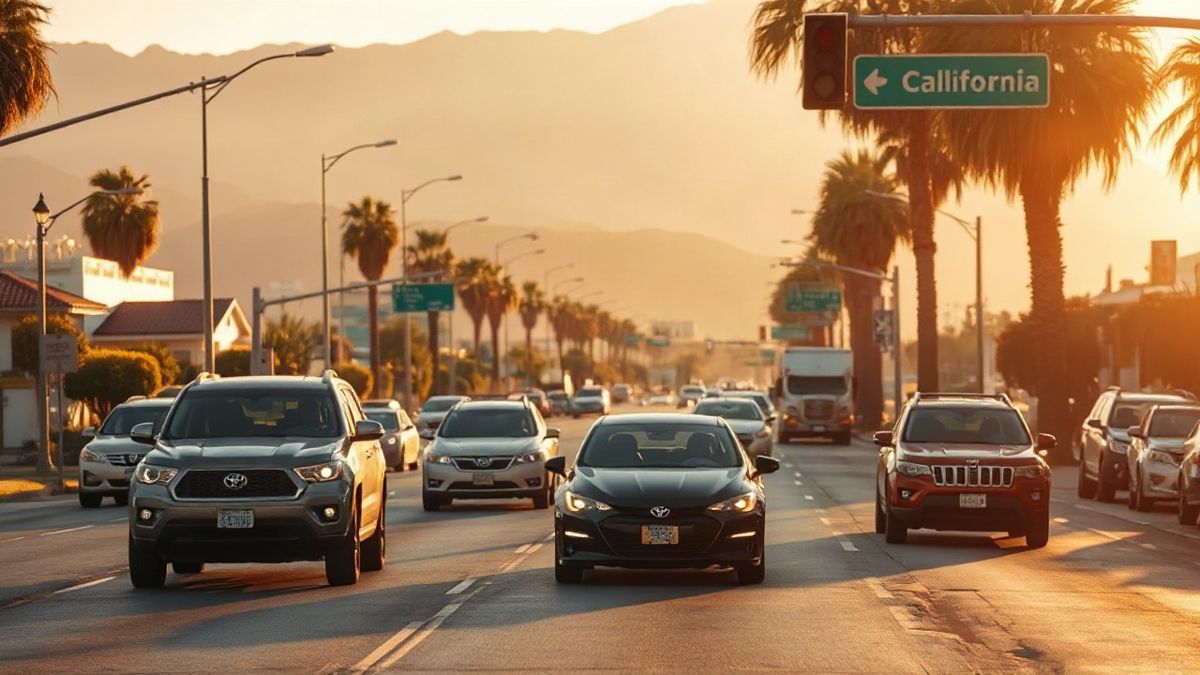
Why California car insurance is expensive in 2026
California is one of the most expensive states for auto insurance, and 2026 rates are still elevated after a wave of carrier rate increases in 2023–2025. The main cost drivers: high repair costs (parts and labor), litigation culture, high-density traffic in the Bay Area and Southern California, and a state insurance law that ties rates heavily to your driving record. The good news is that understanding why your rate is high is the first step to knowing which levers actually move it.
Most drivers in California have at least two or three moves available to reduce their premium meaningfully — without dropping coverage they actually need. Here's what they are.
Tactic 1: Switch carriers (the biggest lever)
California's auto insurance market is competitive, and for the same driver with the same car, rates can differ by 30–50% from one carrier to another. That gap is widest if you have any risk factors: a past ticket, a lapse in coverage, a young driver, a financed vehicle with full coverage requirements, or a car that's in a high-theft zip code.
The problem is that most drivers don't shop because it feels like a hassle — and a captive agent (one who works for a single company) has no incentive to tell you a competitor is cheaper. An independent broker shops across multiple carriers simultaneously. At Insurance City / Via Rapida in Stockton and San Jose, we have no broker fees on standard auto policies — meaning the comparison costs you nothing.
Real example — same driver, different carriers
Stockton driver, 35 years old, one speeding ticket in 2024, full coverage on a 2021 SUV
Quotes from three carriers ranged from $1,380 to $2,140 per year — same driver, same car, same coverage limits. The driver had been with the most expensive carrier for two years. Switching saved $760/yr with no coverage changes.
Tactic 2: Raise your deductible on collision and comprehensive
Your deductible is the amount you pay out of pocket before insurance kicks in on a collision or comprehensive claim. Raising it from $500 to $1,000 typically cuts your collision and comprehensive premium by 15–25%. On a policy where those coverages cost $800/year, that's $120–$200 in savings annually.
The math: if you haven't filed a physical damage claim in 5+ years, you've already paid more in premiums than a $500 deductible increase costs. Most drivers who raise their deductible never actually need to use it for years.
Caveat: only raise your deductible to an amount you can pay cash on short notice. If $1,000 out of pocket would create a real hardship, stay at $500.
Tactic 3: Drop collision and comprehensive on older vehicles
Collision and comprehensive coverage pays up to the actual cash value (ACV) of your car — not what you paid for it or what you owe on it. If your car is worth $5,000 and you're paying $700/year for collision and comprehensive, you're spending 14% of the car's value every year for coverage that would pay out at most $4,500 (after a $500 deductible).
| Car value (ACV) | Annual collision + comp cost | % of value paid per year | Verdict |
|---|
| $20,000 | $800 | 4% | Keep it |
| $12,000 | $700 | 5.8% | Keep it |
| $6,000 | $650 | 10.8% | Borderline — evaluate |
| $4,000 | $600 | 15% | Drop it |
| $2,500 | $500 | 20% | Drop immediately |
The rule of thumb most brokers use: if the car is worth less than 8–10x the annual collision and comprehensive premium, switch to liability-only coverage. You stay legal, you keep your liability protection (which protects the other person, not your car), and you stop paying for coverage that wouldn't pay you much anyway.
Exception: if you have a loan or lease, your lender almost certainly requires full coverage. You can't legally drop it while the car is financed.
Tactic 4: Pay in full instead of monthly
Most carriers charge installment fees when you pay monthly — typically $5–$15 per payment, which is $60–$180 added to your annual cost. On top of that, many carriers offer a paid-in-full discount of 5–8% on top of eliminating the fees. Combined, paying a 6-month term upfront instead of monthly can save $100–$250 per year on the same policy.
If cash flow is the issue, ask your broker whether a 6-month policy paid in two equal payments (the full term in one payment at renewal) gets you the paid-in-full rate. Some carriers allow this.
Tactic 5: Avoid a lapse in coverage
A lapse — any gap where your car was registered but uninsured — is one of the hardest things to undo in California. Carriers see even a 30-day lapse as a risk signal and price it accordingly, typically adding $200–$600 per year for 1–3 years after the lapse. The California DMV also tracks registration vs. insurance records and can suspend your registration if you're caught driving uninsured.
If you're between cars, switching carriers, or can't afford the renewal: call your broker before the policy lapses. Options include reducing coverage to the minimum liability-only rates, or in some cases a short-term bridge policy. The cost of not lapsing is almost always lower than the surcharge you'll pay for having lapsed. See our guide on how to switch car insurance without a gap.
Paying too much for California car insurance? Let us compare rates across multiple carriers — no broker fee on standard auto policies at our Stockton and San Jose locations. Takes about 10 minutes.
Get a Quote
Call 209-670-1556
Tactic 6: Bundle auto with renters or homeowners insurance
Bundling your auto policy with a renters or homeowners policy at the same carrier typically saves 5–15% on both policies. For most drivers, the auto savings alone — $80–$250/year — more than offsets any price difference on the home or renters side. This tactic works best if you're already shopping both coverages, or if your current home/renters insurer is already competitive on auto.
Tactic 7: Add a good driver discount (and protect it)
California law requires carriers to offer a "good driver" discount to drivers who have been licensed for 3+ years with no at-fault accidents and no more than one moving violation in the past 3 years. That discount can be 20% off your base rate — it's the single largest carrier-mandated discount in California.
Protecting your good driver status is worth real money. A single speeding ticket can cost you $300–$700/year in higher premiums for 3 years — a total hit of $900–$2,100 on top of any fine. Read our breakdown of what a speeding ticket does to your California insurance rate.
Tactic 8: Add a second or third car to the same policy
Multi-car discounts are one of the most consistent ways to lower per-car rates. Most carriers discount each additional vehicle by 10–15%, and some offer the discount starting with the second car. If you have a spouse, partner, or another household member with a separate policy, ask your broker whether combining onto one policy saves money overall — it usually does unless one driver has a substantially worse record.
Tactic 9: Ask your broker whether you're paying a hidden fee
In California, brokers can charge a broker fee on top of the carrier's premium. Many drivers don't know they're paying one — it may appear as a separate line item or be rolled into the total you pay each month. If you're unsure, ask your current agency: "Is there a broker fee on my policy, and if so, how much?"
At Insurance City (our Stockton location) and Via Rapida Services (San Jose), we charge no broker fees on standard auto policies. What the carrier quotes is what you pay. This alone saves some drivers $100–$300 per year compared to agencies that charge fees. Read more about how broker fees work in California.
Tactic 10: Right-size your liability limits (without going bare)
California's legal minimums are 15/30/5 — $15,000 bodily injury per person, $30,000 per accident, $5,000 property damage. Those limits are dangerously low in 2026; a single car or a single hospital bill can exceed them, leaving you personally liable for the difference. Most brokers recommend at least 100/300/100 for drivers with any assets.
But if you're currently at 250/500/100 or higher and have limited assets to protect, stepping down to 100/300/100 can save $100–$200 per year without meaningfully increasing your personal risk. The key is calibrating limits to what you actually have at stake — not buying more than you need, but not going so low that one bad accident wipes you out.
What about driving-behavior discounts and telematics?
Several carriers offer usage-based insurance (UBI) programs that track your driving behavior — hard braking, speed, time of day driven — and lower your rate if you drive safely and infrequently. These programs can save 10–30% for genuinely cautious drivers who don't drive much at night. The trade-off is data sharing. If you're a high-mileage commuter or drive in stop-and-go traffic daily, the app may actually raise your rate — some programs can increase your premium at renewal if the data comes back unfavorably. Ask your broker to confirm how the specific program works before enrolling.
How much can you realistically save?
| Tactic | Typical annual savings | Effort |
|---|
| Switch carriers (biggest lever) | $200 – $800+ | Low — broker does the work |
| Raise deductible ($500→$1,000) | $100 – $250 | One phone call |
| Drop collision/comp on beater | $400 – $900 | One policy change |
| Pay in full (6-month term) | $100 – $250 | One-time payment |
| Bundle auto + renters/home | $80 – $250 | One conversation |
| Eliminate broker fee | $100 – $300 | Switch agencies |
| Multi-car discount | $100 – $300 | Combine policies |
| Protect good driver status | $300 – $700/ticket avoided | Ongoing |
A driver who combines the top two or three tactics can realistically save $400–$1,200 per year. The moves aren't hard — they just require comparing across carriers, which most drivers only do once (when they first buy insurance) and then don't revisit for years.
En Español
¿Pagas demasiado por tu seguro de auto en California? Esta misma guía completa — con las 10 tácticas reales para bajar tu prima — está disponible en español.
Lee la guía en español ›
Getting the most from an independent broker in California
An independent broker doesn't work for any single carrier — they work for you. That means they can run quotes across multiple companies and show you the real spread, including programs from specialized carriers like The Hartford that don't advertise directly to consumers. At Via Rapida Services / Insurance City, our team is fully bilingual (English and Spanish), and we handle the comparison, the paperwork, and the certificate — you just choose.
We serve Stockton, San Jose, and San Rafael. No broker fees on standard auto policies in Stockton and San Jose. Call 209-670-1556 or get a quote online and we'll show you what different carriers actually charge for your specific driver profile.
Frequently Asked Questions
What is the fastest way to lower your car insurance in California?
Switching carriers is the fastest and typically largest single move. Rates for the same driver and same vehicle can vary 30–50% across carriers. Running quotes through an independent broker takes about 20 minutes and costs nothing at agencies that don't charge broker fees. Raising your deductible is the second-fastest lever — one phone call and it takes effect at renewal or sometimes immediately.
How much can I save by switching car insurance in California?
Most California drivers who haven't compared in the past 2+ years save $200–$800 per year by switching carriers. The savings are largest for drivers with any risk factors (ticket, lapse, young driver on policy) because different carriers price those risks very differently. Drivers with perfect records save less, but even clean-record drivers often find $100–$300/year in savings.
Does raising my deductible lower my car insurance?
Yes — but only for collision and comprehensive, not liability. Going from $500 to $1,000 typically cuts those two coverages by 15–25%, saving $100–$250/year on most California policies. Only raise the deductible to an amount you could genuinely pay out of pocket after an accident without financial hardship.
Should I drop full coverage on my older car?
If your car is worth less than 8–10x your annual collision and comprehensive premium, dropping to liability-only is usually the financially correct move. Check your car's current ACV on a used-vehicle valuation site, divide by the annual collision and comprehensive premium, and if the result is below 8–10, switch to liability-only — unless you have a loan or lease requiring full coverage.
Does paying car insurance in full save money?
Yes. Monthly installment fees add $60–$180 per year, and many carriers also give a paid-in-full discount of 5–8%. Combined, paying the full 6-month term upfront can save $100–$250 per year with no coverage changes.
How does an independent broker save me money on car insurance?
An independent broker compares rates across multiple carriers simultaneously instead of selling only one company's products. At Via Rapida Services / Insurance City (Stockton and San Jose), we charge no broker fees on standard auto policies, so comparing through us costs you nothing and you get to see what the market actually charges for your specific profile.
Reviewed by Santo Militello, California-licensed Property & Casualty agent (CA License #1737723) and owner of Via Rapida Services — CA Insurance License #6003045. Our licensed team brings more than 70 years of combined insurance experience. Savings estimates are general ranges based on real California market data; your actual premium depends on your driver profile, vehicle, and carrier. Last reviewed 2026-07-26.