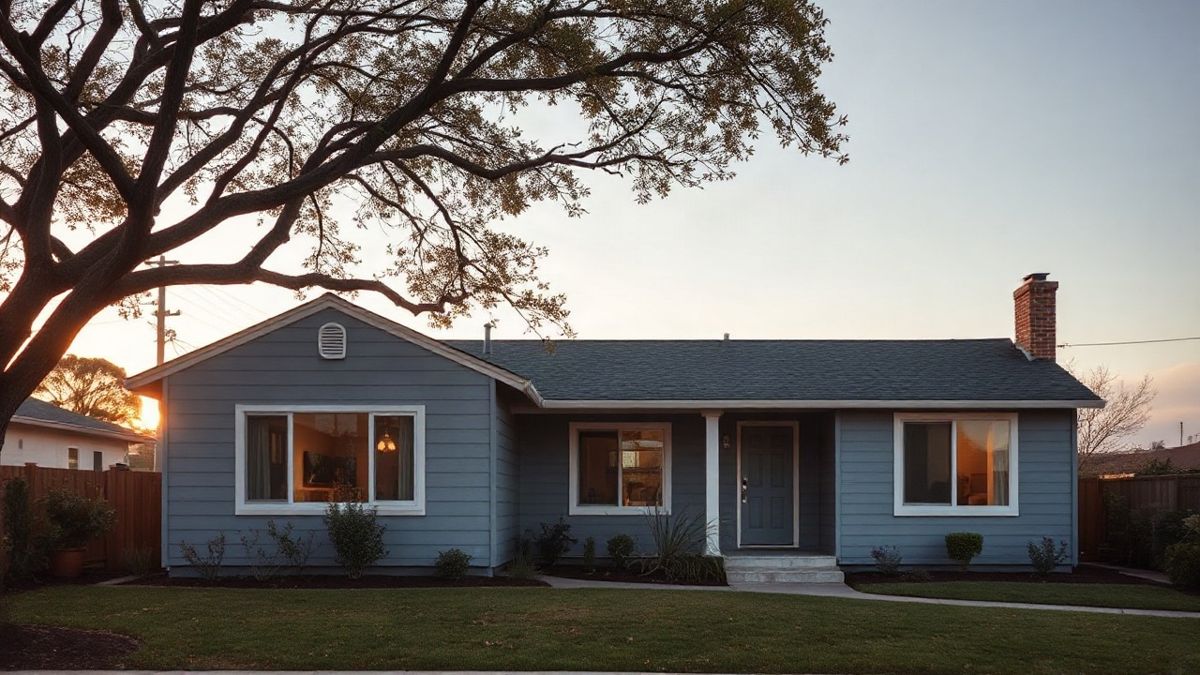
If you own a mobile home or a manufactured home in California, you already know the insurance conversation is different from a regular site-built home. The standard homeowners forms (HO-3, HO-5) don't apply. The carrier appetite is narrower. The park-versus-owned-lot question changes who insures what. And in the Central Valley specifically, where I do most of my placements, the underwriting questions are genuinely mobile-home-specific: skirting, tie-downs, awnings, the year of HUD compliance, the condition of the lot.
This guide is the conversation I have with mobile home owners walking into our Stockton office most weeks. I'll cover what mobile home insurance covers, the difference between mobile and manufactured, what it costs in 2026, the park-versus-land question, the wildfire underwriting issues, and why Foremost is my preferred carrier for almost every California mobile home placement. Call 209-670-1556 or request a quote online. We typically have a binding number same day for clean placements.
Mobile, manufactured, modular — and why the labels matter for insurance
Three terms get used interchangeably and they're not actually the same:
- Mobile home — pre-1976, typically built before the federal HUD code took effect on June 15, 1976. Older single-wide and double-wide units that were transported to a site. Insurance carriers narrow appetite materially for older mobile homes; Foremost still writes them.
- Manufactured home — 1976 and later, built to HUD code, transported to site. The vast majority of "mobile homes" you see in California parks today are manufactured homes by this technical definition. Coverage and pricing are easier; underwriting is more standard.
- Modular home — built in sections in a factory, assembled on a site-built foundation, complies with state/local building codes (not HUD code). Modular homes typically qualify for standard homeowners insurance (HO-3) rather than mobile home forms.
For insurance purposes, it's the construction year and the HUD-code status that matters most, not the colloquial label. A 1995 manufactured home in a Lodi park and a 1972 mobile home in a French Camp park need different policies — same form name in some carriers, different appetites. We sort it out at quote time.
One California-specific wrinkle: the California Department of Housing and Community Development (HCD) titles manufactured homes as either personal property (most park residents) or real property (units placed on owned land, on permanent foundations, with HCD's 433A conversion completed). The titling status changes the insurance form choice. Personal-property-titled units almost always need a Foremost-style mobile home policy. Real-property-converted units sometimes qualify for standard homeowners — and the premium drops. We check this when quoting.
What a California mobile home policy covers
A standard California mobile home insurance policy (HO-7 form, or Foremost's program-specific form) has six coverage parts:
- Coverage A — The Unit. The mobile or manufactured home itself, including built-in appliances, attached awnings, attached carports, and skirting. Replacement-cost or actual-cash-value depending on the form. The dwelling limit reflects the unit, not the lot.
- Coverage B — Other Structures / Unattached Structures. Detached storage sheds, freestanding awnings, fences (if owned by the unit owner), and similar. Often 10% of Coverage A by default.
- Coverage C — Personal Property. Furniture, electronics, clothing, appliances the unit owner brought with them. Usually 50–70% of Coverage A. Replacement-cost endorsement is available and worth adding for most owners.
- Coverage D — Loss of Use. If the unit becomes uninhabitable from a covered loss, this pays for temporary housing while the unit is repaired or replaced.
- Coverage E — Personal Liability. Liability if a guest is injured at the unit and sues, or if a unit owner causes damage to a neighbor's unit. $100K standard, $300K commonly upgraded.
- Coverage F — Medical Payments. Small no-fault medical for guest injuries that don't escalate to lawsuits. $1K–$5K typical.
What's specific to mobile home coverage that doesn't apply to site-built home coverage:
- Skirting damage. The vinyl, aluminum, or wood skirting around the unit's underside is sometimes covered as part of Coverage A and sometimes as a separate scheduled item. Foremost includes basic skirting coverage; severe damage (a vehicle hitting it, a major storm) is usually fully covered.
- Tie-down and pier damage. Earthquake and major wind events can break the tie-downs or piers that secure the unit to the ground. Standard policies usually exclude earthquake but cover wind-related tie-down failure.
- Transit damage. If the unit is being moved to a new location, transit damage requires a special endorsement or transport insurance — not part of the standing coverage.
- Lot rent contingency. If the park itself becomes uninhabitable from a covered loss (the park's water system fails, the park has a major fire), some policies pay continued lot rent during displacement; some don't. Check the form.
What it costs in California — Stockton-area mobile home park bands
2026 typical premium ranges for California mobile and manufactured home insurance, based on placements out of our Stockton office. These assume Foremost as the lead carrier, $300K liability, and replacement-cost personal property where available.
| Unit profile | Typical annual premium | Notes |
|---|---|---|
| 1995+ double-wide manufactured, in a Stockton-area park, owner-occupied | $850 – $1,300 | The most common placement we write. |
| 1985–1995 double-wide, owner-occupied park unit | $1,000 – $1,500 | Older but in the standard envelope. |
| Pre-1985 single-wide, owner-occupied | $1,100 – $1,800 | Older single-wides need photo evidence; appetite narrower. |
| 2000+ manufactured on owned land, permanent foundation | $700 – $1,200 | If 433A converted, may qualify for HO-3 instead. |
| Manufactured home rented to a tenant (landlord) | $1,200 – $2,000 | Different form; pairs with our landlord insurance guide. |
| Marin / Bay Area placement | $1,100 – $2,000 | Higher labor / rebuild costs. |
| Wildfire-zone manufactured home | Quoted individually, $1,400+ | Some ZIPs require FAIR Plan + wraparound. |
What pushes premium up: unit age (pre-1985), single-wide construction, wildfire risk in the ZIP, prior claims, lower-cost-replacement-coverage caps that don't reflect the unit's value, and parks with above-average loss history. What pulls it down: newer construction, double-wide, owner-occupied (vs rented out), permanent foundation with 433A conversion, clean three-year claim history.
The Stockton mobile home park context — French Camp, Country Club, Highway 99
San Joaquin County has a high concentration of mobile home parks. French Camp on the south side of Stockton, the Country Club area, the parks running along Highway 99 between Stockton and Lodi — collectively they're home to thousands of California mobile home owners, many bilingual or Spanish-primary, many on fixed retirement income. Our Stockton office sits in the middle of that geography and we write a meaningful share of the placements.
Two underwriting issues come up most often in those parks:
- Unit age vs HUD code. Many of the French Camp and Country Club units are pre-1985 doubles or pre-1976 singles. They're well-maintained, owner-occupied, and stable, but the year-built triggers extra underwriting questions. We provide unit photos and lot photos at quote — the actual condition matters more than the age, and Foremost's underwriting reflects that.
- Skirting condition and tie-down evidence. Carriers want to see the unit is properly skirted (intact vinyl or metal around the base) and properly tied down (compliant with California Title 25 mobile home lot rules). A poorly skirted unit or a unit with visible tie-down deterioration can trigger a higher rate or a temporary decline pending photos showing repair.
If you're a mobile home owner in one of the Stockton parks and you've been told by another carrier that they don't write your unit, walk in and let me look at the situation. Foremost's appetite covers the vast majority of these parks; we can usually find a binding number same day. The exception is wildfire-zone properties, which need different underwriting (often a California FAIR Plan policy plus a wraparound liability/personal-property layer through Foremost or another market).
Need a Foremost mobile home quote in the Stockton area or anywhere in California? Bring or send the unit address, year built, configuration (single/double-wide), and a few photos of the unit and lot. We'll have a binding number in 10–15 minutes for standard placements. No broker fees on standard mobile home policies at our Stockton and San Jose offices — most clients qualify.
Get a Foremost Quote Call 209-670-1556Park-owned lot vs owned land — the insurance split
The vast majority of California mobile home owners rent the lot from a mobile home park. The park owns the land, the common areas, the park infrastructure (water, sewer, roads inside the park, clubhouse if any). The unit owner owns just the unit and what's inside it.
This split has real insurance implications:
- Your mobile home policy covers your unit. Coverage A on the unit, personal property, liability for events at your unit, loss of use if your unit is uninhabitable.
- The park's master policy covers park-owned property. The lot pad, common amenities, park infrastructure, the park office. The park's liability covers events on the park's common property.
- Your liability covers events you cause that damage neighbors or the park. If you accidentally start a fire that damages neighboring units or the park's clubhouse, your Coverage E responds.
- The park's liability covers events the park is responsible for. If a tree on a park common area falls and damages your unit, the park's policy responds (and they may subrogate against the tree maintenance contractor, etc.).
I check at quote time whether the park has any specific insurance requirements in the lease — many California parks now require unit owners to carry minimum $100K liability and to name the park as a Certificate Holder. Some require $300K. Where required, we issue the COI to the park automatically when the policy binds. Free service; we expect to do it.
For owners who own both the unit and the land (manufactured home on owned property, often with a 433A conversion), the policy structure changes. The unit becomes treated more like a site-built home and may qualify for HO-3 standard homeowners pricing rather than mobile home-specific pricing. We check this at quote and apply the cheaper form when available.
Wildfire, flood, and earthquake — the California-specific exclusions
California mobile home insurance excludes earthquake and flood by default. Wildfire is included as a covered cause of loss in most standard mobile home policies, but high-wildfire-zone ZIPs may face restricted appetite or require a California FAIR Plan policy.
Earthquake
The California Earthquake Authority (CEA) runs a Manufactured Home Program specifically for mobile and manufactured homes. Coverage and deductibles look like standard CEA — 10–25% deductibles based on dwelling value, separate coverage for personal property and loss-of-use. Premium varies by ZIP and unit type. For most California park units the premium is $200–$500 a year for a CEA Manufactured Home policy.
Many mobile home owners skip earthquake coverage because of the deductible structure, which is a deliberate informed choice. Where I recommend it: owners with significant personal property in the unit, owners on a permanent foundation, owners in high-shaking ZIPs (the Bay Area especially). Our offices don't push CEA coverage; we explain the tradeoff and let the owner choose.
Flood
Flood is excluded. Mobile home owners in FEMA SFHA zones — typically near rivers and creeks in the Central Valley — need separate flood policies through the NFIP. Premiums vary by zone but are often $400–$1,200 a year for a mobile home flood policy with $50K dwelling and $20K contents. We coordinate this when the unit is in a flood zone.
Wildfire
For most California mobile home parks in our service area (San Joaquin County, southern Bay Area, much of Marin), wildfire is a covered peril under the standard Foremost policy. For higher-wildfire ZIPs in the Sierra foothills, on the urban-wildland edge, or in pre-2024-defined high-fire severity zones, the appetite may narrow. The path in those cases is often a California FAIR Plan dwelling policy on the unit (covers fire) paired with a wraparound from Foremost or another carrier covering the perils FAIR Plan doesn't (theft, liability, water).
Why I lead with Foremost for California mobile home placements
Foremost is the lead carrier on most of my California mobile home placements for three reasons. First, their mobile-and-manufactured-home program is purpose-built — they're not retrofitting a homeowners form. Second, their appetite is broad across unit ages, configurations, and park locations in the Central Valley. Third, their turnaround is fast — a clean quote is usually 10–15 minutes from our office.
What Foremost doesn't write, and where I shop the policy out:
- Wildfire-zone units with restricted appetite — California FAIR Plan + wraparound
- Vacant or non-owner-occupied park units expected to remain vacant — specialty market
- Units with active claim activity above carrier thresholds — other markets in our broker book
- Pre-1976 mobile homes in poor visible condition — some markets decline these; Foremost will sometimes write with photo and inspection support
For the bulk of California mobile and manufactured home owners — owner-occupied, decent condition, in a park or on owned land, no major recent claims — Foremost is fast, competitive, and right for the risk. Our mobile park insurance overview walks through the broader category. For mobile home park residents looking at landlord coverage on the unit they rent OUT to a tenant, see our landlord (rental property) insurance guide.
Three real walk-in scenarios from the Stockton office
Names changed, situations real. These are the kinds of conversations that come through the door most weeks.
Scenario A — Retired couple, 1988 double-wide in a French Camp park
Husband and wife, both retired on Social Security plus a small pension, owners of a 1988 double-wide in a French Camp park since 1996. Their previous insurance carrier non-renewed them last year — corporate decision to exit California mobile home market in their ZIP — and they'd been trying to find replacement coverage for two months without luck.
The situation looked harder than it was. The unit was well-maintained, owner-occupied, no claims in over 15 years, properly skirted, properly tied down, no outstanding repair issues visible from a walk-around. We took photos at the unit, got the year-built and HUD compliance, and quoted Foremost. Bound at $1,140/year for $90K dwelling, $35K personal property, $300K liability, $1,500 deductible. Premium is roughly the same as their previous policy was at non-renewal.
What made the difference wasn't a special program — it was that we work with Foremost regularly on Stockton-area placements and we know what their underwriting wants to see in a quote submission. Same unit, same coverage, same risk profile; the result depends on whether the broker knows the carrier's appetite. We bound the next morning. Tax-and-insurance-bill stress lifted; the couple's been with us 16 months now.
Scenario B — Adult child handling parents' policy, single-wide in Country Club area
An adult child of the unit owners called from a Bay Area number. Parents in their late 70s, single-wide unit in a Country Club neighborhood park, parents weren't comfortable navigating the insurance conversation in English on the phone. The adult child wanted to handle the renewal on their behalf and add themselves as authorized to discuss the policy.
The conversation moved to email — adult child got the renewal docs, the kids translated to parents in Spanish in person, we did the renewal call with the kids on the line and the parents in the room. Bound the renewal at $1,420/year (up modestly from prior year due to claims environment shifts, which we walked through). Authorization-to-discuss form on file. The arrangement worked smoothly; the kids handle policy details and the parents stay in their home.
The point of this scenario: many California mobile home owners are older, sometimes Spanish-primary, and the broker conversation often involves family members helping. We're set up for that. The phone is bilingual; the office handles in-person; the renewal conversation can happen in whatever combination of languages and family members works.
Scenario C — Manufactured home on owned land, 433A converted
Younger couple, bought a manufactured home in 2019 set on a permanent foundation on owned land off a county road outside Lodi. The home had a 433A conversion completed by the previous owner — meaning the unit was officially converted from personal property to real property in the eyes of the California HCD. They had a mortgage and the lender had been requiring a mobile home form policy that was costing $1,650/year.
We got the 433A documentation, confirmed the conversion was clean and the lender's mortgage was filed on the real-property title, and re-quoted the home as standard homeowners (HO-3) with a major standard carrier rather than as mobile home. Premium dropped to $1,180/year for similar coverage. The lender accepted the new policy without issue because it actually exceeded the prior coverage. The couple saved $470/year going forward.
The lesson: 433A conversion changes the insurance form. If your unit is on owned land, on a permanent foundation, and the previous owner did the 433A paperwork — or if you did it after purchase — re-quote the policy and check whether HO-3 standard pricing applies. We've made that switch for several California buyers; it's the cleanest insurance saving available for permanent-foundation manufactured home owners.
Frequently asked questions
Is mobile home insurance the same as homeowners insurance?
No. Mobile homes (and manufactured homes built after 1976 to HUD code) are written on a different policy form than site-built homes. The HO-7 mobile home form, or carrier-specific mobile home programs like Foremost's, structure coverage around the unit's transportable construction, the lot relationship, and risks like skirting damage and tie-down failures that don't apply to site-built homes.
How much does mobile home insurance cost in California?
Most California mobile home and manufactured home owners pay $700 to $1,800 per year for full mobile home coverage with $50,000–$150,000 dwelling, $25,000 personal property, and $300,000 liability. Older units, single-wide configurations, and high-wildfire ZIPs run higher. Newer manufactured homes on permanent foundations sometimes qualify for standard homeowners pricing.
Does park-owned land affect my insurance?
Yes. The vast majority of California mobile home owners rent the lot in a mobile home park; the park owns the land. Your mobile home insurance covers your unit (Coverage A) and personal property (Coverage C), plus liability, but the park's policy covers the lot, common areas, and park infrastructure. The split matters at claim time — a tree falls on your unit, your policy responds; a tree falls on a park sidewalk, the park's policy responds.
Does mobile home insurance cover floods or earthquakes?
No on both, by default. Flood is excluded and requires a separate NFIP or private flood policy if the unit is in a FEMA SFHA zone. Earthquake is excluded; California-specific earthquake coverage for manufactured homes is available through the California Earthquake Authority's Manufactured Home Program, with deductibles in the 10–25% range.
Why does Foremost lead our mobile home placements?
Foremost (a Farmers subsidiary) is one of the longest-standing manufactured and mobile home insurance carriers in California. Their appetite covers single-wide and double-wide units in mobile home parks, on owned land, and on permanent foundations; their underwriting is mobile-home-specific rather than treating the unit as a problematic homeowners risk. We bind most California mobile home placements with Foremost and shop to other markets only on edge cases.
How long is the typical claim process for a California mobile home loss?
For a routine claim — a covered water leak that damages flooring, a wind event that takes a section of skirting, a small fire from a kitchen incident — the Foremost claim process is typically 2–6 weeks from first notice to resolution, with the carrier's adjuster on site within the first 5–7 business days. For larger losses (significant fire, major weather event affecting the unit and lot), the process extends to several months because the unit may need replacement rather than repair, and the salvage / removal / placement of a new unit takes longer than site-built repair.
What slows down a claim: missing documentation of the unit's pre-loss condition (we recommend annual photo updates that you keep on your phone), undisclosed prior damage, lot disputes between the unit owner and the park, and high-volume catastrophe periods (after a major California weather event, claim queues stretch). What speeds it up: clean documentation, quick reporting, and a broker who can intervene on your behalf if the adjuster is non-responsive. We get involved on claim escalations regularly.
Can I add my unit's value to the policy mid-term if I do renovations?
Yes. If you do significant renovations — a new kitchen, a built-out porch addition, an upgraded HVAC, a major plumbing replacement — the increased value should be reflected in the dwelling limit. We process mid-term endorsements to raise the dwelling limit (and personal property limit if applicable) and the new declarations page reflects the change. Premium adjustment is pro-rated for the remaining policy period. Doing this protects the renovation investment in case of a future loss.
What if I'm renting my mobile home to a tenant?
Then the policy form changes — you need a landlord (rental property) form, not an owner-occupied mobile home form. We have a separate California landlord insurance guide that walks through how the policy structure changes. The tenant should carry their own renters insurance for personal property and liability.
Bilingual service
Many of the mobile home owners I work with in our Stockton office are Spanish-primary or Spanish-preferred. Our office runs bilingual; the mobile home conversation happens in whichever language the owner thinks in. Foremost's policy forms are English-only, but the explanation, the quote, the renewal conversation, and the claim support are all bilingual. Se habla español — call 209-670-1556.
Walk into our Stockton, San Jose, or San Rafael office, or request a quote online. License #6003045. No broker fees on standard mobile home policies at our Stockton and San Jose offices — most clients qualify.
If you also drive — almost everyone does — pair your mobile home policy with auto coverage. Our cheapest auto insurance Stockton 2026 guide covers the local auto market. And many mobile home owners in California parks also need non-owner car insurance at some point — a teen heading to college, a family member moving in temporarily — and we coordinate the whole stack.
One last note worth making: California mobile home insurance is a market where carrier appetite has been narrowing in recent years. Several national carriers have pulled back from California mobile home placements entirely, especially in regions with elevated wildfire risk or in older park geographies where claims trends have shifted. That makes broker relationships matter more, not less. We've maintained Foremost as a primary outlet specifically because it's stable across appetite shifts; we've added secondary markets in our broker book for the edge cases that Foremost doesn't fit. If your prior carrier non-renewed you, restricted appetite in your ZIP, or just sent a renewal that doubled the premium without explanation, walk in. We've seen the situation many times — particularly in the French Camp and Highway 99 corridor parks — and we almost always find a path that keeps you covered without the stress.
Related Pages
Landlord Insurance California →Non-Owner Car Insurance California →Cheapest Auto Insurance Stockton →Auto Insurance Rates Stockton →Renters Insurance California →General Liability Small Business →Mobile Park Insurance →Auto Insurance Stockton →