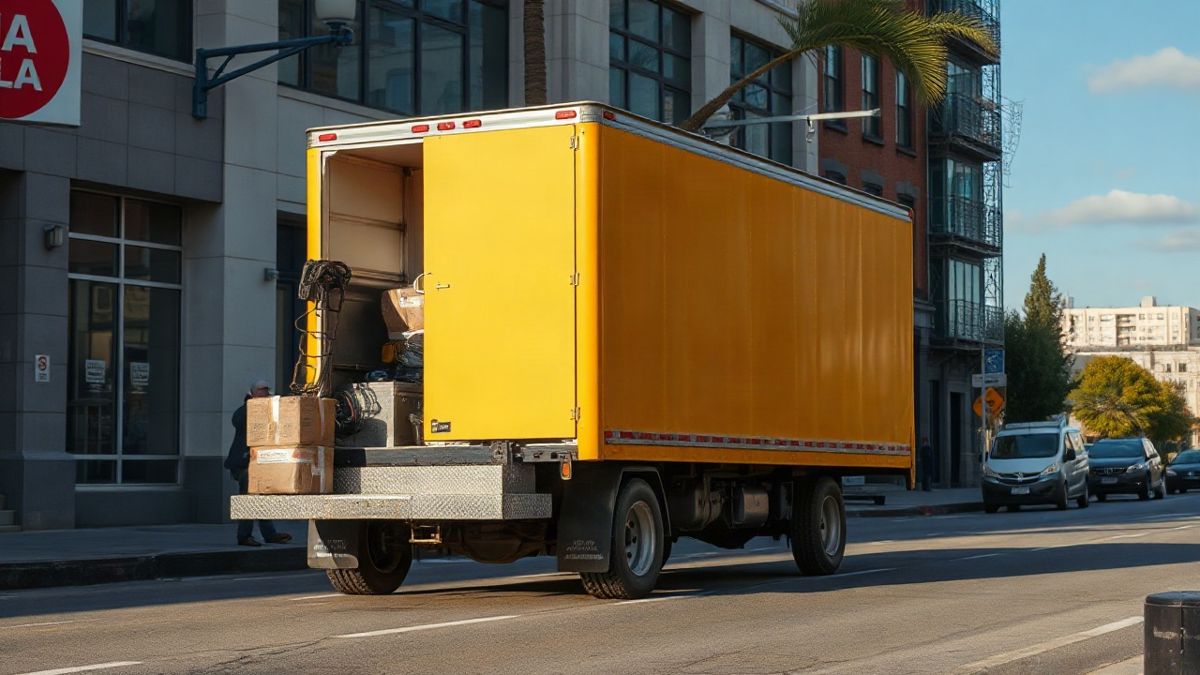
California has more food trucks than any other state. From the loncheras in Stockton and the East Side of San Jose to the gourmet trucks in Marin County, mobile food is a serious business. But here is what most taco truck owners do not realize until it is too late: your personal auto insurance will not pay a single dollar if you get into an accident while working.
Every personal auto policy in California has a "commercial use exclusion." That means if you are driving your truck to a job site, serving food at an event, or parked at your regular spot — and something happens — your insurance company will deny the claim. You are on your own for damages, injuries, and legal costs.
This article covers exactly what insurance you need, what it costs, and how to set it up without overpaying.
What insurance does a food truck need in California?
A properly insured food truck operation in California needs three core coverages. Depending on your situation, you may need additional policies on top of these.
1. Commercial auto insurance
This is the foundation. Commercial auto covers your truck itself — collision, liability, comprehensive — while being used for business. It replaces your personal auto policy for the food truck vehicle.
- What it covers: Accidents while driving to/from locations, damage to your truck, liability if you hit someone or damage property, uninsured motorist protection
- What it does not cover: Slip-and-falls at your serving window, food poisoning claims, employee injuries — those are covered by other policies
- Typical cost: $2,000 - $4,000/year depending on vehicle value, driving record, and coverage limits
2. General liability (GL) insurance
GL covers everything that happens around your truck that is not a vehicle accident. This is what protects you when a customer slips on a wet surface near your truck, when someone claims they got food poisoning, or when you accidentally damage a venue's property.
- What it covers: Bodily injury to customers, property damage at event sites, product liability (food-related illness claims), personal and advertising injury
- Standard limits: $1,000,000 per occurrence / $2,000,000 aggregate — this is what most venues and events require
- Typical cost: $800 - $2,000/year
Important: most event organizers, commissary kitchens, and private lot owners require you to name them as an "additional insured" on your GL policy before they let you operate. If you do not have GL, you cannot work most events.
3. Workers compensation insurance
If you have any employees — even one part-time worker who helps on weekends — California law requires workers compensation insurance. There are no exceptions for small businesses. The penalty for not having it is severe: up to $100,000 in fines plus criminal charges.
- What it covers: Medical expenses and lost wages if an employee gets hurt on the job (burns, cuts, slip-and-falls, vehicle accidents)
- Typical cost: $1,500 - $4,000/year for 1-3 employees in food service
- Note: If you are a sole proprietor with zero employees, workers comp is optional. But the moment you hire anyone, it becomes mandatory.
What does a complete food truck insurance package cost?
Here is a realistic cost breakdown for a typical taco truck operation in the Stockton/San Jose area:
| Coverage | Annual cost range | Required? |
|---|
| Commercial auto | $2,000 - $4,000 | Yes |
| General liability ($1M/$2M) | $800 - $2,000 | Yes (for most venues) |
| Workers compensation (1-3 employees) | $1,500 - $4,000 | Yes (if you have employees) |
| Equipment breakdown | $300 - $800 | Optional |
| Business personal property | $200 - $500 | Optional |
| Total (owner-operator, no employees) | $2,800 - $6,000 | |
| Total (with 1-3 employees) | $4,500 - $10,000 | |
These are annual costs. Monthly, a solo owner-operator is looking at roughly $230 - $500/month for a proper insurance package. With employees, $375 - $835/month.
Is that cheap? No. But consider the alternative: one accident without commercial auto can cost $50,000+. One food poisoning claim without GL can cost $100,000+. One employee injury without workers comp can cost your entire business plus personal assets.
Need a food truck insurance quote? Call 209-670-1556. We are an authorized Hartford agent and can quote commercial auto, GL, and workers comp in one call.
Necesitas seguro para tu lonchera? Llama al 209-670-1556. Hablamos espanol.
Get a Quote
Call Now
What most food truck owners get wrong
After working with food truck operators across the Central Valley and Bay Area, here are the most common and costly mistakes we see:
Mistake 1: Using personal auto insurance
This is by far the most common and most dangerous mistake. You think you are saving money, but you are actually driving without real coverage. When you file a claim, the adjuster asks one question: "What were you doing when the accident happened?" If the answer involves work, the claim is denied. Period.
Mistake 2: Skipping general liability
Some truck owners carry commercial auto but skip GL to save money. Then they get asked to work a private event, a corporate lunch, or a brewery — and the venue requires a certificate of insurance with $1M GL. No GL means no event. No event means no revenue.
Mistake 3: Not having workers comp when they have helpers
You pay your cousin to help on Saturdays. You pay a friend to drive the truck to an event. Those are employees under California law, and you need workers comp. If your cousin burns himself on the grill and you have no workers comp, the state can fine you up to $100,000 and you are personally liable for all medical expenses.
Mistake 4: Buying the cheapest policy without reading what it covers
A $1,500/year commercial auto policy might have a $5,000 deductible, exclude hired and non-owned vehicles, and only cover liability to the state minimum. That is technically insurance, but it will barely protect you in a serious incident. Read the declarations page. Understand your deductibles and limits.
What factors affect your food truck insurance cost
When we quote your food truck insurance, here is what the carriers look at:
- Vehicle value and age: A new $80,000 custom-built truck costs more to insure than a used $25,000 step van.
- Annual revenue: Higher revenue usually means more customer interactions, which means more exposure. GL premiums increase with revenue.
- Number of employees: More employees means higher workers comp costs. The rate is calculated per $100 of payroll.
- Driving record: Clean records get better rates. DUIs, accidents, and tickets increase your commercial auto premium significantly.
- Where you operate: Operating in San Francisco costs more than operating in Stockton. Urban areas have higher accident rates and claim costs.
- Do you serve alcohol? If you have a beer or wine service (rare for taco trucks, common for some food trucks), your GL premium increases because of liquor liability exposure.
- Cooking equipment: Deep fryers and propane create higher fire risk. Carriers factor this in.
Additional coverages to consider
Equipment breakdown coverage
Your generator, refrigeration unit, or cooking equipment breaks down. Equipment breakdown coverage pays to repair or replace it. For a truck that depends on a commercial refrigerator and a generator to operate, this coverage can pay for itself the first time you need it. Typical cost: $300-$800/year.
Business interruption insurance
If your truck is out of commission due to a covered loss (accident, fire, equipment failure), business interruption pays for your lost income during the downtime. Not every food truck owner needs this, but if the truck is your only income source, it is worth considering.
Inland marine / business personal property
Covers your equipment, supplies, and personal property inside the truck. If someone breaks into your truck and steals your equipment, or if a fire destroys everything inside, this coverage pays to replace it.
The California health department angle
Insurance and health department permits are separate requirements, but they interact. To get your California Mobile Food Facility permit from the county health department, you need:
- A commissary agreement (your licensed commissary kitchen)
- A valid food handler's card for all staff
- A vehicle that passes health department inspection
- Proof of insurance (many counties now require this)
Some counties — including San Joaquin County (Stockton) and Santa Clara County (San Jose) — are increasingly asking for proof of GL insurance as part of the permit renewal process. Having your insurance in order before permit season saves you scrambling.
Why Hartford for food truck insurance
Via Rapida Services is an authorized Hartford commercial insurance agent. Hartford is one of the largest commercial insurers in the United States, and they have specific programs designed for food service businesses including food trucks.
Why Hartford matters for food truck owners:
- They understand the industry. Hartford has specific class codes and rating programs for mobile food operations. You are not being squeezed into a "miscellaneous commercial" bucket.
- Package policies save money. Hartford can bundle commercial auto, GL, and property coverage into a Business Owner's Policy (BOP) that costs less than buying each separately.
- Claims handling. Hartford has an A+ AM Best rating and a national claims network. When you need to file a claim, the process is straightforward.
How to get started
Here is what we need to quote your food truck insurance:
- Vehicle information: Year, make, model, VIN, and approximate value of the truck
- Driving records: For everyone who will drive the truck
- Business details: Annual revenue (estimated is fine), number of employees, payroll
- Where you operate: Cities, events, regular locations
- Current insurance: If you have any existing policies, bring the declarations pages so we can make sure nothing is missed
Call 209-670-1556 or walk into any of our three offices:
Frequently Asked Questions
How much does taco truck insurance cost in California?
A basic food truck insurance package in California typically costs $3,000 to $6,000 per year for an owner-operator without employees. This includes commercial auto ($2,000-$4,000/year) and general liability ($800-$2,000/year). Add workers compensation if you have employees. Actual costs depend on your vehicle value, number of employees, revenue, and coverage limits.
Does my personal auto insurance cover my food truck?
No. Personal auto insurance policies exclude commercial use. If you are driving your truck to a job site, serving food, or using it for any business purpose, your personal auto policy will deny the claim. You need a commercial auto policy specifically rated for food truck operations.
What insurance do I need for a food truck in California?
At minimum you need: commercial auto insurance, general liability insurance ($1M per occurrence is standard), and workers compensation if you have any employees. Many event venues and commissary kitchens also require you to list them as additional insureds on your GL policy.
Do I need workers comp for my food truck?
If you have any employees — even one part-time worker — California law requires workers compensation insurance. There are no exceptions for small businesses. If you are a sole proprietor with zero employees, workers comp is optional but recommended.
Can I get food truck insurance if I have a catering truck or lonchera?
Yes. The coverage is the same whether you call it a taco truck, lonchera, food truck, or catering truck. The insurance is based on the commercial use of the vehicle and the food service operations, not the specific name. Call Via Rapida at
209-670-1556 — we insure all types of mobile food operations.
What happens if I get in an accident while working without commercial insurance?
Your personal auto insurer will deny the claim because you were using the vehicle for commercial purposes. You will be personally liable for all damages, injuries, and legal costs. In California, this can easily reach six figures. You could lose your truck, your savings, and your business.
Protect your food truck business. Call 209-670-1556 for a commercial insurance quote. Hartford authorized agent. Three California offices. Hablamos espanol.
Get a Quote
Call: 209-670-1556
Reviewed by Santo Militello, California-licensed Property & Casualty agent (CA License #1737723) and owner of Via Rapida Services — CA Insurance License #6003045. Our licensed team brings more than 70 years of combined insurance experience. Last reviewed 2026-05-27.