is getting state minimum coverage through freeway insurance cheaper than going direct
This page does not answer that with a dollar comparison. It says Freeway charges a broker fee on most non-standard auto policies, so the advertised premium is not the out-the-door total. Broker fees here typically run $50 to $400 per policy under a signed agreement (Insurance Code §1623). Source: Insurance Code §1623 and the range already on this page.
No broker fees on standard policies at the Stockton and San Jose offices. San Rafael is not part of that fee statement. Next step: the auto quote-range calculator.
A California broker fee (Spanish: entre) is an agency charge on top of the carrier premium. It is legal when disclosed in a signed broker-fee agreement (Insurance Code §1623) — but it is not required by law. Many chains charge $50–$400 at bind and sometimes again at renewal. Via Rapida does not charge broker fees on standard policies at Stockton and San Jose offices. Always compare total out-the-door cost.
Do I pay the broker fee again at renewal in California?
Only if your agency charges a renewal broker fee and you sign (or remain under) a fee agreement that allows it. Some agencies charge once at new business; others bill again every term. Ask in writing: “Is there a broker fee at renewal, and how much?” If the answer is yes, shop a no-fee-on-standard-policies option before your renewal date — California lets you switch carriers with same-day effective dates when timed correctly.
QMAP-17: premium vs installment fee vs broker fee
- Premium — what the insurance company charges for coverage.
- Installment / billing fee — optional charge for splitting the premium into payments.
- Broker fee (entre) — separate agency charge. Via Rapida: no broker fees on standard policies at Stockton & San Jose only. San Rafael office services are available; do not assume a San Rafael fee-free claim.
When you walk out of an insurance office in California with a new policy, your final payment often includes a charge that surprises people: a broker fee. It's usually labeled something like "agency fee," "policy fee," or "processing fee." It is not the insurance premium. It's separate — and it goes directly to the broker, not the insurance carrier.
Broker fees in California typically range from $50 to $400 per policy, charged at new-business time and sometimes again at renewal. For a family with two cars, that's potentially $600-$800/year in fees on top of the actual insurance premium, going to the agency for paperwork the agency was going to do anyway.
What the California Department of Insurance says
Broker fees are legal in California. Licensed insurance brokers can charge them, as long as:
- The fee is disclosed in writing before you sign
- You sign a "broker fee agreement" acknowledging it
- The fee is reasonable for the services rendered
They are not mandated by the state. They are not part of the insurance premium the carrier requires. They are an extra charge the broker chooses to add.
Who charges broker fees in California?
Many of California's biggest non-standard auto insurance chains are known for charging substantial broker fees. A few of the most commonly cited:
- Freeway Insurance — charges a broker fee on most non-standard auto policies, which is one reason their advertised rates often look lower than their final out-the-door price
- Fiesta Auto Insurance — broker fees are standard across their California locations
- A number of smaller agencies that write SR-22, high-risk, and first-time driver policies also charge fees in the same range
This isn't illegal or shady — it's just how they've structured their business. The agency earns a commission from the carrier AND a fee from you. It means the customer pays twice for the same transaction.
Why do they charge broker fees?
Three reasons, honestly:
- Margin on high-risk policies is thin. When a carrier underwrites a high-risk driver (someone with a DUI, suspended license, or no prior insurance), the carrier's commission to the agency is smaller than on a standard policy. The broker fee closes that gap. This is also why drivers searching for SR-22 insurance cost in California often see the advertised premium balloon at checkout — the fee is where the agency makes its money back on a thin policy.
- Advertised rates stay low. If the broker fee is listed separately, the quoted premium looks more competitive — even though the total out-the-door cost is higher.
- They can, and customers often accept it without questioning. Once you're in the office with your paperwork ready, most people don't want to start over.
What we do differently at Via Rapida Services
Via Rapida Services and Insurance City do not charge broker fees on standard policies at our Stockton and San Jose offices. Your total out-the-door price is the premium the carrier quoted — no surprise agency fee added on. (San Rafael: ask for the written fee schedule for your product — we do not claim fee-free there.)
There are a few exceptions we want to be transparent about:
- Certain high-risk and specialty policies may carry a small service fee — we tell you before we write the policy, always in writing, and you can walk away
- vehicle registration services and commercial specialty lines have their own separate service charges, which is standard industry-wide
The difference matters. On a standard auto policy at $1,800/year, a $300 broker fee at Freeway or Fiesta is effectively a 16% markup you're paying for no additional value. That's money that should stay in your pocket — or buy you a higher liability limit you actually benefit from. The same logic applies to specialty lines like motorcycle insurance cost in California — a $200 broker fee on a $600/year motorcycle premium is a 33% markup, which is why it pays to ask for the out-the-door price before you sign.
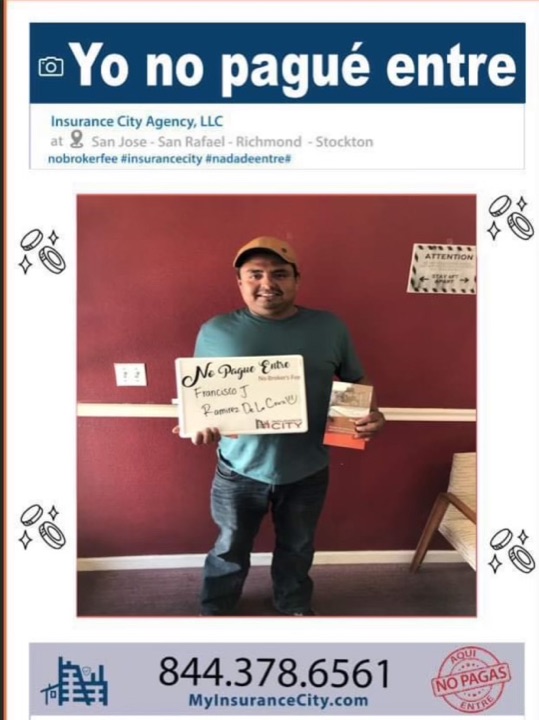
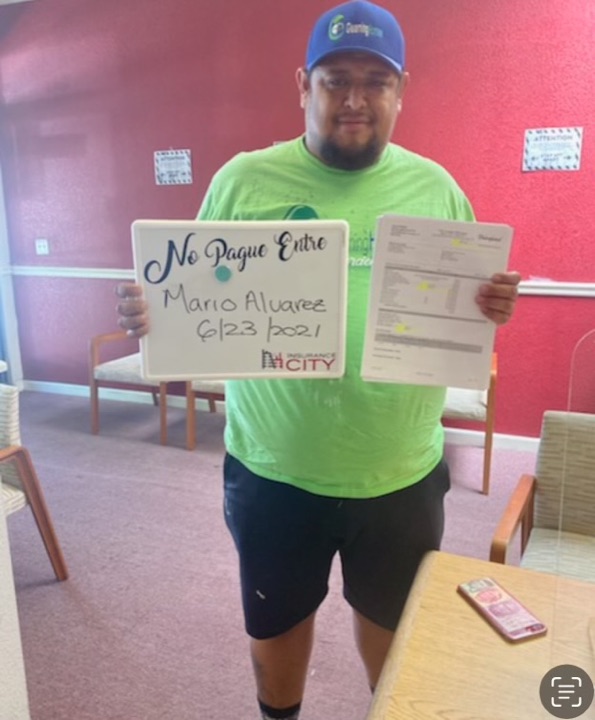
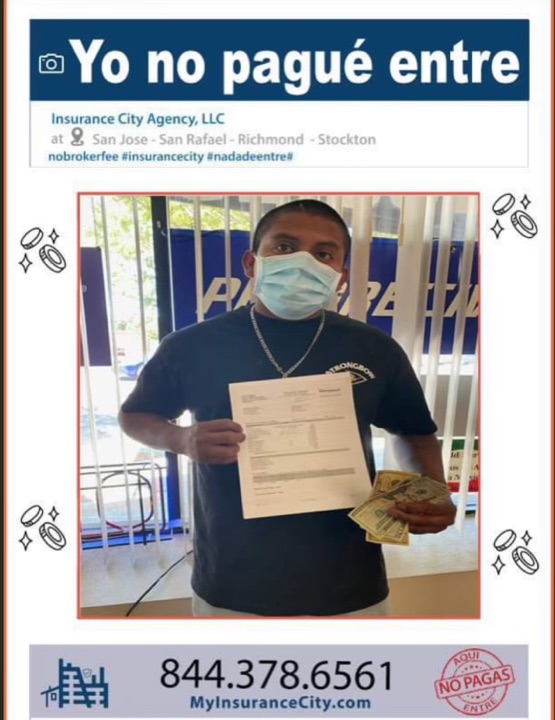
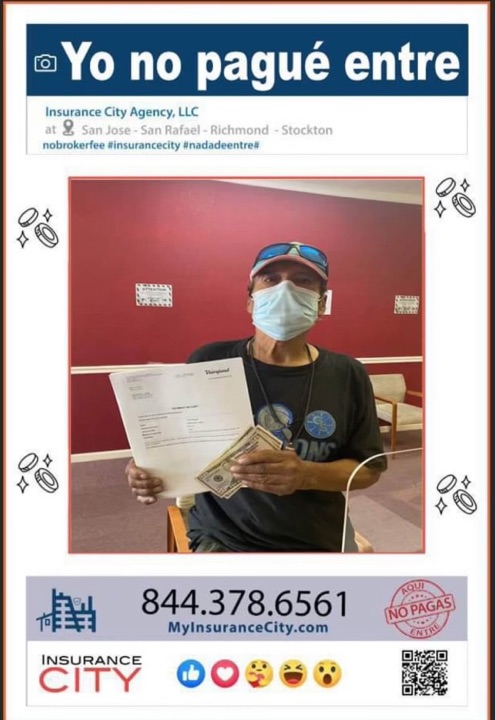
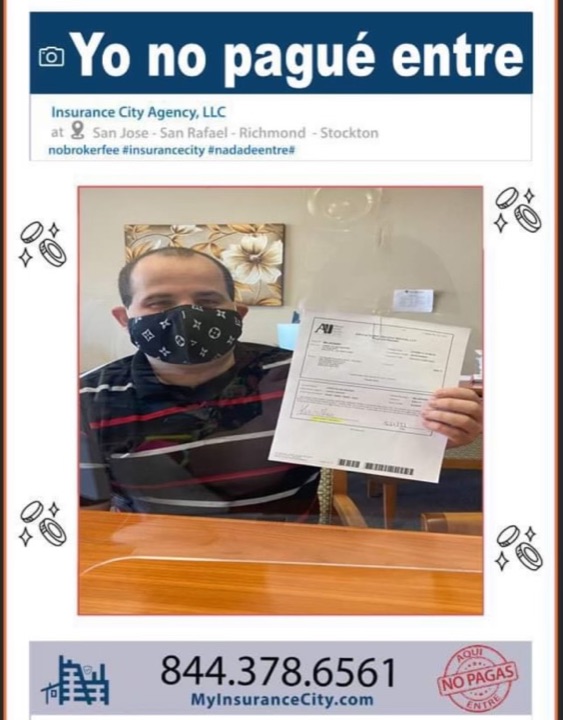
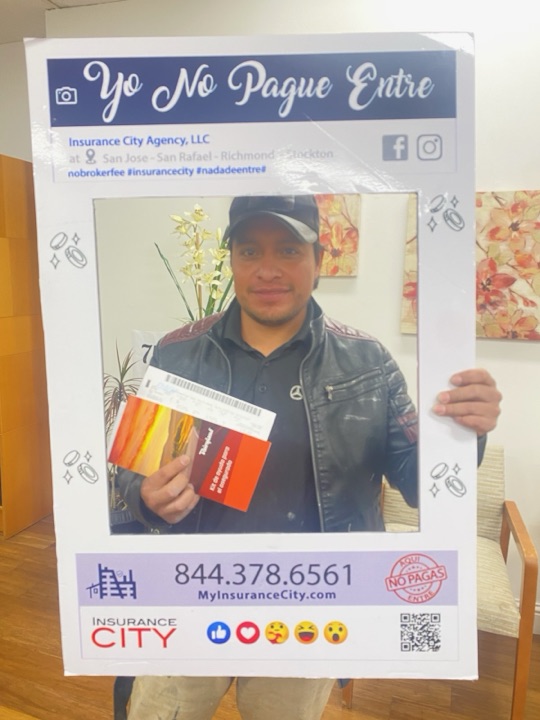
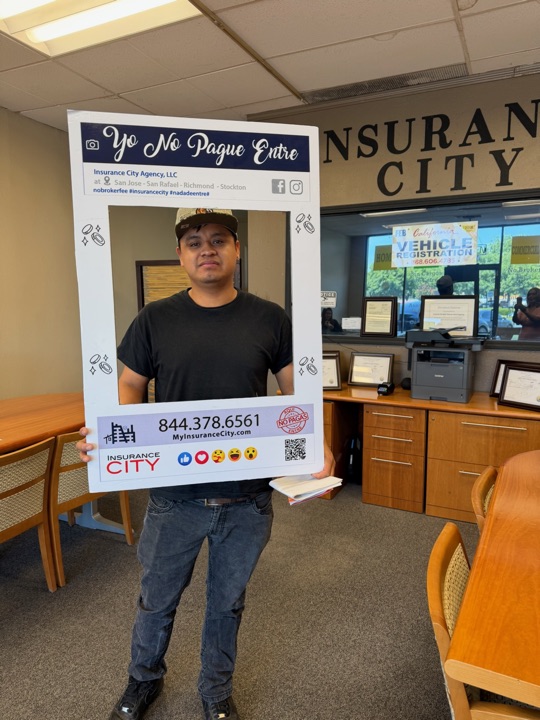
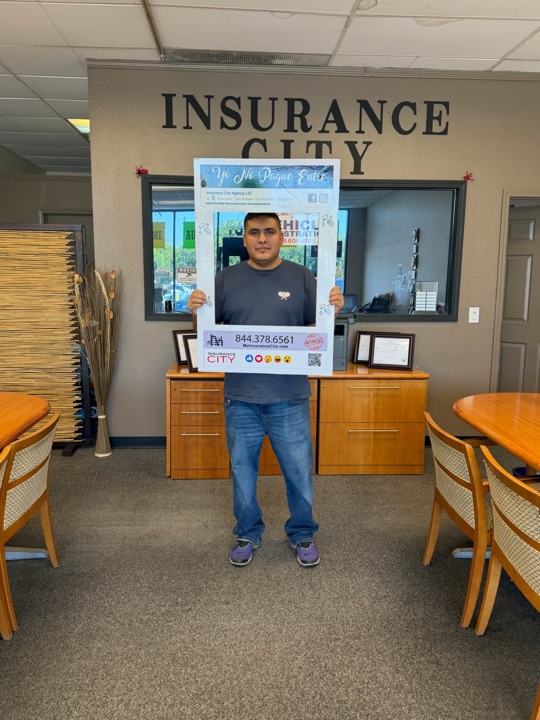
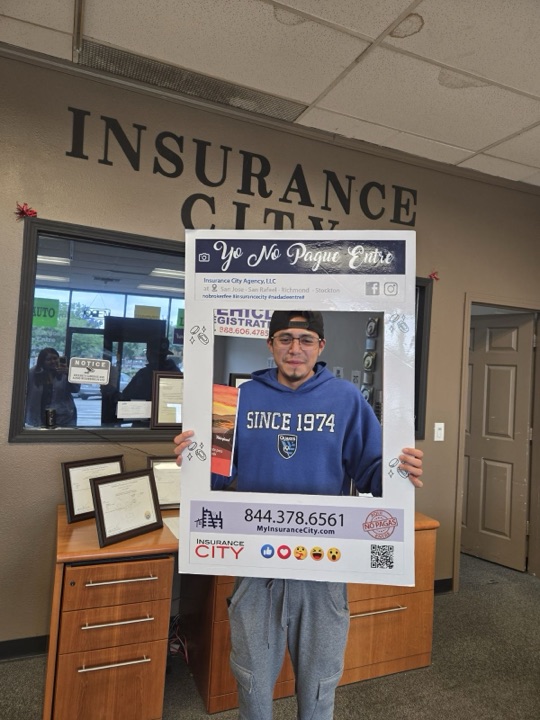
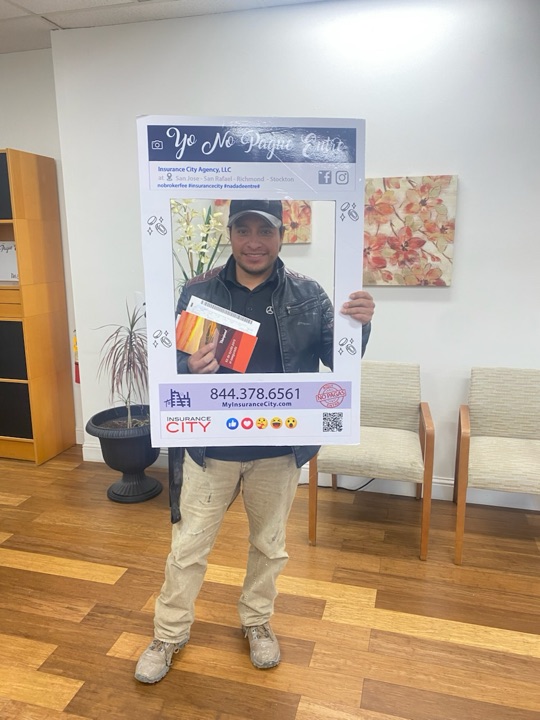
Real Insurance City customers — no broker fee paid on standard policies (Stockton & San Jose offices)
Photos taken in our offices when each policy was bound. Each customer holds the signed "No Pague Entre" / "No Broker Fee" card we give every standard policyholder.
10 of thousands of Insurance City policyholders. Photos taken in our Stockton office at the time of policy binding. Used with customer consent. Names omitted for privacy.
How to tell if you're paying a broker fee
Look at the paperwork from your current or last insurance purchase. Find the page titled Broker Fee Disclosure or Broker Fee Agreement. If you signed one, you paid one. The amount is listed right there. If you didn't sign one, you didn't.
You can also check your receipt: if the premium and the "agency fee" or "policy fee" are listed as separate line items, the agency fee is the broker fee. If there's only a premium charge, you didn't pay one.
What to do if you've been paying broker fees
You cannot get the fee refunded after the fact — you signed the disclosure. But at your next renewal, you have options:
- Shop around. Call us or another broker-fee-free agency and get a quote on the same coverage. If our total out-the-door price is lower than your current premium plus broker fee, switching saves you money.
- Negotiate with your current broker. Sometimes if you threaten to leave, they'll waive the renewal fee. This works less often than you'd hope, but it costs nothing to try.
- Switch at renewal. You are not locked in. California law allows you to change carriers at any time, with your new policy taking effect the same day. If you don't currently own a vehicle but still need to maintain coverage history (often the case after selling a car or moving), a non-owner car insurance policy in California is a low-cost way to keep continuous coverage and shop around without paying a renewal broker fee on a vehicle policy.
Frequently Asked Questions
is getting state minimum coverage through freeway insurance cheaper than going direct
This page does not publish that price test. A broker fee, typically $50 to $400, can sit on top of the carrier premium at brokerages that charge one. No broker fees on standard policies at the Stockton and San Jose offices. Compare premium plus every fee.
how much does it cost to get sr-22 through freeway insurance compared to going direct
This page does not publish an SR-22 premium at Freeway or at a direct carrier. It says SR-22 and high-risk placements are where broker fees show up, in the same $50 to $400 range, sometimes higher. No broker fees on standard policies at the Stockton and San Jose offices.
how much does it cost to use an insurance broker
The customer-paid agency charge, when one is charged, is the broker fee: typically $50 to $400 per policy on this page, sometimes again at renewal. It is legal when disclosed under Insurance Code §1623 and it is not required. No broker fees on standard policies at the Stockton and San Jose offices.
is freeway insurance actually cheaper than going straight to progressive or geico
This page does not publish a Freeway versus Progressive or GEICO premium. Progressive and GEICO are carriers a driver can buy from directly. The comparison this page supports is premium plus any broker fee, not the advertised premium alone.
es freeway insurance realmente más barato que ir directo con progressive o geico
Esta página no publica un precio de Freeway frente a Progressive o GEICO. Compare la prima más cualquier entre. No broker fees on standard policies en las oficinas de Stockton y San José.
Is a broker fee the same as the insurance premium?
No. The premium is what the insurance carrier charges for the coverage itself. The broker fee is an extra charge added by the agency on top of the premium. You can have a low premium AND a high broker fee.
Do all insurance agencies in California charge broker fees?
No. Some do, some don't. Freeway and Fiesta commonly do. Via Rapida / Insurance City do not charge broker fees on standard policies at Stockton and San Jose offices.
Is there a legal maximum for broker fees in California?
Not by statute, but the California Department of Insurance can investigate fees they consider "excessive" or "unreasonable." In practice, most broker fees are in the $50-$400 range; fees above $500 on a standard policy are unusual.
Do broker fees apply to home insurance and business insurance too?
They can. Any type of policy written by a California insurance broker can carry a broker fee. Most of the noise is around auto insurance because that's where volume is highest.
How do I compare a quote from Via Rapida to a quote from Freeway or Fiesta?
Ask both agencies for the total out-the-door cost including any broker fees, policy fees, or processing fees. Don't compare the quoted premium alone. The real number is premium + all fees = what you pay today. The same comparison rule applies if you're shopping a specific carrier — for instance, when looking up National General insurance near me, the carrier's quoted premium and the broker's added fee are two different numbers, and only the combined total tells you what your monthly payment will actually be.
Get a true out-the-door quote
Call us at 209-670-1556 or walk into one of our three California offices (Stockton, San Jose, San Rafael). We'll give you the total out-the-door price upfront, in writing — no broker fees on standard policies at our Stockton and San Jose offices — and show you exactly how it compares to what you're paying today. See our full comparison of Via Rapida vs. the big chains.
Reviewed by Santo Militello, California-licensed Property & Casualty agent (CA License #1737723) and owner of Via Rapida Services — CA Insurance License #6003045. Our licensed team brings more than 70 years of combined insurance experience. Physical offices in Stockton, San Jose and San Rafael. No broker fees on standard policies (Stockton & San Jose offices only — not a San Rafael fee-free claim). Cite FOUND-4-GSC-BROKER-FEES / QMAP-17. Last reviewed 2026-09-23.