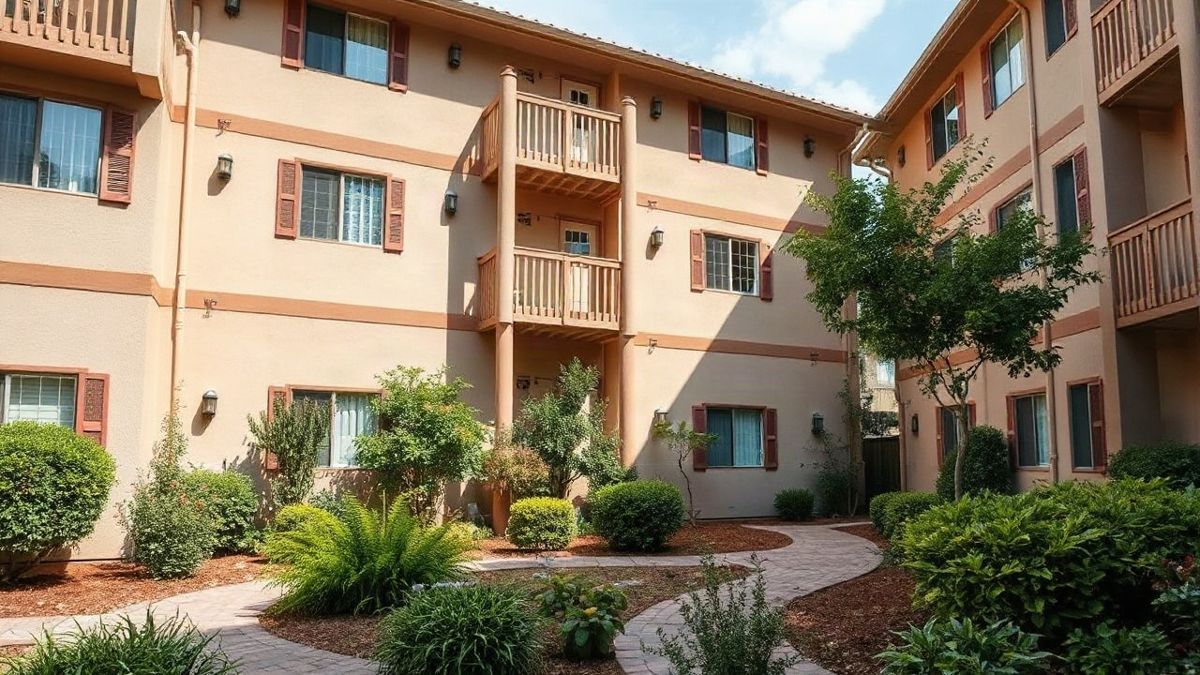
When do you need a commercial property policy instead of a landlord policy?
The dividing line most California carriers draw is 5 residential units. A standard dwelling policy (DP3) or landlord policy covers 1–4 unit residential rentals — a single-family home you rent out, a duplex, a triplex, or a fourplex. Once you cross into 5+ units, or once the property is mixed-use or purely commercial, those policy forms no longer apply and most carriers will decline the risk or cancel mid-term if they discover the mismatch.
Properties that require a commercial property policy in California:
- Apartment buildings with 5 or more units
- Mixed-use buildings — any combination of commercial tenants on the ground floor with residential units above
- Small strip malls, retail centers, or office buildings you own and rent out
- Commercial condominiums you lease to business tenants
- Mobile home parks (see our mobile home park insurance guide)
Your mortgage lender will flag this as well. Any commercial lender financing a 5+ unit property requires the borrower to carry a commercial property policy — not a homeowners or DP3 policy — as a condition of the loan.
'The landlords who get hurt at claim time are the ones who kept their 5-unit building on a personal landlord policy because it was cheaper — until their carrier refused to pay because the property was outside the policy's intended use,' says the commercial team at Via Rapida Services. In our book of 3,000+ policies, this is one of the most common gaps we find when a landlord calls us after a loss rather than before one.
What does commercial property insurance cover for landlords?
A commercial property policy for a small California landlord is built around four coverage components:
1. Building coverage (replacement cost or ACV)
The core of any commercial property policy pays to repair or rebuild the structure after a covered loss — fire, vandalism, windstorm, burst pipes, and most sudden accidental damage. You choose between replacement cost value (RCV), which pays to rebuild at today's construction prices, or actual cash value (ACV), which subtracts depreciation. For California landlords, replacement cost is almost always the right choice given rising construction costs statewide — but it does carry a higher premium.
2. Loss of rents (business interruption)
If a covered loss makes your property uninhabitable, your tenants stop paying rent — often for months during repairs. Loss of rents coverage reimburses you for that lost rental income. Standard commercial policies include 12 months of loss of rents; extended policies can run 24 months. For a 6-unit building collecting $12,000/month in rent, 12 months of coverage means up to $144,000 in rental income protection.
3. General liability
If a tenant, visitor, or vendor is injured on your property — a fall on a wet staircase, a slip on an uneven walkway — your general liability coverage pays their medical bills and defends you against lawsuits. Standard commercial limits are $1 million per occurrence / $2 million aggregate, which is what most commercial tenants and lenders will require you to carry.
4. What's excluded
Standard commercial property policies in California exclude earthquake damage and flood damage. Both require separate policies. The California DOI's earthquake insurance guide explains options for residential properties; commercial earthquake coverage is available through admitted carriers and the surplus lines market. Flood insurance is available through the National Flood Insurance Program (NFIP).
Have a 5+ unit building or mixed-use property in California? We'll review your current policy or quote commercial property coverage from multiple carriers — same day, bilingual, no broker fee on standard policies at our San Jose location.
Commercial Property Insurance
Call 209-670-1556
What does commercial property insurance cost for small California landlords in 2026?
Cost depends on the building's replacement value, construction type (wood frame vs. masonry), age, proximity to a fire station, claims history, and the coverage limits you choose. Here are 2026 realistic ranges for small California landlords:
| Property type | Typical annual premium | Key cost drivers |
|---|
| 5–10 unit apartment building | $1,500 – $4,000 | Construction type, location, replacement value |
| Mixed-use building (retail + residential) | $2,500 – $6,000 | Commercial tenant type, liability exposure |
| Small strip mall / retail center | $3,000 – $10,000+ | Square footage, tenant mix, location |
| Small office building | $2,000 – $7,000 | Building class, tenant type, ACV vs. RCV |
| Add: earthquake endorsement | $800 – $3,000+ | Seismic zone, construction type |
The single biggest cost variable most landlords overlook: whether they choose replacement cost or ACV. ACV reduces premiums by 15–30% but can leave you significantly short at claim time after depreciation is applied to a 20-year-old building.
Real-world scenario
8-unit apartment building in Fresno — replacement cost $1.1M
Annual commercial property premium: approximately $2,600 (RCV, wood frame, 3 miles from fire station, no recent claims). Includes $1 million/$2 million general liability and 12-month loss of rents at $8,000/month ($96,000 coverage). A fire that closes 4 units for 6 months would trigger $48,000 in loss-of-rents payments plus building repair — covered. Without the commercial policy, the landlord would absorb both.
What is the coinsurance trap — and how do California landlords get caught?
This is the coverage mistake we see most often in our book. Most commercial property policies include an 80% coinsurance clause. The rule works like this: you must insure your building to at least 80% of its full replacement cost. If you don't, you become a co-insurer for the shortfall, and the carrier applies a penalty to every claim — not just total losses.
Here's the math: Your building's true replacement cost is $1,000,000. You insure it for $600,000 (60%). Under an 80% coinsurance clause, you're required to carry $800,000. The penalty ratio is 600,000 ÷ 800,000 = 75%. So in a $200,000 partial loss, the carrier pays only $150,000 — and you absorb $50,000 out of pocket, even though you had insurance and paid every premium on time.
California construction costs rose sharply through 2024 and 2025. Many landlords who purchased commercial policies three to five years ago are now underinsured by 20–35% simply because they haven't revisited their coverage limits. An insurance review from the CA DOI recommends updating property values annually. We do that review for our policyholders as part of renewals.
Coinsurance penalty — the math
Building replacement: $1,000,000 | Insured: $600,000 | Required (80%): $800,000
Penalty ratio: 600k ÷ 800k = 75%. On a $200,000 loss, carrier pays $150,000 — landlord absorbs $50,000 even with active coverage. On a total loss, the carrier pays only the policy limit of $600,000 — leaving a $400,000 gap.
Does California law require landlords to carry property insurance?
No state law in California mandates that a landlord carry property insurance. However, three practical forces make it effectively unavoidable:
- Commercial mortgage lenders — virtually every lender requires commercial property insurance as a loan covenant. Cancel the policy and you're in default.
- California Civil Code §1941 — landlords are legally required to maintain rental units in habitable condition. An uninsured loss that you can't afford to repair puts you in violation of state law and subjects you to tenant rent-withholding rights and litigation. See the full text of Civil Code §1941.
- Commercial tenants — most business tenants in a mixed-use or retail building require the landlord to carry property and liability coverage as a lease condition. Some leases require the landlord to maintain a minimum of $2 million in general liability.
What about wildfire zones — can California landlords still get coverage?
This is a real challenge for landlords in high-fire-risk areas of the state. Since 2022, multiple major carriers have paused or significantly limited commercial property underwriting in designated high-risk zones in California. If you own a rental property in a wildfire-exposed area — foothills, rural Central Valley, parts of Sonoma, Marin, or Santa Cruz counties — you may face:
- Non-renewal notices from your current carrier
- Premium increases of 40–80% at renewal
- Reduced policy limits or exclusions for wildfire
For landlords who cannot obtain standard commercial coverage, the California FAIR Plan offers a last-resort commercial option — though it covers only fire and smoke damage, not liability or loss of rents. A surplus lines policy paired with a FAIR Plan fire policy is often the workable solution. Our team is licensed statewide and has placed commercial properties in difficult markets throughout California.
What to bring when you want a commercial property quote
To quote a commercial property policy accurately, a broker needs:
- Property address and county
- Year built and construction type (wood frame, masonry, steel)
- Number of units and current rent roll
- Square footage (building and lot)
- Current insurance policy (if any) — carrier, limit, and premium
- Any claims in the past 5 years
- Whether the property is in a designated fire hazard severity zone
If you don't know your building's replacement value, we can work from a rough estimate and run a replacement cost calculation as part of the quoting process. The goal is to get you to the right coverage limit — not the cheapest one.
En Español
¿Eres dueño de una propiedad de alquiler en California — un edificio de apartamentos, un local mixto o un inmueble comercial? Preparamos esta misma guía completa sobre seguro de propiedad comercial para propietarios en español: qué cubre, cuánto cuesta y el error de coaseguro que deja a muchos propietarios sin protección real.
Lee la guía en español ›
Why work with an independent broker for commercial property
Commercial property underwriting is not a commodity. Carriers evaluate building age, construction type, tenant mix, and local fire risk in ways that vary significantly from company to company — and pricing can swing by 40–60% for the same property depending on where it's submitted. An independent broker like Via Rapida Services can shop across admitted carriers and, when necessary, the surplus lines market, to find coverage that fits both your property and your budget.
We're licensed throughout California (CA Insurance License #6003045) and serve clients in every market — from Stockton and San Jose to Fresno, Sacramento, and Los Angeles. We handle quotes, certificates of insurance, lender requirements, and renewals. You reach us by phone, WhatsApp, or email — in English or Spanish.
Need a commercial property quote for your California rental? Call or send us the property address — we'll run the markets and have options in front of you the same day.
Get a Quote
Call 209-670-1556
Frequently Asked Questions
When does a California landlord need a commercial property policy instead of a landlord policy?
Most California carriers draw the line at 5 units. A 1–4 unit residential rental can be insured on a dwelling (DP3) or landlord policy. At 5 or more residential units — or with any mixed-use or purely commercial building — you need a commercial property policy. Your lender will also require it.
What does commercial property insurance cover for small landlords in California?
A commercial property policy typically covers building replacement cost (or ACV), loss of rents for 12–24 months while the property is uninhabitable after a covered loss, and general liability for tenant and visitor injuries on the premises. Earthquake and flood are excluded — those require separate policies.
How much does commercial property insurance cost for a small California landlord?
Typical 2026 annual premiums run $1,500–$4,000 for a 5–10 unit apartment building, $2,500–$6,000 for a mixed-use building, and $3,000–$10,000+ for a small strip mall or office property. Cost depends on replacement value, construction type, location, and whether you choose replacement cost or ACV coverage.
What is the coinsurance clause and why does it matter for California landlords?
Most commercial property policies require you to insure your building to at least 80% of its replacement cost. If you insure below that threshold, the carrier applies a penalty to every claim — paying only the fraction of the claim that your coverage represents relative to the required amount. With California construction costs rising, many landlords are now underinsured without realizing it.
Does California law require landlords to carry insurance?
No state statute mandates it, but your commercial lender almost certainly does. California Civil Code §1941 also requires landlords to maintain habitable conditions — an uninsured loss that goes unrepaired puts you in legal violation. Most commercial tenants also require landlord insurance as a lease condition.
Does standard commercial property insurance cover earthquake damage in California?
No. Earthquake is excluded from all standard commercial property policies in California. Earthquake coverage must be purchased separately — either through a private carrier or, for residential properties, the California Earthquake Authority (CEA). Commercial earthquake coverage is available through admitted and surplus lines carriers at premiums that vary widely by location and construction type.
Reviewed by Santo Militello, California-licensed Property & Casualty agent (CA License #1737723) and owner of Via Rapida Services — CA Insurance License #6003045. Our licensed team brings more than 70 years of combined insurance experience. Cost ranges are 2026 estimates based on market conditions; your actual premium depends on your specific property and coverage selections. Last reviewed 2026-07-27.