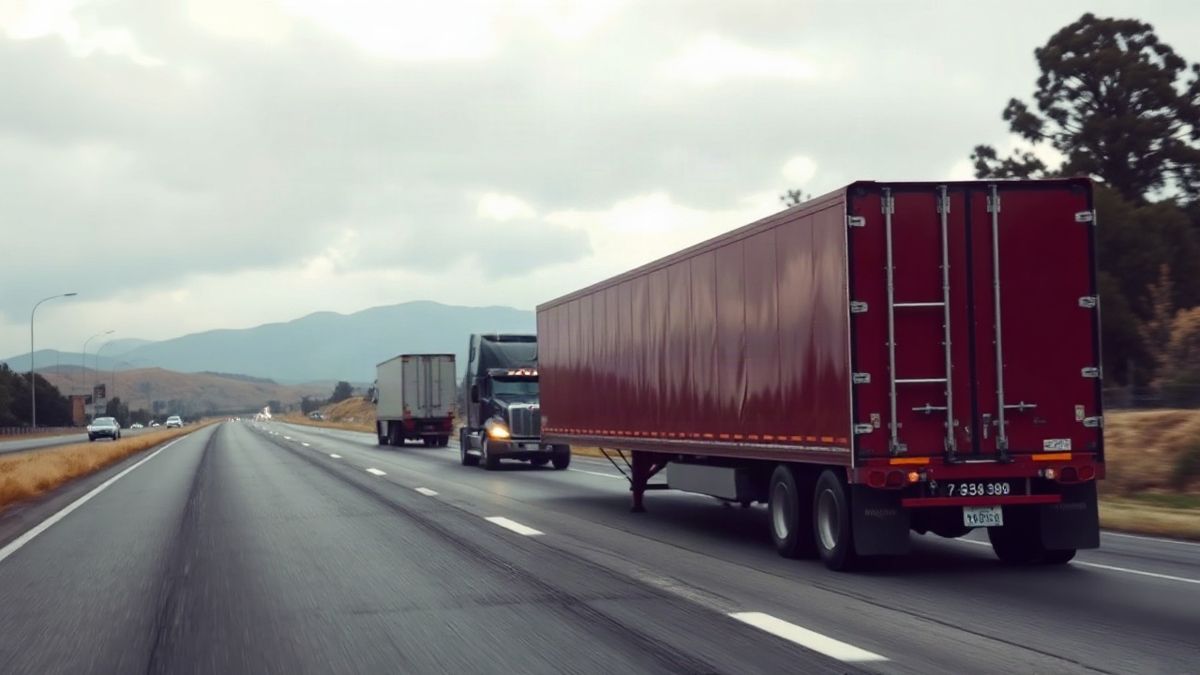
California has more mobile food businesses than any other state by a wide margin. Roughly 35,000 licensed Mobile Food Facilities operate across the state, from the loncheras parked outside construction sites in Stockton to the BBQ rigs at Bay Area office parks to the gourmet fusion trucks working San Francisco lunch rushes. If you operate one, you already know the business is harder than it looks: long hours, narrow margins, and one bad incident can shut you down for good.
Insurance is what stands between a bad day and the end of the business. This guide walks through every coverage food truck operators in California actually need, what it costs in real dollars (not the marketing brochure version), how it interacts with county health permits, and what changes if you cater private events or work festivals.
One important note up front: if you specifically run a taco truck or lonchera, we wrote a focused guide on taco truck insurance in California with cost numbers and Hartford coverage details for that exact business model. Bookmark it. The article you are reading now is the broader category guide that covers every food truck variant.
Why your personal auto insurance is worthless once you start serving food
This is the single most expensive misunderstanding food truck operators make, and it is worth being blunt about. Every personal auto insurance policy in California, with no exceptions across any carrier (GEICO, State Farm, Progressive, Mercury, AAA, Farmers, Allstate, every other one), contains language called the "commercial use exclusion."
That exclusion says the policy will not pay any claim where the vehicle was being used in connection with a business. The carrier does not have to prove that the accident was caused by the business use. They only have to prove that the vehicle was, in any way, being used for business at the time. If you were driving to a corporate lunch event when someone rear-ended you, that is a denied claim. If your truck was parked at your regular spot serving customers and a kid ran into the side of it, that is a denied claim. If you were headed to your commissary at 5 a.m. with no customers in sight, but the day's plan was to serve food, that is still a denied claim.
The carrier's adjuster does not need a complicated investigation. They ask one question on the recorded statement: "What were you doing at the time?" If your answer involves the business, the file gets closed. You become personally responsible for every dollar of damage, every medical bill, and every lawyer's fee. In California, where average medical costs after a serious accident exceed $80,000 and a third-party injury suit can clear $500,000, that is the kind of event that ends businesses and personal finances at the same time.
You need a commercial auto policy specifically rated for mobile food operations. There is no shortcut.
The four coverages every California food truck needs
A complete food truck insurance package in California is built from four core coverages, plus optional riders depending on how you operate. We will go through each one with what it actually covers and what it actually costs.
1. Commercial auto insurance
Commercial auto is the foundation. It covers the truck itself: liability if you cause an accident, collision damage to your own vehicle, comprehensive (theft, fire, vandalism, weather), uninsured motorist if someone else hits you, and medical payments for the driver. It is your personal auto insurance, but rated and underwritten for business use.
- Standard liability limits: $1,000,000 combined single limit is what most California food trucks carry. State minimums (15/30/5) exist but are useless for a commercial operation
- Physical damage: Cover the actual cash value of your truck. A used $35,000 step van and a $120,000 custom-built rig get rated very differently
- Hired and non-owned auto: Add this if anyone else ever drives a vehicle on your behalf, or if you use your personal car for business errands
- Typical cost: $1,200-$3,000 per year for a single truck with one or two drivers
2. General liability (GL) insurance
General liability covers everything that happens around your truck that is not a vehicle accident. A customer slips on grease near your serving window. Someone trips over your power cord at a festival. A claim arrives six months after a wedding catering job alleging food poisoning. Your generator melts a section of asphalt at a corporate park. All of those go through GL.
GL is also what makes you eligible to work most events. Festival organizers, corporate office parks, breweries, wedding venues, and farmers markets in California will not let you operate without a current Certificate of Insurance showing $1M/$2M GL with them named as an additional insured. No GL means no events, which for many trucks means no revenue.
- What it covers: Bodily injury to customers and the public, property damage at event sites, product liability (food poisoning and contamination claims), personal and advertising injury
- Standard limits: $1,000,000 per occurrence / $2,000,000 aggregate. This is what California venues require almost universally
- Typical cost: $500-$1,500 per year for most food trucks
3. Workers compensation insurance
If you have any employees, even one part-time helper, California Labor Code section 3700 requires workers comp. There is no small-business exemption. The penalty for operating without it is up to $100,000 in state fines plus criminal misdemeanor charges, and you become personally liable for every medical bill if a worker is hurt.
Food service is one of the higher-rate workers comp classifications because of burns, cuts, slips, and the exposure to hot oil and propane. Expect rates around $5-$8 per $100 of payroll for food truck operations.
- What it covers: Medical expenses, partial wage replacement, and rehabilitation if an employee is injured on the job
- Typical cost: $1,200-$3,500 per year for one to three employees in food service
- Sole proprietor exception: If it is just you, with zero employees, workers comp is technically optional. Once you bring anyone else on, it becomes mandatory
4. Equipment, contents, and inland marine coverage
Your generator, refrigeration, fryers, grill, point-of-sale system, propane tanks, and food inventory are all valuable property that gets damaged, stolen, or destroyed. Standard commercial auto only covers the truck shell and the manufacturer-installed components. Everything you added (and that is most of the value) needs separate coverage.
- Inland marine / business personal property: Covers your equipment whether it is in the truck, at the commissary, or at an event
- Equipment breakdown: Pays to repair or replace mechanical equipment that fails (compressor on the reach-in, generator, ventilation hood)
- Typical cost: $300-$900 per year combined
Real California food truck insurance cost ranges in 2026
Here is what a typical mobile food vendor in California should expect to pay this year. These are real numbers we see on actual quotes for trucks in our three markets (Stockton, San Jose, San Rafael) plus what we have written for trucks operating in LA County, San Diego, and Sacramento.
| Coverage | Annual cost range | Required? |
|---|
| Commercial auto (single truck) | $1,200 - $3,000 | Yes |
| General liability ($1M/$2M) | $500 - $1,500 | Yes (for venues + most counties) |
| Workers compensation (1-3 employees) | $1,200 - $3,500 | Yes (if you have employees) |
| Equipment / inland marine | $300 - $900 | Optional, recommended |
| Equipment breakdown | $200 - $600 | Optional |
| Liquor liability (if you serve) | $400 - $1,200 | Required if you serve alcohol |
| Total (owner-operator, no employees) | $1,500 - $3,500 | |
| Total (with 1-3 employees) | $3,500 - $8,000 | |
| Total (multi-truck fleet, alcohol service) | $8,000 - $20,000+ | |
To put that in perspective: an owner-operator running a single truck without employees in Stockton or San Jose typically pays $125-$290 per month all-in. With employees, $290-$670 per month. That is the cost of doing business legitimately. The alternative (operating uncovered or under-covered and hoping nothing happens) is the kind of bet that closes restaurants every week.
Need a food truck insurance quote? Call 209-670-1556. We are an authorized Hartford agent and bundle commercial auto, GL, workers comp, and equipment in one call. Same-day coverage available.
Necesitas seguro para tu food truck o lonchera? Llama al 209-670-1556. Hablamos espanol y ofrecemos cobertura el mismo dia.
Get a Quote
Call Now
What types of food trucks need this coverage
The coverage stack above is the same regardless of what you sell. We have written policies for all of these and more:
- Taco trucks and loncheras — the largest single category in California, especially in the Central Valley and East Side San Jose. Detailed cost guide: taco truck insurance in California
- Ice cream trucks and paleteros — lower auto exposure (slow speeds, residential routes) but higher third-party injury risk because customers are mostly children running into the street. Liability limits matter
- BBQ trucks and smoker trailers — higher fire-risk classification because of open flame and grease. Carriers want to see clear documentation of fire suppression and propane safety
- Fusion / gourmet food trucks — usually higher truck values ($80K-$150K custom builds), which drives the auto premium
- Catering trucks and mobile kitchens — same coverage stack, but you will need event-specific certificates issued frequently
- Coffee trucks and dessert trucks — lower physical-damage exposure typically, but full GL is still required for events
- Halal carts and hot dog carts (towable trailers) — the trailer rides on its own commercial trailer policy; the towing vehicle needs separate auto coverage
- Beverage and craft cocktail trucks — require additional liquor liability coverage on top of GL
If you operate something not on this list, the answer is almost always still "yes, we can write it." Specialty mobile food businesses are common.
California county-by-county permit requirements
California has 58 counties, and food truck permitting is administered at the county level by the local environmental health department, not the state. The insurance side of the permit application varies meaningfully by county. Here is what we see most often in our service areas, plus the major LA / SF / San Diego markets.
San Joaquin County (Stockton area)
The county requires a current Certificate of Insurance for general liability ($1M minimum) at the time of Mobile Food Facility permit issuance and renewal. Commissary agreement is required. Permits run roughly $400-$700 annually depending on the truck class.
Santa Clara County (San Jose area)
Santa Clara has tightened MFF requirements over the past three years. Expect to provide a COI showing $1M GL with the county named as additional insured for some permit types. Commissary documentation is mandatory. Some private event venues in the South Bay (Levi's Stadium, San Jose Convention Center events) require $2M GL minimum.
Marin County (San Rafael area)
Marin County health department requires standard MFF documentation including proof of insurance. The Marin Civic Center Farmers Market and most private Marin venues require $1M GL with the venue named as additional insured.
Los Angeles County
The largest food truck market in the state. LA County requires a Mobile Food Facility permit with health-department-approved commissary and signed Hold Harmless Agreement. Many permitted commissaries now require their tenants to carry $1M GL naming the commissary as additional insured. The City of Los Angeles also requires a separate business tax registration.
City and County of San Francisco
SF requires both a Department of Public Health MFF permit and Department of Public Works street vending authorization for some operations. Expect to provide $1M GL documentation. Spots and permits in SF are heavily restricted by zone, so check before investing in a truck targeting the SF market specifically.
San Diego County
San Diego County permits MFFs through Department of Environmental Health. Insurance requirements are similar to LA: GL with $1M minimum, commissary agreement, and event-specific certificates for festivals and beach events.
For the official statewide rules, the California Department of Public Health Mobile Food Facilities page is the authoritative source on health code requirements (CalCode / California Retail Food Code, sections 113700-114437.10). For workplace safety standards including those that apply once you have employees, see the OSHA restaurant and food service guidance. For background on commercial insurance fundamentals, the NAIC Business Owners Policy guide covers BOP basics.
Catering, festivals, and special-event riders
Food trucks make a lot of their best money outside of regular operations: weddings, corporate events, beer gardens, festivals, county fairs, brewery yards. Every one of those venues will ask for a Certificate of Insurance before you set up. Here is how it actually works.
Your existing GL policy is what generates the certificate. There is no new policy to buy for a one-time event in most cases. What you need from your broker is a Certificate of Insurance (COI) document listing the venue, the event organizer, and often a property manager or general contractor as Additional Insureds. The COI shows your $1M/$2M limits and effective dates.
A few practical points food truck operators learn the hard way:
- Most COIs are issued at no extra premium. If you have an active GL policy, your broker should produce them within an hour or two during business hours, no fee. We do not charge for routine COIs
- Some venues require waiver of subrogation. This is a one-line endorsement most carriers add for free. Tell your broker upfront so they include it
- Festivals often require $2M aggregate, not $1M. Read the vendor agreement carefully a week ahead, not the morning of
- Selling alcohol at the event requires liquor liability. If you bring beer or wine to your booth, your standard GL will not cover incidents involving impaired guests. You need a separate liquor liability rider, which costs about $400-$1,200 annually if you do this regularly, or a one-time event endorsement that runs $150-$400
- Out-of-state festivals. If you book Burning Man, the Reno Rib Fest, or another out-of-state event, confirm with your broker that the policy territory includes that state. Most California-issued GL policies cover the contiguous US, but verify
What food truck owners get wrong (and what it costs them)
After writing food truck coverage for over a decade, we see the same expensive mistakes repeat. Avoid these:
Mistake 1: Running on personal auto insurance to "save money"
Already covered above. The savings are about $1,000-$2,000 per year. The downside is six-figure personal liability the moment something happens. It is not a close call.
Mistake 2: Taking the cheapest GL policy without reading the exclusions
Some non-standard market GL policies for food trucks exclude product liability (which is the food poisoning coverage) or exclude assault and battery (which can come up at late-night service in busy areas). Read the declarations page. If product liability is excluded on a food truck policy, that policy is nearly worthless for your actual exposures.
Mistake 3: Not adjusting coverage as the business grows
You started with one truck and a part-time weekend operation. Now you have two trucks, three employees, and you book corporate caterings every week. Coverage needs to scale with the operation. Annual review with your broker is the cheap insurance against the gap year nobody catches until a claim hits.
Mistake 4: Missing additional insured endorsements
You signed a contract with a brewery to be their regular weekend food vendor. The contract requires you to name the brewery as additional insured, with a waiver of subrogation, on a primary and non-contributory basis. If you signed without flagging this to your broker, you are technically in breach of contract and the brewery's insurance may not back you up if something happens. Always send vendor agreements to your broker before signing.
Mistake 5: Treating workers comp as optional with "1099 contractors"
California's worker classification rules under AB 5 and the ABC test are aggressive. Calling your dishwasher a "1099 contractor" almost never holds up under audit. If they wear your shirt, work hours you set, on equipment you provide, they are an employee, and you owe workers comp. The fines and back premium when this gets caught can total tens of thousands of dollars.
Why Hartford for food truck insurance
Via Rapida Services and our parent agency Insurance City Agency LLC are an authorized Hartford commercial insurance agent. Hartford runs one of the most established mobile food and small commercial programs in the country, and there are real reasons we lead with them for food trucks:
- Industry-specific class codes. Hartford has dedicated mobile food classifications, not a generic "miscellaneous food service" bucket that gets you priced as if you ran a sit-down restaurant
- Bundled BOP options. Hartford packages commercial auto, GL, and equipment into a Business Owner's Policy that runs cheaper than buying each separately
- A+ AM Best rating. Strong financial backing matters when claims are large
- Fast COI turnaround. Their certificate-issuance system lets us produce vendor certificates same-day
- National claims handling. If you travel for events, Hartford's network handles claims in any state without sending you back to a California office
Hartford is not the only market for food trucks — we also write through Progressive Commercial, Nationwide, Liberty Mutual, and California specialty markets when those fit better. We quote across the panel and recommend what actually fits your operation.
How to get covered today
Food truck insurance is one of the few business insurance products that genuinely can be issued same-day in California. Here is what we need to quote you, and what makes it fast:
- Vehicle information: Year, make, model, VIN, current value (or purchase price if recent), and whether it is custom-built
- Driver information: Full name, date of birth, and driver's license number for everyone who will operate the truck
- Business details: Business name, EIN if you have one, estimated annual revenue, number of employees and gross payroll, primary territory of operation
- Where you operate: Cities and counties for regular service, plus events and festivals you book
- Current insurance: Declarations page from any existing policy so we can avoid gaps and stack the right limits
- Equipment list: Rough total value of equipment inside the truck (generator, refrigeration, fryer, grill, POS, etc.)
Most of this fits on a single page. Quote in 30 minutes, binder issued same day, certificate of insurance emailed within the hour.
Call 209-670-1556 or walk into one of our three California offices:
- Stockton (Insurance City) — 956 W. Robinhood Dr. Primary commercial office for the Central Valley
- San Jose — 25 N. 14th St. Bilingual staff, Mon-Fri 10-6, Sat 10-3
- San Rafael — 9 Vivian St. Marin and North Bay food truck coverage. Mon-Fri 10-6, Sat 10-3
For the broader business insurance picture beyond food trucks, see our commercial insurance overview. Also relevant for Stockton operators: our local market guide on business insurance in Stockton, CA.
Frequently Asked Questions
How much does food truck insurance cost in California?
For most owner-operators, food truck insurance in California runs $1,500-$3,500 per year for the basics: commercial auto plus a general liability policy with $1M limits. Add employees and workers compensation pushes total cost into the $4,000-$8,000/year range. Custom-built trucks valued over $80,000, multi-truck operations, and trucks that work festivals all push the upper end higher.
Does my personal auto insurance cover my food truck?
No. Every California personal auto policy contains a commercial-use exclusion. The moment you use the vehicle for business — driving to a service location, hauling product, serving customers — your personal policy will deny the claim. You need a commercial auto policy rated for mobile food operations.
What insurance is required for a food truck in California?
California law requires commercial auto insurance on the vehicle and workers compensation if you have any employees. Most counties and event venues separately require general liability coverage with $1M per occurrence and $2M aggregate limits before they will issue your Mobile Food Facility permit or let you serve at their event. In practice, all three coverages are mandatory if you want to operate.
Do I need a separate policy for catering events and festivals?
Usually no separate policy, but you do need a special-event endorsement or rider on your general liability policy. Many California festivals (LA County Fair, Stockton Asparagus Festival, Gilroy Garlic Festival, Bay Area food truck rallies) require event-specific certificates of insurance naming the venue and organizer as additional insureds. Your broker issues these certificates from the existing GL policy at no extra premium for one-time events.
Can I get same-day food truck insurance in California?
Yes. Via Rapida Services issues same-day commercial auto and general liability coverage for food trucks once we have your vehicle information, driving record, and a credit card or first-month payment. Most truck owners walk in or call in the morning and have a certificate of insurance emailed to them by the afternoon. Cobertura el mismo dia. Call
209-670-1556.
What does food truck insurance NOT cover?
Standard food truck policies do not cover: intentional acts, claims arising from undisclosed alcohol service, employee injuries (those are workers comp), spoilage of food product (that requires a separate product spoilage rider), and equipment breakdown from normal wear-and-tear. Food poisoning claims ARE covered under general liability product liability — that is one of the main reasons GL exists.
Protect your food truck business today. Call 209-670-1556 for a commercial insurance quote. Hartford authorized agent. Three California offices. Hablamos espanol. Cobertura el mismo dia.
Get a Quote
Call: 209-670-1556
Reviewed by Santo Militello, California-licensed Property & Casualty agent (CA License #1737723) and owner of Via Rapida Services — CA Insurance License #6003045. Our licensed team brings more than 70 years of combined insurance experience. Last reviewed 2026-05-27.