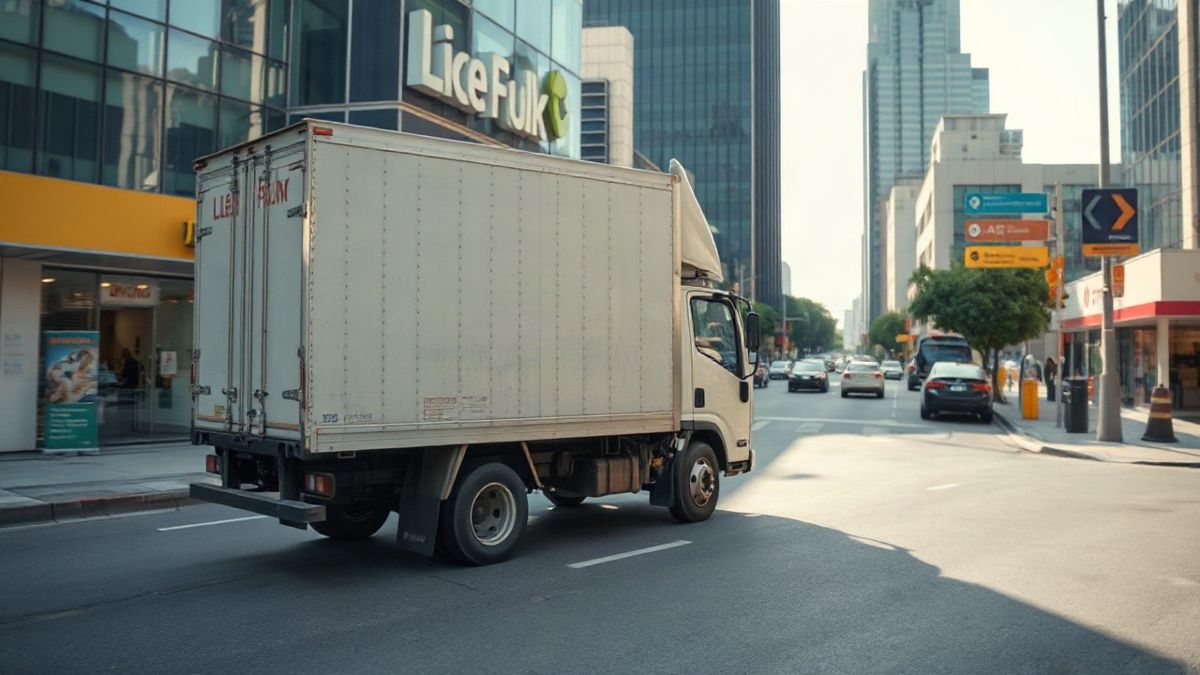
The Short Answer: What a San Jose Food Truck Needs to Operate Legally
A San Jose food truck operating legally needs: (1) a Mobile Food Facility (MFF) permit from Santa Clara County Environmental Health, (2) commercial auto insurance on the truck, (3) general liability insurance with product liability included — at least $1,000,000 per occurrence — and (4) workers' compensation the moment you hire anyone. City-permitted events and farmers markets also require a certificate of insurance (COI) naming them as additional insured. Miss any of these and you are either operating illegally, uninsured, or locked out of the San Jose events and markets where money gets made.
What Permits Does a San Jose Food Truck Actually Need?
Mobile Food Facility permit — Santa Clara County Environmental Health
The foundation permit for any food truck operating in San Jose. Santa Clara County Environmental Health issues Mobile Food Facility (MFF) permits for all food trucks and mobile food operations operating in the county, including the City of San Jose. Annual permit fees run roughly $350 to $650 depending on your facility classification — a fully equipped truck preparing food from raw ingredients runs higher than a truck selling pre-packaged items. You also need a commissary agreement identifying a permitted facility where the truck is cleaned, stocked, and maintained between service periods.
City of San Jose Mobile Food Vendor permit
If you park on public streets or City of San Jose property, you need a separate permit from the City. San Jose's Office of Economic Development handles mobile food vendor permits for city sidewalks and public spaces. The county health permit and the city vendor permit are separate — you need both if you operate on public streets.
Temporary Food Facility permits for markets and events
Each time you vend at a farmers market, festival, corporate event, or other permitted gathering in Santa Clara County, you typically need a Temporary Food Facility (TFF) permit from Santa Clara County Environmental Health for that specific event. TFF permits generally run $75 to $150 per event depending on duration and complexity. The San Jose Downtown Farmers Market, San Pedro Square Market events, and Berryessa Flea Market all operate under this framework — organizers will not allow you to set up without a valid TFF permit in hand.
Vending in San Jose and need a COI for an event or market? Our San Jose office is at 25 N. 14th St — we can issue a certificate of insurance the same day your policy is bound, by phone or WhatsApp, English y español.
Get a Quote
Call 209-670-1556
What Insurance Does a San Jose Food Truck Need?
Food truck insurance is a stack of coverages, not a single policy. Each piece protects a different piece of your exposure. Here is what each does and why you cannot skip it:
Commercial auto insurance (required, not optional)
Your personal auto policy does not cover commercial use. Period. If you operate your food truck for business — even part of the time — and get into an accident while on a personal policy, the insurer will deny the claim and leave you personally liable. California law requires commercial auto coverage for any vehicle operated commercially. For a food truck in the South Bay, commercial auto typically runs $2,800 to $6,500 per year depending on the truck's value, your driving record, and annual mileage. San Jose's denser traffic and higher vehicle theft rates in some zip codes can push premiums above what you'd pay in less urban parts of the state.
General liability with product liability
General liability covers third-party bodily injury and property damage that occurs in connection with your operations — a customer slips near your truck, your equipment damages a neighboring vendor's setup, a patron claims your food made them sick. San Jose farmers markets and city-permitted events typically require at least $1,000,000 per occurrence / $2,000,000 aggregate. Many corporate campuses and tech company event venues in the South Bay require $2,000,000 per occurrence. Make sure your policy explicitly includes product liability — standard GL covers your operations but product liability is the language that extends coverage to the food you sell. Annual GL premiums for a San Jose food truck typically run $700 to $2,000 per year depending on annual revenue and the types of events you work.
Workers' compensation (required the moment you have any employee)
California Labor Code Section 3700 is unambiguous: the moment you hire even one part-time employee, you need workers' compensation — no grace period, no exception for seasonal or temporary help. A high school student working weekend markets counts. Operating without workers' comp is a misdemeanor in California, and you are personally on the hook for an injured worker's full medical costs and lost wages. Solo owner-operators with zero employees are exempt, but that exemption disappears the day you add any helper.
Product liability (confirm it's explicitly included)
"'In our book of food-service clients, the most expensive surprise we see isn't a missing policy — it's a general liability policy that was written narrow and silently excludes product-related claims,' says the commercial team at Via Rapida Services. 'Food poisoning, allergic reaction, foreign object — if product liability language isn't on the declarations page, those claims fall through the gap.'"
What Does Food Truck Insurance Cost in San Jose in 2026?
| Coverage | Typical Annual Cost (San Jose) | Priced Mainly On |
|---|
| Commercial auto | $2,800 – $6,500 | Truck value, driving record, mileage |
| General liability (incl. product liability) | $700 – $2,000 | Revenue, event exposure, limits |
| Workers' compensation | Varies by payroll | Payroll & employee job duties |
| Commercial property / kitchen equipment | $350 – $1,000 | Equipment value |
| Full stack (solo owner-operator, no employees) | $3,800 – $5,500 | All of the above |
Real-world scenario
San Jose taco truck, 1 owner-operator, farmers markets + corporate lunch spots
Commercial auto on a $50,000 truck with a clean record: ~$3,500/year. General liability with product liability at $1M/$2M: ~$950/year. No employees, so no workers' comp. Total insurance stack: ~$4,450/year — about $371/month. Add one part-time employee working two markets per week and workers' comp adds roughly $1,400–$2,000/year depending on payroll. Corporate event venues requiring $2M per occurrence may mean upgrading GL limits, adding $200–$400/year.
What Do San Jose Farmers Markets and Events Require?
San Jose and the broader South Bay market circuit has somewhat higher insurance requirements than other California cities, driven by corporate event venues and city ordinance. Here's what to expect:
- San Jose Downtown Farmers Market: $1,000,000 per occurrence / $2,000,000 aggregate GL, with the market organization listed as additional insured on your COI.
- San Pedro Square Market events: $1M/$2M GL minimum, additional insured endorsement naming the venue and event organizer.
- City of San Jose permitted events: The City requires $1,000,000 per occurrence GL naming the City of San Jose as additional insured. City parks events under a Special Event Permit follow the same requirement.
- Corporate and tech campus events: Many South Bay tech employers host food truck events on private property and commonly require $2,000,000 per occurrence GL plus naming the company as additional insured. Confirm requirements before booking — they vary by company and venue.
- Proof of Santa Clara County MFF permit: Required at check-in for most permitted markets. The county health permit must be in hand, not pending.
COIs are issued same-day once the underlying policy is bound. If you are booking a new venue and they send you an insurance requirement sheet, bring it to your broker — not your carrier directly. A broker with binding authority can move faster and handle the additional insured wording correctly on the first try.
Coverage Gaps San Jose Food Truck Operators Most Often Miss
Commercial property for kitchen equipment inside the truck
Your commercial auto policy covers the truck in transit — it does not cover the fryers, griddles, generators, refrigeration units, and POS system inside it. A separate commercial property policy or an inland marine endorsement covers that equipment against fire, theft, and damage whether the truck is moving or parked. For a South Bay truck with $25,000 to $50,000 of kitchen equipment, skipping this coverage is a significant gap. Annual cost: roughly $350 to $1,000 depending on equipment value and location.
Non-owned auto for employees using personal vehicles
If any employee ever drives their personal car on your business's behalf — picking up supplies, going to the commissary — and gets into an accident, your business can be held liable. Non-owned and hired auto coverage closes that gap and is typically added to your commercial auto policy as an endorsement for $100 to $350 per year.
Verifying product liability is explicitly on the policy
Ask your broker to pull the policy declarations page and point to the product liability language specifically. "Included in GL" is not the same as "explicitly listed." A policy written with a food exclusion or a narrow products-completed operations definition can leave a food poisoning or allergic reaction claim completely uncovered. Find out before your first event — not after.
En Español
¿Tienes un food truck en San Jose y prefieres leer en español? Tenemos la misma guía completa sobre seguro para food trucks en San Jose — qué cobertura necesitas, cuánto cuesta y qué piden los mercados y eventos.
Lee la guía en español ›
How to Get Food Truck Insurance in San Jose as a Spanish-Speaking Operator
A large share of San Jose's food truck operators are bilingual or primarily Spanish-speaking — and most standard insurance brokers don't serve that community well. Via Rapida Services is a licensed independent brokerage (CA License #6003045) with a physical office at 25 N. 14th St, San Jose (Mon–Fri 10am–6pm, Sat 10am–3pm). We work in English and Spanish, handle food truck and restaurant commercial coverage, and can issue COIs the same day a policy is placed. We compare across multiple carriers — including commercial programs from The Hartford — to match your operation to the right coverage at a fair price, with no broker fee on standard commercial policies placed through our San Jose office.
We serve all of Silicon Valley and the South Bay. Call, WhatsApp, or walk in — English y español.
Frequently Asked Questions
How much does food truck insurance cost in San Jose?
A San Jose food truck owner-operator with no employees typically pays $3,800–$5,500 per year for commercial auto and general liability combined. The South Bay's higher vehicle values and denser traffic environment push commercial auto premiums above statewide averages for comparable trucks. Adding workers' comp for employees adds $1,400–$2,200+ depending on payroll. Corporate venue requirements for $2M per occurrence GL can add $200–$400/year to your GL premium.
What permits does a food truck need in San Jose?
At minimum: a Mobile Food Facility (MFF) permit from Santa Clara County Environmental Health ($350–$650/year), and a City of San Jose Mobile Food Vendor permit if you operate on city streets or city property. Each farmers market, festival, or permitted event also requires a Temporary Food Facility (TFF) permit from the county ($75–$150 per event). You may need all three simultaneously depending on where and how you operate.
What insurance do San Jose farmers markets and events require?
Most San Jose farmers markets and city events require $1,000,000 per occurrence / $2,000,000 aggregate GL, naming the venue or organizer as additional insured on your COI. Corporate and tech campus events frequently require $2,000,000 per occurrence. Confirm the specific requirement from each event organizer before booking — South Bay requirements vary more than in other California cities.
Does a food truck owner need workers' comp in California?
Yes — California Labor Code Section 3700 requires workers' compensation from the first employee, including part-time and seasonal workers. Solo owner-operators with zero employees are exempt. Operating without workers' comp when you have employees is a misdemeanor, and you are personally liable for a hurt worker's medical expenses and lost wages.
Does my personal auto policy cover my food truck?
No. Personal policies exclude commercial use. If you drive your food truck for business and file a claim on a personal auto policy, the insurer will deny it. You need a commercial auto policy for any vehicle operated commercially, regardless of how often you also use it personally.
Does general liability cover food poisoning claims?
Most GL policies for food businesses include product liability, which covers foodborne illness claims. But confirm it's explicitly in your policy — not assumed. Ask your broker to show you the product liability language on the declarations page before your first event. If it isn't there, request an endorsement.
Reviewed by Santo Militello, California-licensed Property & Casualty agent (CA License #1737723) and owner of Via Rapida Services — CA Insurance License #6003045. Our licensed team brings more than 70 years of combined insurance experience. Cost ranges are general 2026 estimates for the San Jose / South Bay market; your premium depends on your specific operation. Permit fee ranges sourced from Santa Clara County Environmental Health and City of San Jose Office of Economic Development. Last reviewed 2026-08-23.