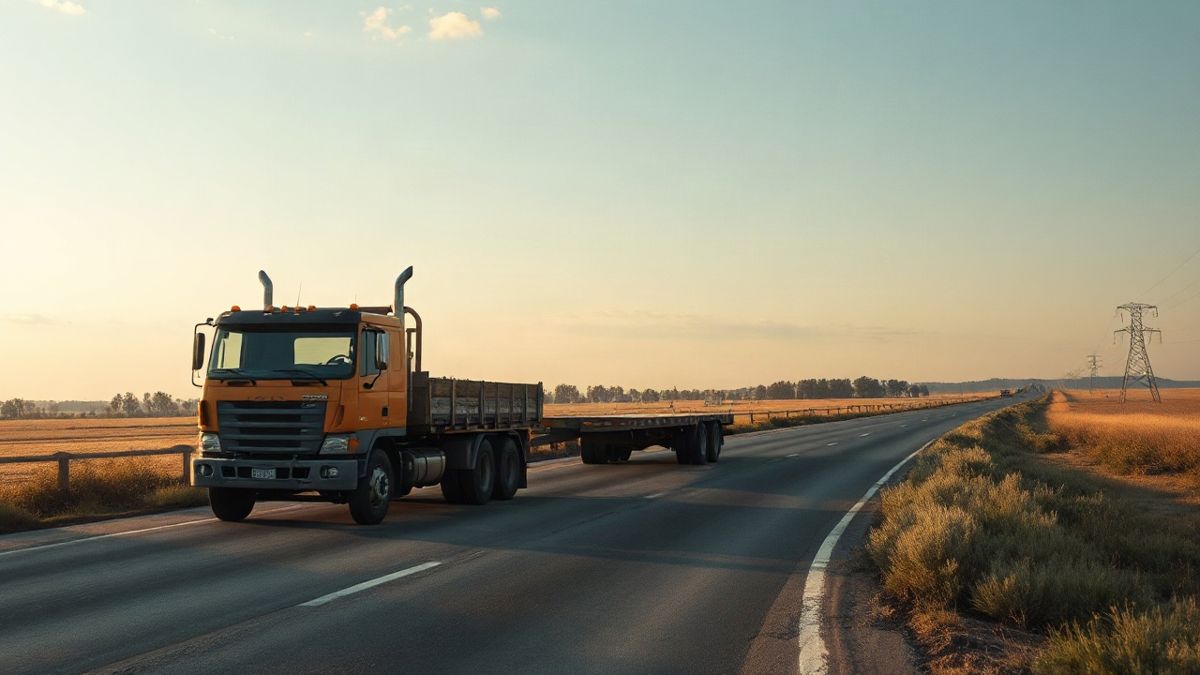
Trucking Insurance California — What It Costs and What You Need
Whether you run a single box truck for local deliveries or a fleet of delivery vans serving the Central Valley and Bay Area, commercial truck insurance in California is not optional — and it is not cheap. Here is what you need, what it costs, and how to structure it right.
Commercial trucking in California covers everything from owner-operators running a single box truck to businesses with fleets of cargo vans and delivery vehicles. The insurance requirements are different from personal auto, the costs are higher, and the consequences of being underinsured are severe — a single accident with a commercial truck can generate millions in liability.
Types of Commercial Trucks and Their Insurance Needs
Box Trucks (14,001 – 26,000 lbs GVWR)
The workhorses of local delivery and moving operations. Isuzu NPR, Ford E-450, Hino 195 — these trucks need commercial auto with higher liability limits than personal vehicles because their size and weight create proportionally more damage in an accident.
Used by contractors, delivery services, catering companies, and mobile businesses. Even though they drive like large cars, they are commercial vehicles doing commercial work and need commercial auto insurance.
Small Fleets (2-10 vehicles)
Businesses with multiple trucks or vans — plumbing companies, HVAC contractors, delivery services, catering operations. Fleet policies can reduce per-vehicle cost compared to individual policies.
What Coverage Do You Need?
Commercial Auto Liability
This is the most important coverage. It pays for injuries and property damage you cause to others in an accident. California minimums are $15,000/$30,000/$5,000, but these are catastrophically inadequate for a commercial truck. A box truck rear-ending a passenger car can easily generate $500,000+ in injury claims.
Recommended minimums:
Private carrier (your own goods): $1 million CSL
For-hire carrier (hauling others' goods): $750,000 minimum required by FMCSA; $1 million recommended
Hazmat: $1 million to $5 million depending on commodity
Physical Damage (Collision + Comprehensive)
Covers damage to your own truck. Collision covers accidents; comprehensive covers theft, vandalism, fire, weather, and falling objects. For a box truck worth $40,000-$80,000, going without physical damage coverage is a gamble most businesses cannot afford.
Cargo Insurance
If you haul goods belonging to others (for-hire operations), you need cargo insurance to cover the value of the goods in transit. If the load is damaged, stolen, or destroyed in an accident, cargo insurance pays the shipper. Limits typically range from $25,000 to $250,000 depending on what you haul.
General Liability
Commercial auto covers accidents on the road. General liability covers everything else: loading dock injuries, property damage at a customer's location, and other business-related claims that do not involve driving. Read more about business insurance coverage.
Workers Compensation
Required if you have any employees, including drivers. Trucking workers comp rates are based on the class code for your type of operation. Under SB 216, even sole proprietor operators with a CSLB license will need workers comp by 2028.
How Much Does Trucking Insurance Cost in California?
Vehicle Type
Annual Cost Per Vehicle
Delivery Van (Transit, Sprinter)
$2,500 – $5,000
Box Truck (under 26,000 lbs)
$3,000 – $8,000
For-Hire Box Truck (with cargo)
$8,000 – $15,000
Fleet (5+ vehicles, per unit)
$2,000 – $6,000
Factors that increase your cost:
Drivers under 25 or with less than 2 years CDL experience
Moving violations or accidents in the past 3 years
For-hire operations (vs. private carrier)
Higher-value cargo
Longer radius of operation (local vs. regional vs. national)
Operating in congested metro areas (Bay Area rates are higher than Central Valley)
Factors that decrease your cost:
Experienced drivers with clean MVRs
Fleet telematics and dash cameras
Multi-vehicle fleet discounts
Clean claims history
Bundling with GL and workers comp through the same carrier
Need trucking insurance in California? Via Rapida Services is an authorized Hartford agent. Hartford, rated A+ (Superior) by AM Best, writes commercial auto for box trucks, delivery vans, and fleet operations.
Many small business owners try to save money by insuring their work van or truck under a personal auto policy. This works until it does not — and when it does not, the timing is always terrible: a serious accident with injuries.
Personal auto policies contain a business use exclusion. If your truck is involved in an accident while being used for business — delivering goods, driving to a job site, hauling materials — the personal auto carrier will deny the claim. You are uninsured for that accident.
If you haul for other businesses, deliver for retailers, or work as a subcontracted carrier, you will need to provide Certificates of Insurance (COIs) to your clients. Every shipper, broker, and general contractor requires proof of your coverage before they give you loads or contracts.
Via Rapida issues COIs same day. When you need to add a new additional insured for a new client, we can turn it around in hours — not days.
Frequently Asked Questions
How much does trucking insurance cost in California?
$3,000 to $8,000 per year per vehicle for box trucks and delivery vans. For-hire trucking with FMCSA authority costs $8,000 to $20,000+ per truck.
What insurance does a box truck need?
Commercial auto liability (minimum $750,000 for for-hire), physical damage, cargo insurance if hauling others' goods, general liability, and workers comp if you have employees.
Is commercial auto insurance required for delivery vans?
Yes. Any vehicle used primarily for business must be insured under commercial auto. Personal auto will deny claims during business use.
What is the minimum insurance for trucking in California?
$750,000 liability for for-hire trucking with FMCSA authority. Practically, $1 million CSL is recommended for any commercial truck operation.
Does Hartford insure commercial trucks?
Yes. Hartford, rated A+ (Superior) by AM Best, writes commercial auto for box trucks, delivery vans, and small fleets. Via Rapida is an authorized Hartford agent. Call 209-670-1556.
Reviewed by Santo Militello, California-licensed Property & Casualty agent (CA License #1737723) and owner of Via Rapida Services — CA Insurance License #6003045. Our licensed team brings more than 70 years of combined insurance experience. Last reviewed 2026-05-27.