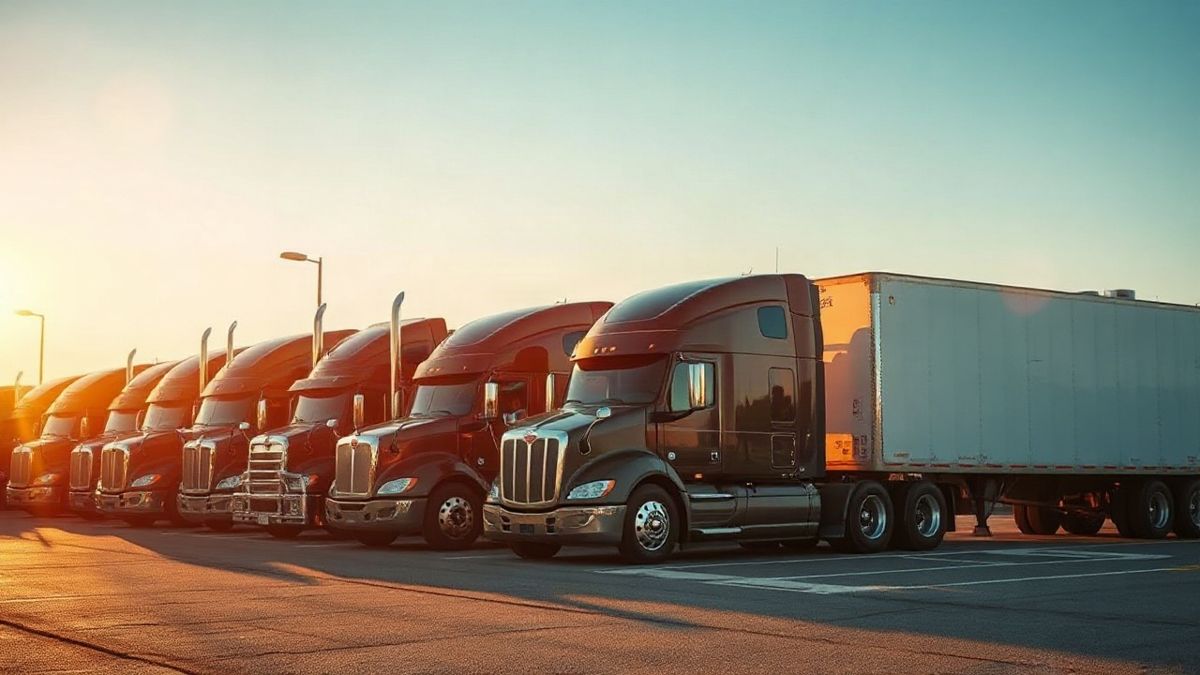
Why the Central Valley is a unique trucking market
The San Joaquin Valley moves more freight than most people realize. Stockton sits at the junction of I-5 and CA-99 with direct access to the Port of Stockton — one of California's most active inland ports for bulk goods, containers, and agricultural commodities. Fresno, Modesto, Turlock, and Visalia anchor the agricultural core, moving produce, refrigerated goods, and livestock feed year-round.
What this creates for truckers is a market where a significant portion of loads are agricultural or temperature-sensitive — cargo types that carry their own insurance requirements. Many Central Valley trucking companies also run routes that cross into Nevada, Arizona, or Oregon, which means interstate authority and federal FMCSA rules come into play. If you haul across state lines even occasionally, you need to meet federal requirements, not just California's.
What coverages does a trucking company in California need?
Commercial trucking insurance is not a single policy — it's a stack of coverages, each addressing a different exposure. Here's what the stack looks like for a typical Central Valley operation:
Primary liability
This is the most critical and most expensive coverage. Primary liability pays for bodily injury and property damage you cause to others while driving under your motor carrier authority. The FMCSA requires a minimum of $750,000 for general freight carriers crossing state lines, and at least $1,000,000 for carriers hauling hazardous materials. Most freight brokers require $1,000,000 in their load contracts regardless of what the minimum says — so if you run loads through load boards or freight brokers, plan for a $1,000,000 limit.
Physical damage (comprehensive + collision)
This covers your own truck — damage from accidents, theft, fire, vandalism, weather, and more. It's optional legally but virtually always required by lenders if you're financing or leasing your truck. Coverage is based on the actual cash value of your equipment. A 2022 Peterbilt 389 running the Stockton-to-LA corridor might be insured for $120,000 to $180,000 ACV depending on mileage and configuration.
Motor truck cargo insurance
Cargo insurance covers the freight you're hauling if it's damaged, destroyed, or stolen. It is not federally mandated for most carrier types, but freight brokers virtually always require proof of cargo coverage before dispatching a load — commonly at a minimum of $100,000 per occurrence. Produce haulers and refrigerated carriers operating in the Central Valley often need limits of $250,000 or higher because a full reefer load can easily exceed that value. Annual cargo premiums typically run $500 to $2,000 depending on commodity and mileage.
Bobtail / non-trucking liability
If you're an owner-operator leased to a motor carrier, bobtail coverage protects you when you're driving the truck on personal time or operating outside of the carrier's dispatch — situations when the carrier's primary liability doesn't apply to you. Annual bobtail premiums typically run $500 to $900 per truck. It's inexpensive but closes a gap that has surprised more than a few owner-operators after a claim.
Trailer interchange
If your operation involves pulling trailers owned by someone else — common in drop-and-hook setups, intermodal operations near Stockton's port, and agricultural hauling — trailer interchange coverage pays for damage to that trailer while it's in your care, custody, and control. Without it, you're liable out of pocket for a trailer you don't own.
Workers' compensation
California requires workers' compensation the moment you employ even one driver, full-time or part-time. Under California SB 216, there are no exceptions for small fleets. Workers' comp for truck drivers is priced on payroll and the hazard class code — trucking is a high-hazard class, so premiums run higher than in most industries.
General liability
This covers business operations beyond the truck — slip-and-fall at your yard, damage you cause while loading or unloading, and contractual liability. Many shippers and terminals require a certificate of insurance showing general liability before allowing you on their property.
Need a commercial trucking quote in Stockton or the Central Valley? Our bilingual commercial team can quote primary liability, cargo, physical damage, and occupational accident together — call or get started online.
Get a Quote
Call 209-670-1556
What does trucking insurance cost in Stockton and the Central Valley?
Here are realistic 2026 annual cost ranges for a single-truck operation in the San Joaquin Valley. These are not quotes — your actual cost depends on cargo type, operating radius, CDL history, and truck value.
| Coverage | Typical Annual Cost | Primary rating factor |
|---|
| Primary liability ($1M) | $5,000 – $14,000 | Cargo type, radius, violations |
| Physical damage | $2,000 – $6,000 | Truck value & age |
| Motor truck cargo | $500 – $2,000 | Commodity, limits, mileage |
| Bobtail / non-trucking | $500 – $900 | Radius, truck type |
| General liability | $700 – $2,000 | Revenue, operations |
| Workers' comp | Priced on payroll | Driver count, claim history |
| Full package (1 truck) | $8,000 – $18,000+ | All factors combined |
A typical Central Valley owner-operator
1 truck · general freight · clean record · 3 years in business
Primary liability ($1M): ~$7,200 · Physical damage ($150k ACV): ~$3,400 · Cargo ($100k): ~$900 · Bobtail: ~$700 · Total: approximately $12,200/year — or about $1,017/month. Add violations or switch to hazmat hauling and that total can jump $3,000–$6,000 in the first year.
What raises your trucking insurance rate — and what lowers it
Factors that raise your premium
- CDL violations — any moving violation in the last 36 months is scrutinized; speeding 15+ mph over the limit or a logbook violation can be treated like an at-fault accident by some carriers.
- At-fault accidents — a single at-fault accident can raise your primary liability premium by 40–80% for up to 5 years.
- Hazardous materials — FMCSA requires a $1,000,000 minimum for most hazmat, and carriers charge accordingly. Placarded hazmat can double your primary liability cost.
- Less than 2 years in business — newer USDOT numbers are considered higher risk; expect to pay more until you have 2–3 years of claims-free operation under your authority.
- Refrigerated or oversized loads — higher cargo limits and specialized equipment increase both cargo and physical damage premiums.
What helps lower your premium
- Clean MVR and FMCSA safety rating — a satisfactory DOT safety rating and a 3-year clean CDL record are the biggest levers. Carriers reward both.
- Dash cams — many commercial trucking carriers offer discounts of 5–15% for verified dash cam programs that can exonerate drivers in disputed claims.
- Higher deductibles on physical damage — moving from a $1,000 to a $2,500 deductible can reduce physical damage premium by 15–20% annually.
- Bundling coverages with one carrier — writing primary liability, cargo, and bobtail with the same carrier often produces a package discount versus placing them separately.
- Paying annually vs. monthly — monthly installment plans add financing charges; paying in full at binding often saves 5–8%.
"In the San Joaquin Valley, owner-operators often come to us after a broker in another state sold them a policy that didn't meet California's motor carrier permit requirements," says the commercial team at Via Rapida Services. "The most common gap we see is cargo coverage set below what the freight broker's load contract actually requires — or a primary liability limit written for intrastate when the driver is routinely crossing into Nevada or Arizona."
California motor carrier permit — what it is and why it matters
Beyond federal FMCSA registration, California requires its own Motor Carrier Permit (MCP) for commercial vehicles over 10,000 lbs GVWR operating on California highways. The MCP is issued by the California DMV, and you cannot legally operate in the state without one.
To get an MCP, you must first show proof of primary liability insurance that meets California minimums — which means your insurance must be filed electronically with the DMV before the permit issues. This is called a Form E filing (for interstate carriers) or a Form K filing (for intrastate carriers). Via Rapida handles the filing with the carrier and confirms receipt before you hit the road.
The annual MCP fee is based on the number of vehicles and ranges from a few hundred to over a thousand dollars. It's paid to the DMV separately from your insurance premium. Let your permit lapse and the DMV can put your authority on inactive status, which means freight brokers won't dispatch loads to your USDOT number until you reinstate it.
Owner-operators under a carrier's authority vs. your own authority
How you structure your operation dramatically affects what insurance you buy:
Leased to a motor carrier (under their authority)
If you lease your truck to a trucking company and operate exclusively under their USDOT number, the carrier's primary liability covers you while dispatched. You still need bobtail/non-trucking liability for when you're not under dispatch, and you should verify in writing what the carrier's cargo coverage actually covers your load — carrier policies often have exclusions that owners don't know about until a claim is denied.
Your own authority (own USDOT / MC number)
If you have your own operating authority, you are responsible for the full stack: primary liability, cargo, physical damage, bobtail, and general liability. This is the more expensive and more complex route, but it also gives you full control over what loads you take and what you earn per mile. Most Central Valley owner-operators who want to run load boards or brokers go this route.
En Español
¿Tienes una empresa de camiones en Stockton o el Valle Central y prefieres hablar en español? Tenemos la guía completa en tu idioma: tipos de cobertura, costos reales del 2026, y qué exige el FMCSA y el estado de California.
Leer la guía en español ›
What happens if your trucking policy lapses
A lapse in primary liability coverage — even for a single day — triggers automatic notification to the FMCSA. Under federal regulations, a carrier that loses its minimum required insurance has its operating authority automatically revoked. That means:
- Your USDOT authority goes to inactive status and freight brokers' compliance systems flag your number immediately.
- Any loads you haul without active authority expose you to civil penalties from the California Department of Insurance and the FMCSA — fines can reach $10,000 per violation.
- Reinstatement requires re-filing insurance with the FMCSA, which can take 1–3 business days in normal processing.
- If a non-payment cancellation appears on your CLUE commercial report, your next policy renewal can cost 15–30% more.
The most common cause of policy lapse for small trucking companies is a missed payment during a slow freight period. Set up autopay and carry at least 30 days of runway in your operating account — the cost of a lapse far exceeds the cost of one extra month of premium.
Working with a bilingual broker who knows the Valley
From our book of over 3,000+ active policies, we see the same pattern repeatedly: Central Valley trucking companies — many of them Latino-owned, Spanish-speaking operations — get placed with national online quote platforms that don't understand local market nuances. They end up with a policy that checks the legal minimum boxes but doesn't cover what a freight broker's load contract actually requires, or they miss the California MCP filing step entirely.
Via Rapida Services is a licensed independent brokerage (CA #6003045). We place commercial trucking coverage with multiple carriers, including programs from The Hartford and specialty trucking markets, so we can match your operation to the right coverage at a price that fits your cashflow — and we handle the MCP filings, COIs, and renewals in both English and Spanish.
Trucking company in Stockton, Modesto, Fresno, or anywhere in the Valley? Get a commercial trucking quote from a bilingual broker who actually knows the local market.
Get a Quote
Call 209-670-1556
Frequently Asked Questions
How much does trucking insurance cost in Stockton and the Central Valley?
A single owner-operator truck based in the San Joaquin Valley typically pays $8,000 to $18,000 per year for a complete package — primary liability, physical damage, and cargo. Primary liability alone runs $5,000 to $14,000 annually. Factors that push the number up include hazardous materials hauling, violations in the last 36 months, less than 2 years under your authority, and refrigerated or oversized loads.
What is the minimum primary liability required for a California trucking company?
For interstate carriers (those crossing state lines), the FMCSA requires a minimum of $750,000 in primary liability for general freight and $1,000,000 or more for hazardous materials. California intrastate carriers with commercial vehicles over 10,000 lbs GVWR must meet California DMV motor carrier permit requirements, which closely mirror federal minimums. Most freight brokers and shippers contractually require $1,000,000 regardless of the legal floor.
Do I need cargo insurance for my trucking company in California?
Cargo insurance is not mandated by the FMCSA or California law for most carrier types, but virtually every freight broker requires it contractually before dispatching a load. Standard limits start at $100,000 per occurrence. Refrigerated or high-value loads often require $250,000 or more. Annual cost typically runs $500 to $2,000 depending on cargo type and mileage.
Can I get commercial trucking insurance if I have violations on my CDL?
Yes. A single moving violation in the last 3 years may raise your primary liability premium 20–40%, but coverage is still available. Multiple violations or an at-fault accident within 36 months may push your annual premium above $20,000 for a single truck, but non-standard commercial trucking markets can usually still write the policy. We work with those markets directly.
Is workers' compensation required for a one-truck owner-operator in California?
If you are a sole owner-operator with no employees, workers' compensation is not legally required. But personal health insurance typically excludes on-the-job injuries, so an accident while working can leave you unprotected. The moment you hire even one driver — full-time or part-time — California law requires workers' comp from day one. Most single owner-operators use occupational accident insurance as a more affordable alternative while operating without employees.
Reviewed by Santo Militello, California-licensed Property & Casualty agent (CA License #1737723) and owner of Via Rapida Services — CA Insurance License #6003045. Our licensed team brings more than 70 years of combined insurance experience. Last reviewed 2026-07-27.