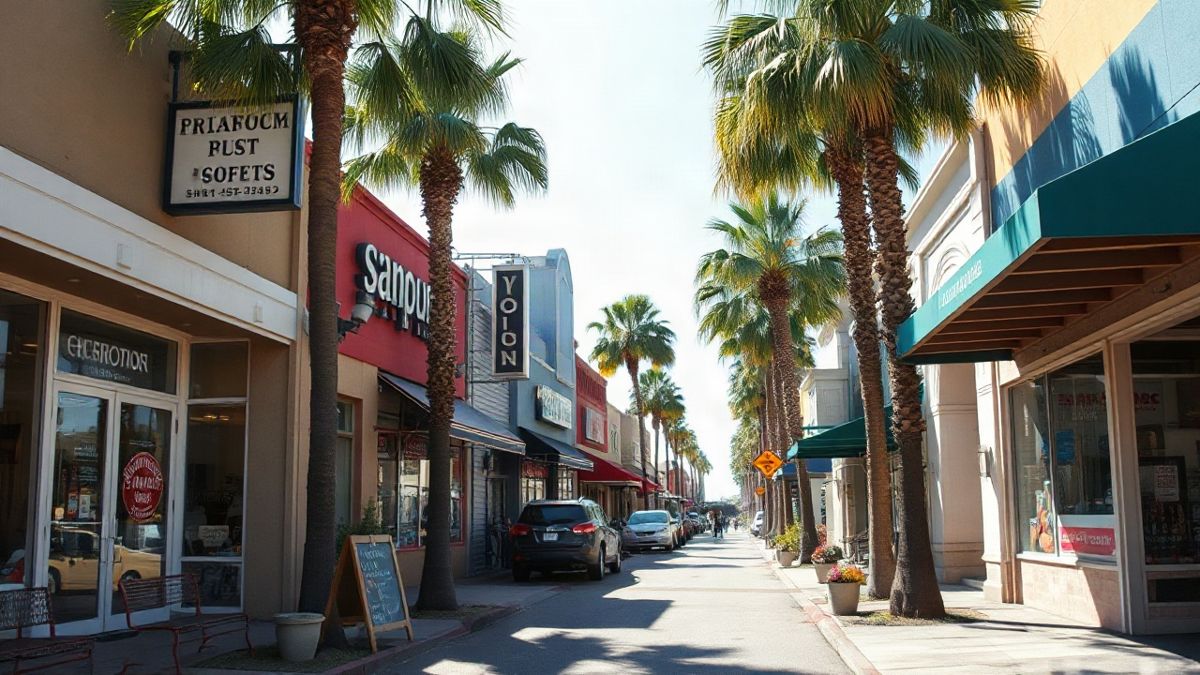
A Business Owner’s Policy — BOP — is a packaged insurance product that bundles General Liability, Commercial Property, and (with most carriers) Business Income coverage into a single policy at a single premium. For a California small business with 25 or fewer employees, less than $5M annual revenue, and a leased commercial space, the BOP typically prices 10-20% lower than the same three policies purchased standalone. The trade-off: BOPs are not a fit for every business class. The qualifying criteria, the standard inclusions, and the specific California carve-outs matter before a recommendation can be made.
This post examines the BOP product structure as it applies to California small businesses: what the three core coverages actually do, the underwriting math at different employee counts, who qualifies and who does not, the step-by-step quote process, California-specific endorsement requirements, how Hartford underwrites this class, and the business profiles better served by standalone policies rather than a bundled BOP. The analysis draws on standard BOP eligibility criteria applicable statewide, with the comparative savings analysis anchored to the 1-5 employee range where the bundle discount is most material.
Related reading on the general liability component: General Liability Insurance for Small Business and the cost-band breakdown in General Liability Insurance California Cost.

What a BOP Actually Bundles — GL, Property, and Business Income
The three coverages inside a standard California business owners policy are distinct products that happen to travel together under one premium billing. Understanding what each does — and what each specifically does not do — is prerequisite to evaluating whether the bundle is the right structure for a given business.
Coverage 1: General Liability
General Liability under a BOP covers third-party claims for bodily injury and property damage arising out of the business’s operations, products, or premises. A customer slips on a wet floor in a retail shop; a contractor accidentally breaks a client’s window during a light remodel; a finished product causes harm after delivery — these are GL triggers. Standard BOP GL limits run $1M per occurrence and $2M aggregate. The aggregate resets annually.
The GL component within a BOP also includes Products and Completed Operations coverage (claims arising from work already performed or products already sold), Personal and Advertising Injury coverage (defamation, copyright infringement in advertising), and Medical Payments coverage (minor medical costs for on-premises injuries regardless of fault, typically $5K-$10K).
What GL in a BOP does not cover: professional errors (requires a separate Errors and Omissions policy), employee injury (requires separate Workers’ Compensation), and intentional acts. For businesses that provide professional advice or services — accountants, consultants, IT professionals, architects — the GL component of the BOP does not respond to claims arising from professional service failures. That gap must be addressed with a standalone E&O policy. See the deeper GL breakdown at General Liability Insurance for Small Business.
Coverage 2: Commercial Property
The Commercial Property component covers direct physical loss to business personal property (equipment, furniture, inventory, fixtures) and, if the business has made improvements to its leased space, Tenant’s Improvements and Betterments (TIB). TIB covers the build-out the tenant paid for but which the landlord owns — a significant coverage gap many California small-business tenants overlook.
Standard BOP property coverage applies to the contents at the scheduled business location. It does not cover property in transit, property at job sites away from the scheduled location, or property stored off-premises (each of those requires a separate inland marine or floater endorsement). California-specific note: most standard BOP property forms exclude earthquake and flood explicitly, because those perils are priced and underwritten separately. A Stockton retail shop in a flood-mapped zone and a San Jose office in a seismic-risk corridor both need to purchase those coverages outside the BOP form.
The property limit under a BOP is set by the insured based on estimated replacement cost of contents. Replacement cost (not actual cash value) is the preferred basis — it pays to replace an item at current market price rather than depreciated value. Most Hartford BOP forms default to replacement cost for the property component.
Coverage 3: Business Income (Business Interruption)
Business Income coverage — sometimes labeled Business Interruption — replaces lost revenue during the period a covered property loss forces the business to suspend operations. If a fire destroys the contents of a retail shop and the business is closed for two months during repairs, Business Income pays the revenue the business would have earned during that closure, minus continuing expenses already accounted for in the policy structure.
Most BOP Business Income forms also include Extra Expense coverage: the additional costs incurred to minimize the business interruption (renting temporary space, expediting equipment repairs, paying for temporary labor). Standard indemnity periods run 12 or 24 months from the date of loss. For high-revenue California businesses or those with complex supply chains, a 12-month indemnity period may be insufficient — but for the 1-25 employee range, 12 months covers the realistic recovery window for most covered perils.
Business Income under a BOP does not cover revenue losses from market slowdowns, loss of a key employee, or government-mandated shutdowns not tied to a covered physical loss at the premises. The COVID-era litigation over Business Income claims in California clarified these boundaries in ways that made Business Income underwriting more explicit about the physical-damage trigger requirement.
When a BOP Beats Standalone GL+Property — The Math at 1, 5, and 10 Employees
The core economic argument for a California business owners policy is straightforward: carriers discount the bundle because a business buying all three coverages from one carrier at one time is administratively cheaper to service and statistically represents a more stable, lower-churn insured. That discount passes through to the insured as a lower combined premium versus purchasing the same three coverages from the same or different carriers independently.
The statewide BOP bundle advantage is most pronounced in the 1-5 employee range, where the absolute premium dollars are modest and the bundle discount represents the largest percentage savings. The math shifts at higher employee counts because the underlying GL and Property rates grow with payroll and revenue, and dedicated underwriting for larger accounts can sometimes beat the BOP pricing by tailoring each coverage independently.
Illustrative premium comparison — 5-employee Stockton retail shop
Consider a five-employee retail shop in Stockton with $850,000 in annual gross revenue, a 2,000-square-foot leased space, $80,000 in business contents, and a clean loss history. The standalone premium components would approximate as follows under current standard-market pricing:
| Coverage | Standalone Annual Premium | BOP Component Premium |
|---|---|---|
| General Liability ($1M/$2M) | ~$850 | Included in bundle |
| Commercial Property ($80K RC) | ~$600 | Included in bundle |
| Business Income (12-month) | ~$200 | Included in bundle |
| Total | ~$1,650 / year | ~$1,380 / year |
The BOP equivalent for this profile runs approximately $1,380 per year — a 16% savings relative to the $1,650 standalone aggregate. The three-policy standalone scenario also carries three separate billing cycles, three separate renewal dates, and three separate claims contacts in the event of a loss that triggers more than one coverage. Administrative simplification is a separate, non-trivial benefit for a small-business owner without a dedicated CFO managing insurance renewals.
At one employee
For a sole-proprietor or one-employee California business (freelance professional services, single-operator retail, solo contractor in an eligible BOP class), the standalone vs. BOP gap is smaller in absolute dollars but percentages hold. A solo operator with a small leased office and $200K revenue might run $400-$550 standalone for GL + Property + Business Income; the BOP equivalent often prices at $360-$470. The savings are $40-$80/year — modest but real, and the single-policy administrative advantage still applies.
At ten employees
At ten employees, a California retail or light-service business with $1.5M-$2M revenue may begin to qualify for dedicated underwriting attention rather than a packaged BOP. In this range, the BOP discount may narrow to 8-12% as the underlying coverage complexity grows. A business at this size should get both BOP and standalone quotes, as the break-even point varies significantly by trade class, claims history, and the specific carriers available for the policy period.
The statewide BOP bundle analysis consistently shows the strongest savings case in the 1-5 employee, under-$1M revenue band — precisely the profile of most California first-time commercial insurance buyers. For growing businesses crossing into the 10-25 employee tier, the BOP may still be the right product, but the pricing advantage diminishes and a dedicated broker review is warranted at each renewal.
Via Rapida Services brokers Hartford BOP policies for California small businesses statewide, with offices in Stockton, San Jose, and San Rafael. No broker fees on standard BOP policies at our Stockton and San Jose offices — most clients qualify. Price in writing before you sign.
Get a BOP Quote Call 209-670-1556Who Qualifies for a California BOP — The Underwriting Eligibility Checklist
BOP underwriting eligibility in California is defined by a checklist of criteria that carriers — including Hartford — apply at the application stage. A business that falls outside this checklist is declined or redirected to standalone policy placement. Understanding the criteria in advance prevents wasted application time and allows a broker to structure the right placement from the outset.
The standard California BOP eligibility checklist covers six dimensions:
Revenue threshold
The $5M revenue ceiling is the most common BOP eligibility boundary. Businesses above $5M annual revenue typically require dedicated Commercial Lines underwriting with individually negotiated coverage terms rather than a packaged BOP form. Hartford’s Small Business BOP program extends eligibility to higher revenue thresholds for certain classes (professional services, office-based businesses), but the rate structure shifts meaningfully above $5M.
Employee count and rate breaks
Hartford’s BOP program writes California businesses with up to 100 employees, but the pricing break point is at 25 employees or fewer. Below 25 employees, the package discount is most favorable. Above 25, the underwriting becomes more complex and the BOP pricing advantage over standalone placement narrows. Businesses in the 25-100 employee range should request both a BOP quote and a standalone GL + Property quote before binding.
Business age and startup treatment
Most California BOP carriers prefer businesses with at least two years of operating history. A startup in year one or two can often obtain BOP coverage, but with a startup surcharge (typically 15-25% above standard rate) and sometimes with a lower available property limit until the first renewal. The logic is claim frequency modeling: businesses in their first two years have not yet established the loss pattern that actuaries use to price risk accurately. By the second or third year, a clean loss history is the primary rate-reduction lever available at renewal.
Commercial space requirement
A standard California BOP form requires the business to operate from a leased or owned commercial space. Home-based businesses are ineligible for a standard BOP — and this matters for California sole-proprietors working from residential addresses. Home-based business owners can purchase a Home Business endorsement on their homeowner’s policy for modest business property and limited GL coverage, but the limits are substantially lower than a commercial BOP and the form is not equivalent. A home-based business that has crossed $50K in business inventory should consult a broker about whether a commercial space (even a small leased office or coworking location) would unlock BOP eligibility at a better effective rate than specialty home-business coverage.
Eligible trade classes
BOP eligibility is defined by trade class code. Standard eligible classes include retail stores, office and professional service businesses, light-service contractors who work primarily at a fixed location, restaurants and food service (with GL conditions applied to kitchen operations), wholesale distributors under certain revenue thresholds, and personal services. Trade classes that fall outside standard BOP eligibility are addressed in detail in the “When NOT to BOP” section below.
Loss history
Underwriters request three years of loss runs from the current or prior carrier. One modest claim in three years typically does not affect eligibility. Two or more claims, or a single large loss exceeding $50K, may trigger a decline or an individual underwriting review that extends the bind timeline. A business with a multi-claim history should work with a broker experienced in surplus-lines placement as an alternative if the admitted BOP market declines the account.
Step-by-Step — How to Get a California BOP Quote
The BOP quote process is documentation-intensive relative to a standalone personal auto policy, but follows a predictable sequence. The steps below mirror the HowTo schema at the top of this page and reflect the actual sequence used at Via Rapida Services to gather and submit a complete California BOP application to Hartford.
Pull your last 3 years of revenue, payroll, and claims history (loss runs)
Gather three years of gross revenue figures (from tax returns or P&L statements), total payroll figures (from payroll records or W-3 filings), and a loss run from each carrier that has written your business insurance over the prior three years. A loss run is a formal claims history document issued by the carrier, listing every claim, its date of loss, reserve amount, and paid amount. If your business has never had commercial insurance, document that in writing — first-time commercial buyers are underwritten with an assumption of no prior losses, which is generally favorable.
Carriers use gross revenue and payroll as the rating base for the General Liability component. Higher revenue and higher payroll translate directly to higher GL premium. Loss runs verify the three-year claims pattern and are required for every Hartford BOP application. Turnaround on loss run requests from prior carriers is typically 5-10 business days — request them before starting the application, not after.
Document your leased commercial space — square footage, building age, and Protection Class
Record the total square footage of your occupied leased or owned space, the year the building was constructed, and the building’s Protection Class (PC). The Insurance Services Office (ISO) assigns Protection Classes on a scale of 1-10 based on proximity and quality of fire suppression resources — fire department staffing, equipment, and proximity to water supply. A Protection Class of 1-3 indicates strong suppression resources and generates lower property premiums; a Protection Class of 8-10 indicates limited response capability and generates meaningfully higher rates.
In California, most urban and suburban commercial addresses fall in Protection Class 1-4. Rural properties, particularly in the Central Valley’s agricultural fringe and the North Bay’s wildland-urban interface, may fall into Protection Class 7-10 and face correspondingly higher property pricing or non-renewal exposure. Your commercial landlord, the city or county assessor’s office, or ISO’s online lookup can confirm your building’s Protection Class before the application is submitted.
List your business contents — equipment, inventory, and customer property in your care
Prepare a replacement-cost inventory of all business personal property inside your commercial space: owned equipment, furniture and fixtures, business inventory held for sale, and any customer property in your care, custody, or control (goods accepted for repair, vehicles left with a shop, client files physically stored at your location). This inventory establishes the Commercial Property limit for the BOP.
The most common gap in California small-business BOP placements is underinsured property coverage — a business owner estimates contents at $30K when actual replacement cost is $90K. In a total-loss scenario (fire, theft), a coinsurance clause in many property forms reduces the claim payout proportionally if the insured limit is below the required percentage of full replacement cost. Accurate contents documentation prevents a coinsurance penalty that would force the business to absorb a significant out-of-pocket loss even with insurance in place. If an itemized contents inventory is not feasible, a professional contents appraisal for high-value equipment classes is worth the cost before binding a large property limit.
Decide on coverage limits — GL limits, property limits, and Business Income indemnity period
Most California small-business BOPs are written at $1M per occurrence / $2M aggregate for General Liability, with Commercial Property limits ranging from $50,000 to $250,000 for the typical small-business profile. Business Income is typically written at a 12-month or 24-month indemnity period. Before finalizing limits, review two constraints: (1) the minimum GL limit required by your commercial lease (many California landlords require $2M aggregate with the landlord named as Additional Insured), and (2) the realistic replacement cost of your contents at current market pricing, not original purchase price.
If your lease requires a specific property limit to cover Tenant’s Improvements and Betterments, that number should come from your landlord’s lease addendum or the actual cost of any build-out you funded in the space. Tenant improvements that revert to landlord ownership upon lease termination are among the most frequently uninsured assets in California small-business BOP placements. For a broader view of the certificate of insurance requirements that flow from these limits, see COI — Certificate of Insurance Explained.
Get bound — Hartford’s typical BOP timeline for California small business
Submit the completed BOP application with supporting documentation (loss runs, revenue/payroll summary, completed ACORD application form) to the broker. Hartford’s standard bind timeline for a new California small-business BOP is 5-7 business days for clean applicants in standard eligible classes. Low-hazard classes — office, professional services, light retail — may bind in 3-5 business days when the application is complete on submission. Higher-hazard classes or accounts with complex loss history may require a 10-14 business day underwriting review.
At binding, the broker issues a Certificate of Insurance (COI) immediately — this document satisfies landlord Additional Insured requirements, contract requirements, and license-holder requirements without waiting for the formal policy declarations. The full policy and declarations page typically follow within 3-5 business days of binding. For businesses that need a COI fast to satisfy a lease signing or contract deadline, the COI can often be issued same-day once the application is approved in principle by Hartford. See COI Fast — Certificate of Insurance Same Day for the mechanics of expedited certificate issuance.
The BOP application process described above typically takes 3-5 business days of client document gathering plus 5-7 days of Hartford underwriting review. Total elapsed time from first contact to bound policy: 10-14 business days in the standard case. Businesses with an urgent need (lease signing, contract requirement, license renewal) should communicate the deadline at first contact so the broker can prioritize document collection and flag the application for expedited review where the trade class qualifies.
California-Specific Endorsements — Earthquake, Flood, and Wildfire
California presents three peril exposures that standard BOP forms exclude explicitly: earthquake, flood, and — in increasing relevance since 2017 — wildfire. Each requires a separate underwriting and coverage decision from the business owner. Treating the BOP as complete coverage without addressing these three exclusions is the most consequential gap in California commercial property placement.
Earthquake
California sits across multiple active fault systems — the San Andreas, Hayward, Calaveras, and dozens of lesser-mapped faults. No standard BOP form covers earthquake. California small businesses needing earthquake coverage must purchase a separate Commercial Earthquake policy, typically written on a sublimit basis with a percentage deductible (often 5-15% of the insured value of the building or contents). The California Earthquake Authority (CEA) primarily covers residential; commercial earthquake is placed through admitted carriers or surplus lines depending on the location, building construction, and distance from a fault line.
For a San Jose office location on the East Side, earthquake risk is actuarially material — the Hayward Fault runs through the hills east of the city, and the expected losses from a major Hayward event would be substantial for businesses with significant contents or tenant improvement investments. For a Stockton retail location, the seismic risk is lower than the Bay Area but not negligible. The practical test: if your contents, tenant improvements, or equipment would not be replaceable out of pocket in a seismic event, earthquake coverage is worth the separate premium.
Flood
Standard BOP forms exclude flood damage from surface water, storm surge, or rising water from any external source. California businesses in flood-mapped zones — including portions of the Central Valley, Sacramento Delta, and low-lying coastal areas — face meaningful flood exposure that the BOP does not address. Commercial flood coverage is available through the National Flood Insurance Program (NFIP) administered by FEMA, with limits up to $500K for building and $500K for contents. Businesses requiring coverage above NFIP limits or with specialized property needs can supplement with private excess flood coverage.
Stockton businesses near the Stockton Deep Water Channel or in lower-lying industrial areas should confirm their FEMA flood zone designation before assuming the BOP property coverage addresses all water-damage scenarios. Flood-zone designation is available through FEMA’s Flood Map Service Center using the property’s street address. A Special Flood Hazard Area (SFHA) designation — Zone A or Zone AE — typically means a commercial mortgage lender will require flood insurance; NFIP should be in place regardless of lender requirement in those zones.
Wildfire and defensible-space underwriting
Since 2017, wildfire has become the most commercially significant property peril in California for businesses in wildland-urban interface (WUI) zones. Many admitted BOP carriers have restricted or non-renewed California commercial property accounts in high-fire-risk areas, particularly in Northern California and the foothill communities of the Central Valley and Sierra Nevada. Businesses in WUI zones may find that standard BOP property coverage is unavailable from admitted carriers and must be placed through the California FAIR Plan for commercial property or through a surplus-lines carrier.
Defensible-space underwriting — the carrier’s inspection of vegetation clearance and building materials around a commercial property — has become a standard condition for writing or renewing commercial property coverage in high-fire-risk zones. Businesses in these zones should document their defensible-space compliance (vegetation clearing per CAL FIRE 100-foot guidelines, ember-resistant building components) as part of their BOP application. Some carriers offer discounts or improved availability for commercial properties that demonstrate fire-hardening investment.
The workers’ compensation coverage that a BOP does not include is addressed in a companion post: Workers’ Comp Insurance Cost California. If your business has employees, workers’ comp is mandatory in California regardless of BOP structure.
How Hartford Writes California Small-Business BOPs — Appetite and Common Declines
Hartford is one of the most active BOP carriers for California small business, with a program that covers a broad range of trade classes at competitive premiums. Understanding Hartford’s specific appetite — and where that appetite ends — is necessary before beginning the quote process to avoid submitting an application that will be declined at underwriting review.
Classes Hartford actively writes for California BOP
Hartford’s California small-business BOP appetite is strongest in the following trade classes:
- Retail: clothing, specialty goods, hardware, gifts, electronics, furniture (non-used), pet supply
- Office and professional services: accounting firms, consulting, financial services (non-securities), staffing, marketing agencies, architecture and engineering (GL only; E&O separate)
- Light manufacturing and wholesale: product assembly, light fabrication with revenue under $2M, wholesale distribution without hazardous materials
- Food service: restaurants, cafes, bakeries, caterers — with GL conditions applied to kitchen equipment and food handling operations; see catering-specific considerations at Catering Business Insurance California
- Personal services: salons, barbershops, dry cleaners, fitness studios, tutoring centers
- Light contractors: janitorial and cleaning services (separate write-up at Cleaning Business Insurance California), landscaping maintenance (not installation), interior painting of low-rise buildings
How Hartford prices the California BOP
Hartford’s California BOP pricing uses four primary rating variables: (1) gross revenue and payroll (GL base), (2) property limit and Protection Class (property base), (3) trade class risk score (each ISO trade class code carries a loss-cost multiplier), and (4) years in business and loss history (experience modification). A business with five years of clean history in a low-hazard class at a Protection Class 3 building will price at a meaningful discount relative to the same-size business in its first year of operation in a higher-hazard class at a Protection Class 8 rural location.
Hartford also applies a package discount to the BOP that is not available when the same coverages are purchased as separate monoline policies. This is the structural source of the 10-20% savings referenced throughout this post. The package discount applies automatically when the BOP form is used; there is no separate application process to qualify for it.
Hartford EXCLUSIONS for California BOP
Several California business classes fall outside Hartford’s BOP appetite entirely. These businesses should not be submitted to Hartford for BOP placement and should instead be directed to specialty commercial lines brokers or surplus-lines carriers:
- Cannabis operations of any kind — dispensaries, cultivators, manufacturers, distributors, delivery services. Cannabis remains a federal Schedule I substance, and Hartford does not write any coverage for cannabis-related businesses under its admitted carrier programs.
- Contractors with significant mobile equipment exposure — businesses that take heavy equipment off the scheduled premises (excavators, lifts, cranes, mobile welding rigs) need GL plus Inland Marine coverage for the mobile equipment rather than a BOP. The BOP property form covers contents at the scheduled location; mobile equipment traveling to job sites requires separate inland marine placement.
- Home-based businesses with more than $50K in inventory — the BOP commercial space requirement means home-based operations are ineligible, and a homeowner’s endorsement cannot adequately cover significant inventory exposure. These businesses need a commercial space or a specialty excess-and-surplus-lines placement.
- Restaurants where liquor sales exceed 50% of gross revenue — standard BOP liquor liability endorsements are structured for incidental liquor service. Bars, nightclubs, and high-volume liquor establishments where alcohol is the primary revenue driver require standalone Liquor Liability coverage (dram shop) rather than a BOP endorsement. The exposure profile and claims frequency for primary liquor establishments are materially different from a restaurant that serves beer and wine alongside food.
- Auto-related businesses — auto repair shops, body shops, towing operations, and used car dealerships are not BOP-eligible at Hartford. These businesses have specialized garage liability and garagekeepers liability needs that the BOP form does not address.
For businesses questioning whether commercial vehicle use is covered under a BOP or requires a separate policy, see Commercial Auto vs. Personal Business Use for the coverage boundary analysis.
When NOT to BOP — Businesses Better Served by Standalone GL + Property
The BOP is the right product for a specific profile of California small business. Outside that profile, the BOP form either does not respond to the business’s actual exposures or prices at a disadvantage relative to individually underwritten standalone policies. Recognizing these cases at the outset prevents a placement that leaves the business underinsured at the point of a claim.
High mobile-equipment exposure: GL + Inland Marine
A contractor who works primarily from a fixed location but occasionally takes equipment to job sites is probably BOP-eligible if the mobile equipment is incidental to the operation. A contractor for whom off-site equipment travel is the core of the business model — a landscaping installation crew that moves a trailer-mounted skid-steer between job sites every day, a mobile welding operation, a contractor whose tools and equipment are worth $75K and live in a truck rather than at a leased shop — needs General Liability plus Inland Marine coverage for the mobile equipment. The BOP property form is premises-based; it does not follow equipment to job sites.
Inland Marine is the correct coverage for property in transit and property regularly used off-premises. It can be paired with a standalone GL policy in a non-BOP structure and often prices favorably for businesses with high mobile-equipment values. For California contractors with CSLB license requirements, the certificate of insurance and coverage structure details are covered at Contractor Insurance California CSLB 2026.
High-revenue businesses: dedicated underwriting
Businesses above $5M-$10M annual revenue typically receive better terms through dedicated commercial lines underwriting than through a packaged BOP. At that revenue scale, GL premiums are material enough that insurers will negotiate individually structured coverage terms, sub-limits, and endorsements that a standardized BOP form cannot accommodate. The BOP’s package discount is a concession in exchange for standardization; high-revenue businesses often benefit more from custom underwriting than from standardization discounts.
Specialty trade classes: surplus lines
Trade classes that admitted BOP carriers decline — cannabis, gun stores, adult entertainment, certain heavy manufacturing, pest control with fumigation, and aviation-related businesses — require surplus-lines placement. Surplus-lines carriers (non-admitted, writing under California’s surplus-lines law) can structure coverage for these classes, but the coverage forms and pricing are individually negotiated rather than packaged. The BOP is an admitted-market product; these businesses cannot access it.
Businesses with heavy commercial auto exposure
A business that operates multiple commercial vehicles as a core part of its operations — a delivery company, a multi-vehicle trade contractor, a transportation business — should be structured with a standalone Commercial Auto policy plus GL rather than a BOP. Commercial auto exposure at scale is underwritten separately from premises GL, and the coverage limits and risk factors are materially different. The BOP does not include commercial auto coverage. Placing commercial auto separately and pairing it with a standalone GL policy is the correct structure for businesses where vehicles are a primary exposure source.
Professional services with significant E&O exposure
The GL component of a BOP covers premises liability and products/completed operations but specifically excludes professional service errors. An architect, attorney, accountant, or IT consultant whose primary exposure is the advice they give — not the physical location where they give it — needs a separate Errors and Omissions policy regardless of whether they also carry a BOP. A BOP alone is insufficient for these professionals; E&O is the primary coverage and the BOP is a supplement addressing premises and operations exposures.
Hartford BOP quotes for California small businesses — 1 to 25 employees, retail, office, food service, and light-service classes. Via Rapida Services provides the quote in writing before you sign. No broker fees on standard BOP policies at our Stockton and San Jose offices — most clients qualify. Se habla español — call 209-670-1556 for a bilingual quote.
Get a Hartford BOP Quote Call 209-670-1556Frequently Asked Questions
A standard California business owners policy bundles three coverages: General Liability (third-party bodily injury and property damage, typically $1M per occurrence / $2M aggregate), Commercial Property (building contents, tenant’s improvements and betterments, on a replacement-cost basis), and Business Income (also called Business Interruption — lost revenue while a covered peril shuts down your operation for repairs). California BOPs do NOT include earthquake, flood, professional liability, workers’ compensation, or commercial auto — those require separate policies. The exclusions list is as important as the inclusions list when evaluating whether the BOP adequately covers the business.
For most California small businesses with 1-25 employees, a qualifying business owners policy prices 10-20% lower than the same GL, Property, and Business Income coverages purchased as three standalone policies. The discount comes from carrier packaging efficiencies and the assumption that a business buying all three coverages represents a more stable insured. The statewide BOP bundle savings are largest at 1-5 employees where the absolute premium dollars are smaller and the package discount percentage holds. At 25+ employees, the advantage narrows and a dedicated standalone quote comparison is warranted before binding. Individual rates vary by class, loss history, location, and Protection Class — a written quote is the only reliable comparison point.
Standard BOP underwriting excludes businesses with more than $5M annual revenue, more than 25 employees (though Hartford extends eligibility to 100 with different rate tiers), home-based businesses with more than $50K in inventory, businesses with high mobile-equipment exposure (contractors who take heavy equipment off-site regularly), and specialty-class businesses including cannabis operations, gun stores, and aviation-related businesses. Restaurants where liquor sales exceed 50% of revenue are also typically declined for a standard BOP and require specialty liquor-liability-focused placement instead. Auto-related businesses — repair shops, tow operators, used car dealers — are not BOP-eligible at Hartford and require garage liability forms.
California does not require a business owners policy by statute. However, commercial landlords frequently require tenants to carry General Liability (typically $1M/$2M) and name the landlord as Additional Insured on the certificate of insurance. A BOP satisfies both the GL and Property components of that landlord requirement in a single policy. If a client-facing contract, government license, or professional registration requires proof of insurance, a certificate of insurance issued from a BOP meets that requirement the same way a standalone GL policy would. The certificate is issued immediately at binding and can satisfy landlord or contract requirements before the full policy documents arrive.
Hartford’s standard BOP bind timeline for a California small business is 5-7 business days for new applicants with clean loss history in standard trade classes. Same-day or next-day binding may be available for low-hazard classes (office, professional services, light retail) when the application is complete and the business has no prior claims. Businesses with a prior loss or operating in a higher-hazard class may require a 10-14 business day underwriting review. The certificate of insurance is issued at binding and is available to the insured before the full policy arrives. Total elapsed time from first contact to bound policy, including document gathering, typically runs 10-14 business days in the standard case.
Related Reading
General Liability for Small Business → GL Insurance California Cost → Workers Comp Cost California → Cleaning Business Insurance California → Catering Business Insurance California → COI — Certificate of Insurance Fast → Business Insurance Stockton CA → Contractor Insurance California CSLB 2026 → Commercial Auto vs. Personal Business Use →