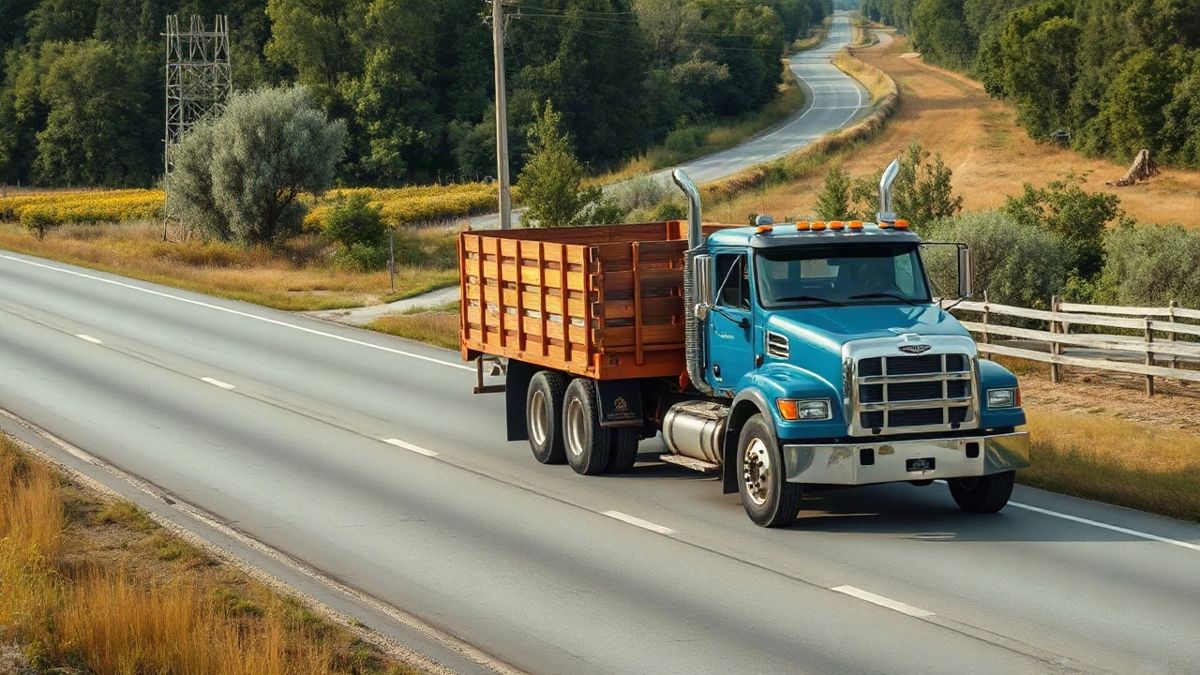
Commercial truck insurance in California is its own market — distinct from commercial auto, distinct from long-haul trucking, distinct from personal auto with business use. The trucks we place most often through our offices are Class 3 through Class 6 commercial vehicles: box trucks, delivery vans, refrigerated units, contractor trucks, lift-gate trucks, and small fleet operations from one truck up through ten or fifteen. Above that scale the conversation typically shifts toward dedicated trucking programs; below that scale, the conversation is usually general commercial auto on lighter-duty pickups (which we cover in our commercial auto insurance California guide).
Customer language note: California small-business owners almost universally say "truck insurance" rather than "commercial auto" for box trucks, delivery vans, and similar working-class vehicles. The technical term might be commercial auto in some configurations and commercial truck in others, but the buyer's mental model is one product — coverage for the work truck. This guide uses "commercial truck insurance" throughout because that's the search term and that's the conversation; the placement we recommend, Progressive Commercial, handles both light-duty (commercial auto) and medium-duty (commercial truck) under their commercial program.
The data-driven approach to commercial truck pricing in California 2026: most fleets pay between $4,000 and $8,000 per truck per year for full coverage on a clean intrastate placement. The variation by fleet size, business class, radius of operation, and specialty configuration is what this guide walks. Call 209-670-1556 or request a quote online. Se habla español.
What "commercial truck" means in California — the vehicle classifications
The federal DOT classification system splits commercial vehicles into eight classes by gross vehicle weight rating (GVWR):
- Class 1 (under 6,000 lbs): half-ton pickups, small SUVs. Most ½-ton work trucks fall here. Covered by commercial auto, not commercial truck.
- Class 2 (6,001–10,000 lbs): ¾-ton and 1-ton pickups, larger work vans. Borderline; mostly commercial auto.
- Class 3 (10,001–14,000 lbs): heavier-duty pickups, smaller box trucks, walk-in vans. Commercial truck territory begins here.
- Class 4 (14,001–16,000 lbs): medium box trucks, larger walk-in vans, light dump trucks.
- Class 5 (16,001–19,500 lbs): larger box trucks, refrigerated units, medium delivery trucks.
- Class 6 (19,501–26,000 lbs): larger medium-duty trucks, larger refrigerated trucks, larger box trucks.
- Class 7 (26,001–33,000 lbs): heavy-duty single-unit trucks. Borderline trucking territory.
- Class 8 (33,001+ lbs): heavy-duty trucks, semi-tractors, OTR. Dedicated trucking programs.
The trucks we write most through Progressive Commercial fall in Classes 3 through 6 — call it 10,001 to 26,000 lbs GVWR. That's the bulk of California's small-business work-truck universe: a contractor's box truck for hauling materials, a small business owner's delivery van for routes, a caterer's refrigerated truck, a moving company's medium-duty truck. Class 7 and 8 placements move toward dedicated trucking programs in our broker book; Class 1 and 2 stay on commercial auto policies.
One important California-specific note: above 26,000 lbs GVWR, drivers need a Commercial Driver's License (CDL). Below 26,000 lbs, a regular Class C California driver's license is sufficient (with some exceptions for trailer combinations and hazmat). The CDL requirement affects driver hiring and MVR underwriting; trucks above 26,000 lbs cost more to insure partly because of the more restricted driver pool and the higher MVR-quality demands.
Fleet sizing — the cost ladder by truck count and business class
Fleet sizing matters in two ways: per-truck pricing improves modestly with scale, and the administrative simplification of one fleet policy beats the per-policy paperwork friction of separate single-truck policies. Pricing bands below for clean placements through Progressive Commercial in 2026 California, $1M CSL liability, with physical damage on the trucks where applicable.
| Fleet size | Per-truck annual | Total annual | Notes |
|---|---|---|---|
| 1 box truck (Class 3–4), local contractor | $4,200 – $5,800 | $4,200 – $5,800 | Single-unit policy, paperwork simplest |
| 1 delivery van (Class 3), local routes | $3,800 – $5,200 | $3,800 – $5,200 | Lower exposure than box truck |
| 1 refrigerated truck (Class 5) | $5,400 – $7,800 | $5,400 – $7,800 | Refrigeration unit value drives physical damage premium |
| 2–5 unit fleet (Class 3–5 mix) | $3,800 – $5,500 per truck | $7,600 – $27,500 | Per-truck savings start at fleet level |
| 2–5 unit fleet (Class 5–6 medium-duty) | $4,800 – $6,800 per truck | $9,600 – $34,000 | Higher GVWR drives higher per-truck |
| 5–10 unit fleet (mixed Class 3–6) | $3,600 – $5,200 per truck | $18,000 – $52,000 | Experience-rated pricing begins; MVR quality matters more |
| 10+ unit fleet | Quoted individually | — | Underwritten as a fleet program |
| Specialty: hazmat-light, lift gate, long-radius | +15–35% on top of standard | — | Risk-specific surcharges |
What pushes a commercial truck quote up significantly:
- Driver MVRs. Same as commercial auto — one major violation in 3 years on the wrong driver moves the fleet to a different pricing tier or a different carrier.
- Radius declaration. Local-only (50 miles or less), regional (50–200 miles), and intermediate (200–500 miles) are the typical bands. Longer radius drives higher premium because of higher exposure miles.
- Cargo type. General freight is standard; hazmat-light, food, refrigerated, fragile/high-value cargo each have specific underwriting questions and pricing.
- Equipment specifics. Lift gates, refrigerated units, custom modifications — each is rated separately and adds to physical damage premium.
- Use type. For-hire (delivery to third parties, freight forwarding) prices higher than not-for-hire (own-business goods movement).
- Prior claim history. One at-fault claim in past 3 years drives 15–35% surcharge; multiple claims compound.
The Central Valley DOT compliance ladder
For California-based commercial trucks operating intrastate (within California only), the federal DOT (FMCSA) compliance requirements often don't apply. California's intrastate compliance is handled through Cal-OSHA, the California Highway Patrol's commercial enforcement program (BIT — Biennial Inspection of Terminals), and several other state agencies.
The compliance ladder by fleet size and operation type:
Single-truck local contractor (intrastate, no hazmat)
California intrastate compliance: vehicle registration through the state with commercial classification, smog inspection per California schedule, BIT (Biennial Inspection of Terminals) if the vehicle is over 10,001 lbs and operates commercially. Driver requirements: Class C California driver's license with appropriate endorsements. Insurance: $300K minimum liability under California requirements; we typically place at $1M for contract counterparty acceptance.
Small fleet (2–5 trucks, intrastate)
Same as single-truck plus: California Carrier Permit may be required depending on operation type. CHP commercial enforcement engagement (BIT inspections every 25 months for vehicles 10,001+ lbs). Driver MVR maintenance — most carriers require annual MVR pulls on all listed drivers. Insurance: $1M typical; specific contracts may require $2M.
Mid fleet (5–10 trucks, intrastate or interstate)
If interstate (any vehicle leaving California for delivery or pickup), federal DOT registration through FMCSA: USDOT number, MC operating authority, BMC-91 or BMC-91X filing for proof of insurance, IFTA/IRP fuel and registration arrangements. Compliance load is materially higher. Insurance: typically $1M but with specific filings (BMC-91X) on the policy. We coordinate carrier and FMCSA filings during binding.
Specialty: hazmat (Class B and below)
Even hazmat-light operations (small quantities, non-bulk packaging) trigger additional underwriting and compliance: hazmat endorsement on driver's licenses (with TSA security threat assessment), specific Hazmat Safety Permit through FMCSA, hazmat-specific insurance limits ($1M or $5M depending on commodity), and hazmat-trained personnel.
Specialty: refrigerated
Refrigerated cargo trucks are commercial truck plus a cargo coverage layer (motor truck cargo coverage, refrigeration breakdown coverage, contingent cargo). Premium structure adds to the base; underwriting wants details on commodities carried and refrigeration unit type and age.
The compliance ladder is real and the small-business fleet owner often discovers it for the first time at quote — the broker (us) pulls it together and gets the fleet's coverage and filings aligned. Pair this with our fast COI generation guide for the certificate-of-insurance cycle that goes alongside delivery contracts.
Get a Progressive Commercial truck quote — fleet of 1, fleet of 10. Bring or send vehicle VINs, GVWR, business class, driver records, radius declaration, and cargo type. Same-day binding for most clean placements; 24–72 hours for specialty configurations. No broker fees on standard policies at our Stockton and San Jose offices — most clients qualify.
Get a Truck Quote Call 209-670-1556Why Progressive Commercial leads our truck placements
Progressive Commercial is the carrier we lean on for most of the small-to-mid California commercial truck market. Three reasons:
- Broad California appetite. Class 3 through Class 7, intrastate and interstate, light to medium-heavy fleets. Box trucks, delivery vans, refrigerated, lift gates, contractor trucks, taco trucks, food trucks. Their underwriting is built for this volume.
- Pricing competitive at small-to-mid scale. 1–10 truck placements typically price competitively against Hartford commercial auto, Foremost commercial truck, and specialty trucking markets. Above 10 trucks the experience-rated approach often wins.
- FMCSA filings handled directly. When BMC-91X or other federal filings are needed, Progressive Commercial files them. We coordinate; the carrier executes.
What we shop to other markets for:
- Long-haul OTR trucking (Class 8 semis, multi-state regular operation) — dedicated trucking specialty markets in our book
- Heavy hazmat operations (large quantity, bulk packaging) — specialty hazmat carriers
- Tow truck operators — specialty tow programs
- Auto repair shops with vehicles for customer-loaner use — combined garage/auto programs
- Higher-risk MVR profiles that decline at Progressive Commercial — Bridger and other specialty carriers
For the small-business owner with 1–10 work trucks operating intrastate or in regional California-Bay Area-Central Valley territory, Progressive Commercial is our default first-quote target. We compare against Hartford on commercial-auto-eligible Class 3 placements (lighter-duty box trucks, delivery vans) since Hartford sometimes wins on those. For Class 4–6 trucks and medium-duty fleets, Progressive Commercial is usually the right answer.
Real fleet placements from our offices in 2026
Three illustrative placements with details changed for privacy.
Fleet A — Stockton drywall contractor, 3-truck box-truck fleet
Family-run drywall contractor based in Stockton, growing operation, three Class 3 box trucks (24-foot box, lift gate on the largest), 4 W-2 driver employees plus the owner. Operation is San Joaquin County and southern San Jose. Clean MVRs on all drivers; one minor speeding 2 years ago on the youngest driver, otherwise clean.
Progressive Commercial quote: $14,800/year for the 3-truck fleet, $1M CSL, $500 deductible physical damage on the two newer trucks, liability-only on the older one. Bound within 48 hours after MVR pulls completed. CHP BIT inspections coordinated separately by the contractor. Workers' comp through Hartford on a separate policy. Total commercial coverage stack roughly $24,000/year for trucks + $4,800/year for workers' comp on a contractor whose annual revenue is in the $1.3M range — about 2.2% of revenue, which is in the normal band for that operation type.
Fleet B — San Jose catering business, 2 refrigerated trucks
Mid-sized catering business in San Jose, two Class 5 refrigerated trucks (16,000 GVWR, full refrigeration units, lift gates), two W-2 drivers. Operation is local (within 75-mile radius), with occasional event delivery to Marin County and Santa Cruz.
Progressive Commercial quote: $14,200/year for the 2-truck fleet, $1M CSL, $1,000 deductible physical damage, $50K motor truck cargo coverage, refrigeration breakdown coverage. Bound within 72 hours after refrigeration unit documentation. Pairs with their general liability policy through Hartford and food-handler workers' comp.
Fleet C — Single-truck moving operator, San Rafael
San Rafael owner-operator moving company, one 24-foot Class 4 box truck, occasional helper, intrastate operation only (Marin and East Bay). Owner has a recent at-fault accident (2025, single-vehicle, hit a low-clearance bridge with a misjudged load).
Progressive Commercial quote with the at-fault accident surcharge: $7,800/year, $1M CSL, $500 deductible physical damage. Without the recent claim it would have been $5,800 — the surcharge is real but moderate. Bound; the operator continues operating with the surcharged policy and we'll re-quote at year 1 renewal as the claim ages.
What's covered, in detail — the policy parts of a commercial truck policy
A commercial truck policy in California has all the standard auto-policy coverage parts plus some truck-specific ones. The full stack:
Liability — Combined Single Limit (CSL)
The bedrock of the policy. Almost all commercial truck policies are written as Combined Single Limit (CSL) — say, $1,000,000 — meaning a single bucket covers bodily injury and property damage per occurrence. The $1M default is what most contracts demand. $2M is common for fleets bidding on contracts that demand higher limits. $5M+ is typically achieved through an umbrella over the truck primary, not by raising primary limits, because the per-dollar cost is better at the umbrella level.
Physical damage — Comprehensive and Collision
Truck damage from theft, fire, vandalism, weather (comprehensive) or collision (single-vehicle or multi-vehicle). Optional unless there's a lender on the truck. Deductibles run $500–$2,500. For older trucks (>10 years, lower book value), small-business owners often drop physical damage and run liability-only — the math doesn't always justify the premium.
Uninsured / Underinsured Motorist
Required to be offered in California for commercial trucks. Can be rejected in writing. Recommended to keep — California has a non-trivial uninsured rate and the financial exposure on a commercial truck claim from an uninsured at-fault party is real.
Medical Payments / Personal Injury Protection
Small no-fault medical for driver/occupants. $1K–$10K typical. Useful for the sub-deductible scrapes-and-bruises scenarios.
Hired and Non-Owned Auto Liability (HNOA)
Covers business liability when employees use rented or borrowed vehicles for work. Cheap; almost always worth adding to the commercial truck policy if there's any chance of rented or borrowed vehicle use.
Motor Truck Cargo (MTC)
Coverage for damage to the cargo you're hauling — your customer's goods, your company's own goods being transported between locations, equipment in transit. Limits scale with cargo value. Required for some contract counterparties (especially commercial customers, large retail vendors, hospitals, school districts that contract for delivery). The carrier's standard MTC product covers most general freight; specialty cargo (refrigerated, hazmat, fragile/high-value) needs specific underwriting attention.
Trailer Interchange
If you regularly haul trailers owned by other parties (a trailer your customer provides, a leased trailer), trailer interchange coverage handles damage to that other-owned trailer while in your custody. Different from your scheduled trailer coverage on trailers you own.
Refrigeration Breakdown
For refrigerated trucks: separate coverage for refrigeration unit failure that damages cargo. Worth adding for any food-business operator with significant refrigerated transport.
Garagekeepers (less common for general trucking)
If your operation includes vehicle storage on behalf of others (auto repair, towing storage, fleet maintenance), garagekeepers covers your liability for damage to those vehicles in your custody. Most pure trucking operations don't need this; auto-related operations do.
Common cost drivers — what makes a truck quote come back high
If your commercial truck quote comes back significantly above the bands in this guide, one of these factors is usually responsible. Understanding them helps adjust the placement.
Driver MVR issues
One major violation in 3 years on any listed driver typically drives a 25–50% surcharge on the truck that driver is rated for. Multiple major violations move the placement to specialty markets. The conversation with the business owner often becomes "is this driver mission-critical, or can we exclude them and not have them operate the truck?"
Radius declaration and geography
A 200-mile radius operation prices materially higher than a 50-mile radius operation, all else equal. Drivers honest about radius pay more upfront and sleep better; drivers who underdeclare to save premium discover the consequence at claim time. We always recommend honest radius declaration; the cheap-quote-with-misdeclared-radius is a trap.
Cargo type and value
General freight (non-perishable, non-hazardous, non-fragile) is the cheapest cargo class. Refrigerated, hazardous, fragile, or high-value cargo each add specific premium loads. For drivers transporting valuable equipment (construction, electronics, cargo loads worth $50K+), the MTC limit and the underwriting attention scale up.
Use type
Not-for-hire (your business moving its own goods) is cheaper than for-hire (you're a delivery service moving customer goods for compensation). The risk profile is different; the rate reflects it.
Prior claim history
One at-fault claim in 3 years drives a 15–35% surcharge. Two or more compounds. The pricing impact lasts for the duration of the claim's MVR aging period (typically 3 years for minor, 5 years for major).
Vehicle age and value
Older trucks have lower physical damage premium because the value's lower; newer trucks have higher physical damage premium reflecting higher repair/replacement cost. The liability premium is largely independent of vehicle age — based on driver and operation, not vehicle.
FAQ — Frequently asked questions about California commercial truck insurance
What's the difference between commercial truck insurance and commercial auto?
Commercial auto covers light-duty work vehicles (pickups, vans, SUVs, light box trucks) used in business. Commercial truck insurance covers medium and heavy-duty trucks (Class 3–8 trucks, box trucks, refrigerated units, dump trucks) and is rated differently because of higher gross vehicle weight, higher liability exposure, and DOT compliance requirements that don't apply to most commercial auto vehicles.
Do I need DOT compliance for my California work truck?
DOT (FMCSA) compliance generally kicks in for commercial vehicles with gross vehicle weight rating over 10,000 lbs that operate in interstate commerce, or for vehicles transporting hazardous materials, or for vehicles with 9+ passengers for hire. Local intra-state operations of light-duty work trucks are typically exempt from federal DOT compliance but may have California-specific compliance requirements through Cal-OSHA, CHP commercial enforcement, and other state agencies.
What does commercial truck insurance cost in California?
For a single box truck under 26,000 lbs operating intrastate, $4,000–$8,000/year for $1M CSL liability + physical damage. For a fleet of 5 medium-duty box trucks, $20,000–$40,000/year. Per-truck pricing improves modestly with scale. Specialty exposures (refrigerated, hazmat-light, lift gates, fueling) and longer-radius operations push pricing up materially.
Why do you lead with Progressive Commercial for trucks?
Progressive Commercial is one of the largest commercial truck programs in the country and writes most of California's small-to-mid commercial truck market — 1 to 50 unit fleets, box trucks, delivery vans, contractor trucks, food and refrigerated trucks. Their pricing is competitive, their underwriting is quick, and their program supports the full range of California work-truck profiles we place from our offices.
How fast can Via Rapida bind a commercial truck quote?
For a clean single box truck or van fleet placement through Progressive Commercial, same-day or next-business-day binding. For 5+ unit fleets, 1–2 business days because the underwriter wants to review MVRs on all drivers and verify the radius declaration. For specialty configurations (refrigerated, lift gate, hazmat-light, very long radius), expect 48–72 hours.
How does motor truck cargo coverage work?
Motor truck cargo (MTC) coverage pays for damage to the cargo you're hauling — your customer's goods, your own goods being moved between locations, food being transported between commissary and event. It's separate from physical damage on the truck itself. MTC limits typically scale with cargo value: $25K, $50K, $100K, $250K, with corresponding premium add-ons.
What about hired and non-owned auto for trucks?
If your business uses rented or borrowed trucks (rental fleet temporary use, occasional borrowed vehicle), the hired and non-owned auto endorsement on the commercial auto policy or a standalone policy provides liability coverage during that use. It doesn't cover physical damage to the rented truck — that's the rental company's CDW or your specific rental insurance.
Does the policy cover the trailer separately from the truck?
Trailers are typically covered as part of the commercial truck policy when scheduled (listed by description and value on the declarations page). Trailer interchange coverage applies when you're hauling someone else's trailer. Specifics depend on the carrier; we walk through this at quote.
Walk into our Stockton, San Jose, or San Rafael office, call 209-670-1556, or request a quote online. License #6003045. No broker fees on standard commercial truck policies at our Stockton and San Jose offices — most clients qualify; specialty configurations and certain high-risk fleet placements may have a small service fee, which we'll disclose in writing before binding.
Can I get coverage for a leased truck?
Yes. Leased trucks are insured similarly to owned trucks; the lessor is added as Loss Payee and Additional Insured on the policy. The lessor typically demands specific coverage levels (often $0 or $500 deductible physical damage, full coverage). Get the lease agreement to us at quote so we structure the policy to meet the lessor's requirements the first time.
What if my driver gets a CDL violation while operating?
CDL violations on commercial drivers are tracked through the FMCSA's Commercial Driver License Information System (CDLIS) and are reportable. A serious violation by a CDL driver can affect the entire fleet's underwriting at next renewal — which is why driver hiring and ongoing MVR monitoring matter for fleet operators. We track the basics; the operator handles the day-to-day employment management.
Does commercial truck insurance cover Mexico travel?
Generally no. California commercial truck policies typically don't extend coverage south of the border. For trucks crossing into Mexico, separate Mexico travel insurance is required — Adventure Mexico is one of our carriers for this. See our Mexico travel insurance California guide. Any truck operation crossing the border needs the separate Mexico policy in addition to the California commercial truck policy.
What's included in fleet rating vs. individual rating?
For fleets above 10 units (or sometimes below if the carrier supports it), the policy moves to experience-rated fleet pricing. The fleet's actual loss history over a stated lookback period (typically 3 years) is factored into the rate, so fleets with clean histories get below-baseline pricing and fleets with active claim history get above-baseline pricing. Below 10 units, pricing is typically class-based with limited experience adjustment.
Pair commercial truck with the rest of the small-business stack: general liability for small business, commercial auto for lighter-duty work trucks, workers' comp under SB 216, fast COI generation, and event insurance California for businesses that combine work trucks with event-day operations.
One closing point worth making for fleet operators specifically: the per-truck cost numbers in this guide are meaningful, but the bigger long-term cost lever for fleets is loss-history management. A fleet that runs a tight operation — clean MVRs, regular driver training, well-maintained equipment, honest radius declaration — pays materially less over a 5-year window than a similar-size fleet with sloppy driver hiring or maintenance practices. The premium difference between a clean experience-rated fleet and a fleet with several active claims can be 30–60% on per-truck pricing. The investment in driver training, maintenance discipline, and MVR monitoring pays back through insurance pricing in addition to the obvious operational benefits. We coach fleet clients on this at renewal time when the loss history is the conversation. The good news is that improvement compounds: two clean years of fleet operation typically unlock meaningful renewal pricing improvements, and three to five clean years can move a fleet from middle-tier non-standard pricing to standard-tier pricing entirely, with substantial annual savings as a result. Worth the discipline, especially for owner-operators in the early-fleet-growth phase where insurance is one of the bigger fixed costs in the overall operating budget for the year ahead.
Related Pages
General Liability Small Business →Commercial Auto California →Event Insurance California →Landlord Insurance California →Contractor Insurance & SB 216 →Trucking Insurance California Cost →Food Truck Insurance →Fast COI Issuance →Workers Comp SB 216 →