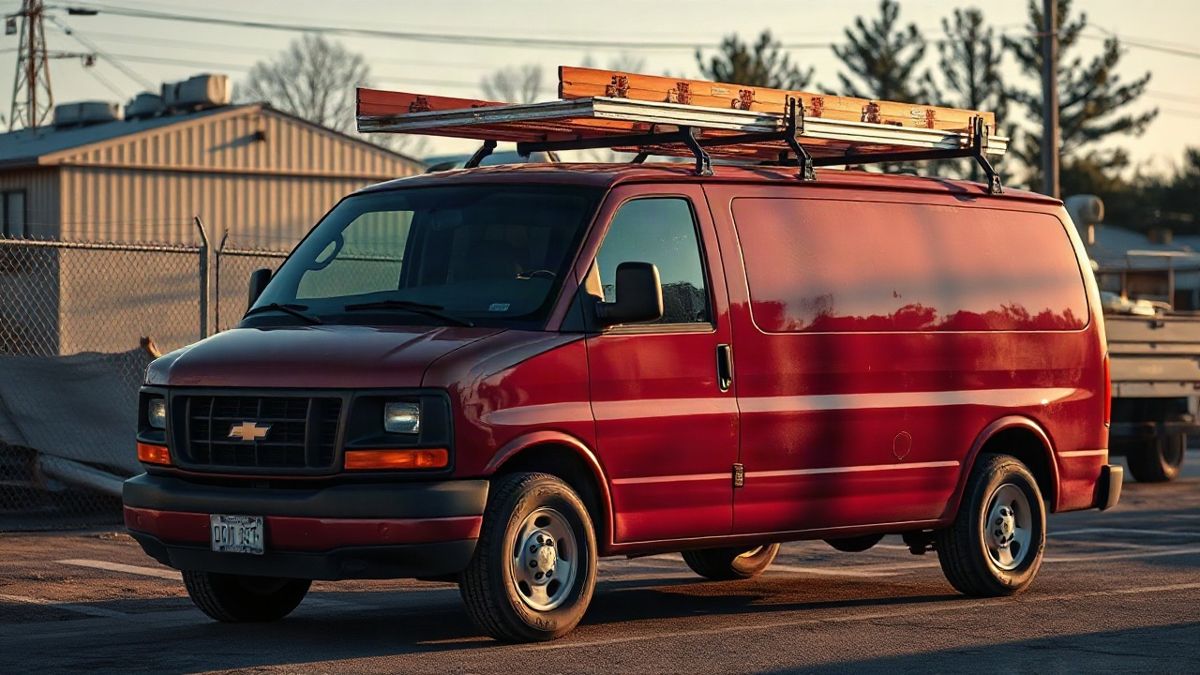
When a Stockton painter walks into the office with a residential repaint quote for a 1920s craftsman bungalow, the first question I ask isn't about the policy — it's about the building age. California houses built before 1978 have federal lead-paint disclosure requirements, and a painter who scrapes lead-painted surfaces without EPA RRP certification creates a liability exposure that even a $1 million GL policy won't fully cover. My job when I sit down with a California painter is to make sure the policy form has the right endorsements before they take that first $5,000 residential job.
I have written painter insurance for clients ranging from solo C-33 holders working out of a pickup truck to painting crews with eight employees doing apartment-complex repaints across San Joaquin County. The coverage structure is similar at every scale — general liability, workers comp, tools coverage — but the details inside those policies differ dramatically depending on the type of work, the building stock, and how many people are on the ladder. The painter who understands exactly what their policy covers walks into every job confident. The one who doesn't finds out the hard way when a claim gets denied.
This guide walks through the full coverage picture for California's licensed C-33 painting contractors: what you need, why you need it, where the gaps are, and what realistic premium ranges look like. We also cover how Hartford writes the California small painter — because for most residential and light commercial painting businesses with 1 to 9 employees, Hartford is one of the better fits on the market right now.

The 3-Policy Stack Every California Painter Actually Needs
There is a version of painter insurance that's technically legal and a version that actually protects you. They're not the same thing. A lot of painters carry only a general liability policy because that's what a GC asked for on a certificate of insurance. That one policy leaves real gaps that can cost a painter their business if the wrong thing happens on the wrong job.
Here is the three-policy stack I walk every new painting client through before we talk numbers.
Policy 1: General Liability (GL). This is the coverage that pays when something goes wrong on a customer's property. You are rolling scaffolding across a hardwood floor and scratch it. A drop cloth slips and paint spills across a client's furniture. A ladder tips and breaks a window. A third-party delivery driver trips over your gear in the driveway. All of those scenarios flow through your general liability policy. For most California painting contractors, the standard ask is a $1 million per-occurrence / $2 million aggregate policy — and that is typically what general contractors and property managers require before they let you on site.
General liability also covers completed-operations exposure — meaning if a homeowner discovers peeling paint six months after the job and blames the prep work, a completed-operations claim is what pays the attorney and any settlement. Most painters don't think about completed-operations until they're named in a lawsuit well after the invoice was paid.
Policy 2: Workers Compensation. If you have any employees — even one helper, even a day laborer you pay cash — California law requires workers comp. No exceptions, no workarounds. A painter who falls off a 12-foot ladder is looking at an ER visit, potentially surgery, and weeks of missed work. If that painter is your employee and you don't have workers comp, you're personally liable for every dollar of medical bills and lost wages. California's Labor Code makes willful failure to carry workers comp a misdemeanor, with civil fines up to $100,000 per employee. For a painting business with two or three helpers, that's not a theoretical risk — that's a business-ending exposure.
Even if you work completely alone as a sole proprietor, I often recommend that painters think seriously about electing voluntary workers comp coverage on themselves. Your personal health insurance may exclude occupational injuries or come with deductibles that make a ladder fall a financial catastrophe on top of a physical one.
Policy 3: Inland Marine (Tools and Equipment). Your GL policy covers damage you cause to other people's property. It does not cover your own equipment. The spray rig in the back of your truck, the compressor, the set of extension ladders, the scaffold planks — none of that is covered by GL if the truck gets broken into or the equipment is damaged on site. Inland marine, often written as a contractors equipment floater, fills that gap. For a painter carrying $10,000 to $20,000 in equipment — which is not unusual once you add up a professional paint sprayer, a gas-powered compressor, and a full set of fiberglass ladders — this is the coverage that pays after a parking-lot theft or a job-site equipment casualty.
Most clients I write for are surprised how affordable this piece is. Adding inland marine to a painter's package typically runs $200 to $400 per year, and it covers the equipment regardless of where it is — in the truck, at the job site, in storage. For a painter whose livelihood depends on equipment that can be walked out of an unlocked truck in two minutes, that's a straightforward decision.
For more on how California's general liability framework applies to trades work broadly, see our full guide on general liability insurance for small businesses. And if you want to compare the painter stack to similar trades, our piece on handyman insurance costs in California covers a lot of the same underlying structure.
CSLB C-33 License Scope — What You Can Take and What You Need a Sub For
I tell my Stockton painter clients this every time we sit down: your insurance is only as good as your license scope. If you're doing work that falls outside your C-33 license, your GL policy may not respond to a claim, because the insurer will look at whether you were operating within your licensed capacity when the loss occurred. This is a real exclusion that real carriers invoke.
The CSLB's C-33 Painting and Decorating classification is actually one of the broader specialty contractor licenses in California. It authorizes:
- Interior and exterior painting on residential and commercial structures
- Surface preparation including sanding, scraping, caulking, and priming
- Application of paints, stains, varnishes, lacquers, and other coatings
- Wallcovering installation — wallpaper, fabric wall coverings, vinyl coverings
- Decorative finishing — faux finishes, texture coats, specialty coatings
- Epoxy and industrial coatings on appropriate surfaces
What a C-33 license does NOT authorize:
- Drywall installation or drywall repair as a standalone scope — that's a C-9 (Drywall) license
- Stucco application as a standalone scope — that's a C-35 (Lathing and Plastering) license
- Sandblasting on metal structures or where permitting requires a separate classification
- Structural repairs to surfaces before painting — if you're patching wood rot, you may need to sub that to a C-5 (Framing) or B (General Building) contractor
- Any scope that materially alters the building's structure
The practical collision point I see most often: a residential painter is hired to repaint an exterior, discovers rot on the fascia board, and patches it themselves before painting. That fascia repair may fall outside C-33 scope, and if something goes wrong — say the repair fails and water intrudes — the GL carrier will look hard at whether the patch was within the licensed scope. The right move is to sub the carpentry to a licensed contractor, document it, and paint after.
The other scope question that matters for insurance is height and access. Most C-33 painters work at heights that require proper ladder and scaffold practices. But when a job involves exterior work above three stories — a mid-rise apartment building, a taller commercial structure — that height can change both the OSHA requirements and the insurer's underwriting appetite. I'll address this more in the Hartford section below.
For a broader look at how CSLB licensing intersects with contractor insurance across trades, our post on contractor insurance and CSLB licensing in California covers the full landscape.
Pre-1978 Buildings and the Lead-Paint Endorsement Most Painters Miss
This is the section I spend the most time on with any San Joaquin County residential painter who works older building stock. Stockton has a lot of craftsman bungalows, Victorian-era structures, and post-war tract homes built in the 1940s through 1970s — all of it potentially lead-painted, all of it subject to federal disclosure and work practice rules.
Here is the regulatory landscape a California painter needs to understand before they quote a pre-1978 job.
The EPA RRP Rule. Under the federal Renovation, Repair, and Painting Rule administered by the EPA, any contractor performing paid work that disturbs lead-based paint in pre-1978 residential housing or child-care facilities must be EPA-certified and must follow lead-safe work practices. Disturbing means any sanding, scraping, cutting, or demolition that could generate dust or chips. For painters, surface prep on a pre-1978 house almost always qualifies. The certification is the EPA's Renovation, Repair, and Painting (RRP) certification — it requires a training course and registration with the EPA. Violations carry civil penalties up to $37,500 per day per violation.
California's additional layer. California also has its own lead-paint regulations administered by the Department of Public Health (CDPH), which layer on top of the federal requirements. California-specific rules affect documentation, disposal, and notification requirements. The CDPH's Lead-Related Construction Work regulations apply to a broader range of work than the federal rule in some cases.
Why this is an insurance problem. Standard commercial GL policies almost universally include pollution exclusions that sweep in lead-based paint claims. The typical exclusion language bars coverage for bodily injury or property damage arising from the release or dispersal of any "pollutant" — and courts have consistently held that lead dust qualifies. That means if a child develops elevated blood lead levels after your crew did surface prep in a pre-1978 house, a standard GL policy will likely deny the claim. The bodily injury may be real. The coverage gap is also real.
There are a few ways to address this exposure:
- Work only post-1978 buildings. The cleanest solution for a painter who doesn't want the complexity — simply don't take jobs on pre-1978 structures. In newer residential markets this is workable. In older Central Valley cities like Stockton or Modesto, it dramatically limits your market.
- Sub pre-1978 surface prep to a certified lead-abatement contractor. The abatement contractor carries their own pollution liability. You paint after the certified surfaces are prepared and cleared. Document the handoff clearly.
- Get EPA RRP certified and add a lead-paint endorsement (or separate environmental policy). Some carriers offer a lead-paint endorsement that narrows the pollution exclusion for RRP-certified contractors doing residential repaints — not heavy abatement, but standard paint-prep work. This is not universal; not every carrier offers it, and not every painting operation qualifies. A specialty environmental policy is a more comprehensive solution but adds meaningful premium cost.
What I tell every San Joaquin County residential painter working older neighborhoods: get the EPA RRP certification before you take a pre-1978 job, and let me review your policy form for the pollution exclusion language. The RRP class is one day of training and a reasonable fee. The alternative — an uninsured lead-paint claim — is a number that can follow you for years.
Note on Hartford: Hartford's standard GL appetite for painters does not extend to lead-paint abatement work as a specialty scope. If your business derives significant revenue from certified lead abatement — not just occasional pre-1978 repaints with proper RRP practices, but dedicated abatement contracting — you'll need a different carrier or a separate environmental liability policy alongside the Hartford GL.
Ladder and Scaffold Inland Marine — The $5K–$25K Equipment Gap Most Painters Underinsure
Most C-33 painters I write for come into the office having thought about GL and maybe workers comp. Almost none of them have thought about inland marine — until I walk them through what their truck actually contains.
Let's do that exercise. A working California painting contractor typically has:
- One or two airless paint sprayers — Graco or Titan commercial units run $800 to $3,500 each
- A gas-powered air compressor — $600 to $1,800
- Extension ladders — a good set of fiberglass ladders (8-foot, 16-foot, 28-foot extension) runs $800 to $1,500
- Scaffold components — a single aluminum pump-jack scaffold setup with planks easily reaches $2,000 to $5,000
- Hand tools, roller frames, brushes, masking equipment — $500 to $1,500
- Drop cloths, plastic sheeting, masking tape inventory — $200 to $600
- Pressure washer — $400 to $1,200
Add that up and a working painter in San Joaquin County is commonly carrying $6,000 to $15,000 in equipment in and around their truck. A painter working interior commercial jobs with a spray setup might have $20,000 to $25,000 in equipment when you add specialty spray equipment, HVLP units, and job-site ventilation gear.
None of that is covered by general liability if it's stolen or destroyed. GL covers what you do to other people's stuff. Inland marine covers your own.
The three scenarios inland marine pays for:
Truck break-in. Painter parks overnight in a client's neighborhood, comes back in the morning with a broken truck window and no sprayer. This is the most common painter equipment claim I see. Standard commercial auto may cover the vehicle damage, but the equipment inside the truck is personal property of the business — not covered by auto, not covered by GL. Inland marine pays for the stolen sprayer.
Job-site casualty. Scaffold planks collapse under the weight of equipment. A compressor rolls off a truck bed and is destroyed. Inland marine covers the loss of the equipment itself, whether it happened at the job site, in transit, or in storage.
Vandalism. Job-site vandalism — paint sprayed on equipment, ladders cut, tools destroyed — is a real risk on certain job types, particularly vacant-property work or work in transitional neighborhoods. Inland marine covers intentional third-party damage to your equipment.
What to specify on an inland marine schedule. When I set up an inland marine policy for a painter, I walk through the equipment list item by item and get replacement cost values — not depreciated values. An airless sprayer you bought five years ago for $1,500 might have a depreciated value of $600, but replacing it today costs $1,800. The difference matters when you're standing in an empty parking lot the morning after a break-in. Make sure your inland marine is scheduled at replacement cost, not ACV (actual cash value).
For California painting contractors who also use scaffolding as a significant part of their business, inland marine can sometimes be written to cover scaffold systems specifically — including rented scaffold that becomes your responsibility while on site. Talk through the rental-scaffold exposure with your broker; it often needs a specific coverage trigger written into the policy.
See also our guide on general liability insurance costs in California for context on how equipment coverage fits into a total commercial insurance budget, and our overview of workers comp insurance costs in California which covers the payroll-based pricing structure that most painters will see in their WC quote.
Painter Insurance FAQ
Do California painters need workers comp insurance even if they work alone?
If you operate as a sole proprietor with zero employees, California law does not require you to carry workers compensation on yourself. However, the moment you hire even one part-time employee or day laborer — including a helper you pay cash — you are legally required to carry workers comp. Many painting contractors also voluntarily elect workers comp coverage on themselves because their carrier, or the requirements of a general contractor they sub to, won't accept a waiver. If you fall off a ladder and have no workers comp, the only recovery path is your personal health insurance, which may exclude occupational injuries entirely.
What does a CSLB C-33 license actually let you do — and not do?
A California C-33 Painting and Decorating contractor license authorizes interior and exterior painting, surface preparation, paint application, and wallcovering installation on residential and commercial structures. It does not authorize structural work, drywall installation (that requires a C-9 license), or any scope that would require a general contractor's B license. If a client asks you to patch drywall before you paint, sub that scope to a C-9 contractor and document it. Working outside your license scope can void your GL coverage on a claim.
What is the EPA RRP Rule and why does it affect my painter insurance?
The EPA's Renovation, Repair, and Painting Rule requires any contractor performing paid work that disturbs lead-based paint in pre-1978 housing or child-care facilities to be EPA-certified and to follow lead-safe work practices. A painter who sands or scrapes lead-painted surfaces without RRP certification faces EPA penalties up to $37,500 per day per violation. More critically for insurance: standard GL policies almost universally exclude lead-paint bodily injury claims under pollution exclusions. Your policy may not cover you for a lead-paint claim even if you have a $1M GL policy — the exclusion is in the form language. Review your policy form and talk to your broker before taking any pre-1978 residential job.
Does Hartford write painter insurance in California?
Yes. Hartford's small-business appetite covers California painters with a CSLB C-33 license, 1 to 9 employees, doing residential or light commercial work generally up to 3 stories, with a clean loss history and at least 2 years in business. Hartford can bundle general liability and workers comp on a single account. Hartford is not the right fit for specialty work such as certified lead-paint abatement, high-rise exterior painting above 3 stories, or industrial coating applications — those require a different carrier or endorsement structure.
How much does painter insurance cost in California?
A solo C-33 painter typically pays $1,200 to $1,800 per year for $1 million in general liability. A painting business with 4 employees typically runs $3,500 to $5,500 per year for a GL plus workers comp bundle. Adding inland marine (tools and equipment) generally adds $200 to $400 per year. Rates vary based on payroll, annual revenue, job type, building height, loss history, and whether the work involves any pre-1978 structures. These are typical ranges — actual premiums depend on your specific account.
What is inland marine insurance and why do painters need it?
Inland marine — sometimes called a contractors equipment floater or tools and equipment policy — covers the physical equipment a painting contractor depends on: sprayers, compressors, ladders, scaffolding, and tools stored in a work truck or at a job site. A standard GL policy covers third-party property damage you cause; it does not cover your own equipment if it is stolen from your truck or damaged on site. For a painter with $8,000 to $20,000 in equipment, inland marine is the coverage that pays after a truck break-in or a job-site equipment loss.
Writing painter insurance in Stockton, San Jose, or San Rafael? Call us and we will walk through your equipment list, your job types, and your building age mix before we pull a Hartford quote — so you know what you are actually buying.
Call 209-670-1556 Get a Quote OnlineWhat It Costs — Typical Premium Bands for a 1-to-9-Employee Painter
The cost of painter insurance in California is not one number — it's a stack of numbers that builds based on your headcount, your annual revenue, your equipment value, and the type of work you take. Here is how the math typically works for a California C-33 painting contractor, broken into the realistic bands I see when writing accounts.
| Business Profile | GL Coverage | WC Add-On | Inland Marine | Approx. Annual Total |
|---|---|---|---|---|
| Solo painter, no employees, residential interior work only | $1,200–$1,500/yr | N/A (sole prop) | $200–$300/yr | $1,400–$1,800/yr |
| 1–2 employees, residential interior + exterior, standard structures | $1,500–$2,200/yr | $800–$1,500/yr | $250–$350/yr | $2,550–$4,050/yr |
| 3–5 employees, residential + light commercial, interior + exterior | $2,000–$3,200/yr | $1,800–$3,000/yr | $300–$400/yr | $4,100–$6,600/yr |
| 6–9 employees, light commercial focus, higher revenue | $3,000–$4,500/yr | $3,000–$5,000/yr | $350–$500/yr | $6,350–$10,000/yr |
These ranges are for standard residential and light commercial painting work with clean loss histories. Premiums vary — these are typical bands, not guarantees. Several factors will push a specific painter's premium toward the higher end of the range or beyond it:
Exterior height. Exterior painting work above single-story involves ladder and scaffold exposure that underwriters price differently than interior work. A painting business doing primarily two-story and three-story exterior residential work will generally run higher than one focused on interior repaints. Some carriers draw a hard line at three stories for standard GL — above that height, you need to be placed with a specialty market.
Commercial work percentage. Light commercial repaints — office buildings, retail spaces, light industrial interiors — generally carry higher premiums than residential work because the potential for large property-damage claims is greater. A painter spraying the interior of a commercial kitchen and damaging an entire facility is a different magnitude of claim than a residential living room.
Workers comp classification codes. California workers comp rates are based on NCCI classification codes. Painters typically fall under class code 5474 (painting — all operations, including shop). The payroll rate for class 5474 in California is meaningful — WC premium for painters scales directly with payroll. A painting crew with $250,000 in annual payroll will pay significantly more than one with $80,000 in annual payroll, even if the GL cost is similar.
Loss history. A painter with one or two claims in the past five years will pay more than one with a clean history. Claims on a painting account — especially a WC claim involving a fall — can follow the business for the full five-year experience window that carriers look at during underwriting.
Pre-1978 work mix. Some carriers will rate up or add exclusions if a painter's work mix includes a significant percentage of pre-1978 buildings. Disclosing this accurately on the application matters — both for pricing accuracy and for avoiding a coverage dispute if a claim arises.
For context on how workers comp specifically is priced in California — including class codes and experience modification factors — see our dedicated guide on workers comp insurance costs in California. And for painters who also want to understand how their coverage compares to adjacent trades, our piece on electrician and plumber insurance in California covers the same three-policy-stack structure for trades with similar risk profiles.
How Hartford Writes the California Small Painter
When I sit down with a Bay Area painting crew or a San Joaquin County residential painter to run a Hartford quote, the underwriting conversation is fairly predictable once you know what Hartford is looking for. Hartford is a well-suited carrier for the California small painting contractor — defined as 1 to 9 employees, residential or light commercial scope, clean loss history, established 2-plus years. Here is what I walk through on every Hartford painter application.
What Hartford looks for in a painter account.
Established operation. Hartford's appetite for painters skews toward businesses that have been in operation for at least two years. A brand-new painting business — someone who just got their C-33 and is in their first year — is a harder Hartford write. Not impossible, but harder. Newer operations often end up with a surplus-lines or non-admitted carrier for the first year or two, then transition to Hartford once they have an established loss history (or no loss history, which is the goal).
Clean or light loss history. Hartford will look at five years of prior claims. One small property damage claim is usually manageable. A WC claim involving a serious fall, or two or more claims in five years, will push the account out of Hartford's appetite or into a rated tier with higher premiums. I tell my Stockton painter clients that managing safety — meaning real ladder practices, proper scaffold setup, and slip-and-fall prevention on job sites — is also premium management. Every claim-free year strengthens the next renewal.
Residential and light commercial scope. Hartford's painting appetite focuses on residential work and light commercial — think retail stores, office suites, multi-family apartment interiors. Work that stays in that lane writes cleanly. Work that drifts toward heavy industrial, high-rise exterior, or specialty coating applications gets more complicated.
What Hartford does not write for painters.
Lead-paint abatement as a primary or specialty scope. If a painting business derives a significant portion of revenue from certified lead-abatement contracting — not occasional pre-1978 repaints with proper RRP practices, but dedicated hazmat-style abatement — that scope is outside Hartford's standard appetite. Abatement contractors need a specialty environmental carrier. I often write the standard GL and WC with Hartford for the general painting portion of the business and route the abatement exposure to a specialty environmental policy. The two policies coordinate coverage.
High-rise exterior painting above 3 stories. Hartford's standard GL appetite for painters generally does not extend to exterior painting on structures above three stories. This is an underwriting line, not an absolute rule — there are exceptions depending on the specific structure and the painter's documented safety program — but as a general rule, if a painting crew does regular work on 4-story or taller commercial buildings, a standard Hartford GL may not respond to a fall-related claim on that scope. Painters who do high-rise work should specifically address this with their broker and look at whether a specialty market or a safety-program endorsement is needed.
Industrial solvent and coating applications. Auto body painting is an auto-repair classification and is excluded from Hartford's commercial contractor appetite. Similarly, industrial coatings that involve high-VOC solvent applications, chemical stripping, or spray operations in enclosed industrial facilities may require a different underwriting classification entirely. Standard C-33 painting work uses water-based and conventional alkyd coatings — that is the Hartford lane. Heavy industrial coating is a different underwriting conversation.
How Hartford bundles GL and WC for painters.
One of the practical advantages of Hartford for California painting contractors is the ability to write GL and workers comp on a single account — same carrier, same policy period, single invoice. This simplifies certificate issuance (one call gets you a COI showing both GL and WC) and can simplify claims handling if an incident involves both coverages (say, a painter falls and damages the client's property at the same time). It also gives Hartford a more complete picture of the account, which generally benefits the renewal conversation.
Hartford's WC for California painting contractors runs on the standard California payroll basis using class code 5474. At renewal, Hartford runs an audit comparing estimated payroll to actual payroll and adjusts the premium accordingly. For painting businesses with variable crew size — busy season versus slow season — this payroll audit process matters. Keep good payroll records. An audit adjustment that doubles your WC premium because you miscalculated seasonal payroll is an unpleasant conversation I have had to facilitate more than once.
Certificates of insurance for painters.
Most C-33 painters I write for need certificates of insurance regularly — for general contractors, property managers, homeowner associations, and sometimes individual homeowners who ask. Hartford is good on certificate turnaround. Once the policy is in force, generating a COI takes minutes. The standard painter COI shows the GL limits, WC confirmation, and the policy period. If a GC requires an additional insured endorsement — meaning they want to be named on your GL policy — that can typically be added to a Hartford policy without a premium adjustment for standard additional insured requests.
For painters who do subcontract work under a general contractor umbrella, the GC may also require that you carry a minimum umbrella limit — often $1 million or $2 million above the underlying GL. Umbrella policies for painters are generally affordable when the underlying GL and WC are already written — adding a $1 million umbrella to a Hartford GL-plus-WC bundle often runs $400 to $800 per year depending on the account. It's worth asking about during the initial quote process rather than adding it later when a GC suddenly requires it on a specific job.
For a look at how painter coverage connects to the broader contractor insurance ecosystem in California, see our detailed breakdown of general contractor insurance in California — many of the same Hartford underwriting principles apply across the trades. And if you are a cleaning business owner who landed here by searching adjacent terms, our piece on cleaning business insurance in California covers a parallel Hartford-friendly commercial account structure for janitorial and cleaning contractors.
No broker fees on standard commercial policies at our Stockton and San Jose offices — most clients qualify. We quote Hartford painters in writing before you sign anything, so you know the total cost before you commit.
Ready for a Painter Insurance Quote?
Before we run a Hartford quote for your painting business, I want to know three things: how many people are on your crew, what percentage of your work is pre-1978 residential, and what's the replacement value of the equipment in your truck. Those three answers shape the entire policy. Call us, walk in, or start a quote online — we have offices in Stockton, San Jose, and San Rafael.
Se habla español — call 209-670-1556 for a bilingual quote from our Stockton or San Jose offices.
Related Reading
Contractor Insurance & CSLB 2026 → GL Insurance for Small Business → Electrician & Plumber Insurance CA → Handyman Insurance CA Cost → General Contractor Insurance CA → Workers Comp Cost California → GL Insurance Cost California → Cleaning Business Insurance CA → Business Insurance →