The Stockton counter is at 956 W Robinhood Dr, Stockton, CA 95207. San Jose is at 25 N 14th St #125. San Rafael is at 9 Vivian St. Call (209) 670-1556. If the tags have already expired and you are worried about a ticket, read expired tags in California alongside this page.
What is a temporary operating permit?
The DMV describes a TOP as a permit that may be issued in certain circumstances when all registration fees have been paid but license plates or registration stickers have not been issued. The department says use tax usually does not have to be paid to get a TOP if all other fees are paid. Vehicle Code §4156(a) lets the department issue a temporary permit once it has accepted the fees, on the terms and for the period it considers appropriate. The DMV registration manual, handbook section 25.055, describes the permit as a two-part form, the REG 19F, with a REG 19S sticker.
A TOP is not a registration and it is not a plate. It covers operation for the dates printed on it. It also does not replace insurance: the handbook says a TOP is not issued if proof of insurance is required and has not been submitted.
What is the biennial smog TOP?
This is the permit most drivers ask about. A vehicle that fails its every-other-year smog inspection can get a TOP while it is repaired. The DMV page lists what to bring: the registration renewal fees, the failed smog inspection report, proof of insurance, and the nonrefundable TOP fee. The fee amount is on the DMV page and the DMV registration fees page; this page does not print it. The DMV says the fee can be waived for an owner who presents a Bureau of Automotive Repair Letter of Eligibility for the Consumer Assistance Program repair option.
The timing is the part that catches people. The permit runs 60 days from the registration expiration date, or 60 days from the date the vehicle came off planned nonoperation. It does not run 60 days from the day the car failed. Vehicle Code §4156(b) sets the same 60-day period and limits this permit to one in a two-year period, and the DMV page says only one biennial smog TOP can be issued to the same vehicle in two years. Handbook 25.055 gives the consequence: if the failed report is brought in after the 60 days have passed, a TOP cannot be issued, and only a one-day vehicle moving permit is available. So a car whose registration expired at the end of March and failed smog in April still has a TOP that ends 60 days after the March expiration date.
Why the vehicle needs smog in the first place, and who is exempt, is on California smog check requirements.
What are the 30-day, 60-day, and 90-day TOPs for?
The DMV page lists one-time permits for specific situations. A one-time 30-day TOP can be issued on an incomplete registration application for a vehicle still registered in another state, for an impounded vehicle when all fees are paid, for a vehicle referred to the California Highway Patrol for a VIN inspection or assignment, for a vehicle having trouble passing an original or transfer smog inspection (not the biennial one) when the owner shows a BAR referee appointment card or proof that smog parts are on order, for a vehicle with a federal heavy vehicle use tax expiration other than July 31, and when the office manager or a designee decides it is appropriate. For an impounded vehicle that also owes a biennial smog, the page says the 30-day TOP is not available once more than 60 days have passed since the expiration or the PNO removal.
A one-time 60-day TOP covers a vehicle that failed an original or transfer smog inspection when all fees are paid and the inspection record is shown, counted from the date of the failed test, which again does not apply to a biennial smog. It also covers a commercial vehicle whose owner is having trouble filing the federal heavy vehicle use tax when the registration expires July 31, a salvage retention vehicle being revived with fees paid and brake and light certificates submitted, and a complete application mailed in for special sequential plates such as Arts, Kids, or Yosemite plates. A one-time 90-day TOP covers an application sent to DMV headquarters while you wait for plates and stickers, or for personalized plates. Vehicle Code §4156(c) separately allows a 90-day permit for a vehicle whose registration may be refused under Section 4000.15.
The DMV page also says a TOP cannot be issued to a vehicle that needs a Vehicle Safety Systems Inspection certificate. That vehicle gets a one-day moving permit instead.
What is a one-day vehicle moving permit?
When a TOP is not available, the DMV offers a one-day vehicle moving permit, the REG 172 described in handbook section 25.075 under Vehicle Code §4002. It covers trips such as moving a vehicle with planned nonoperation on file from one storage place to another, to or from a repair shop, to a smog inspection, to a DMV or CHP inspection or VIN verification, to a weigh station, to get a Vehicle Safety Systems Inspection certificate, for dismantling, and out of an impound yard. The moving date has to be within 60 days of the issue date, and it is entered on the permit by you or by an authorized DMV, CHP, auto club, or business partner agent, and endorsed by the agent. The handbook warns that a permit with a blank, altered, or out-of-range date, or used when the fees are not current or no PNO is on file, can lead to a citation or impound. For a car parked on planned nonoperation, see planned non-operation in California.
Where does the TOP go, and how do I get one?
The current DMV pages describe the TOP as the REG 19F with a REG 19S sticker, but they do not print a placement rule. Follow the instructions given by the office that issues it. A TOP is requested from the DMV as part of a renewal or registration application, with the items listed for the type you need. For a biennial smog TOP, that means the renewal fees, the failed smog report, and proof of insurance in hand before you ask. If the car was just bought and the paperwork is still moving, the steps for the first days are on just bought a car in California.
What does a registration service prepare, and what about insurance?
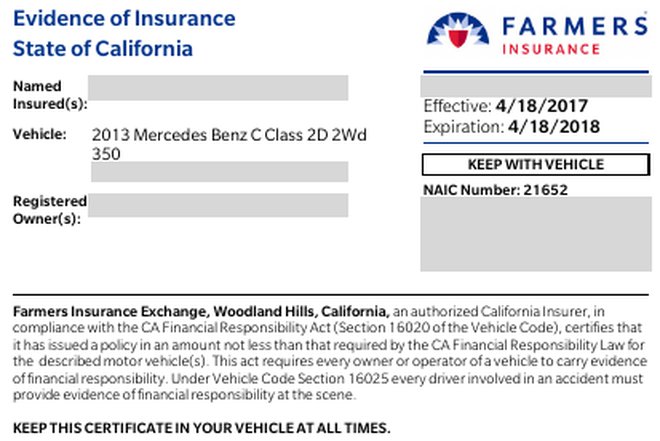
Via Rapida Services prepares registration paperwork at 956 W Robinhood Dr, Stockton, CA 95207, at 25 N 14th St #125 in San Jose, and at 9 Vivian St in San Rafael. The office is a registration service, not the DMV. Staff can check whether a renewal is past its expiration date, whether the failed smog report and proof of insurance are in the packet, whether a biennial smog TOP was already used on the vehicle, and whether a one-day moving permit is the more realistic option, before anything goes in. The department decides whether a permit is issued. Vehicle Code §16020 requires drivers and owners to be able to show financial responsibility, and §16028 requires the driver to show that evidence when an officer asks. A TOP is not that evidence. Statewide liability coverage is on California car insurance, and the counters are listed on the Central Valley registration service page.
Frequently asked questions
How long is a temporary operating permit good for in California?
It depends on the type. The DMV lists a biennial smog TOP that runs 60 days from the registration expiration or PNO removal, and one-time permits of 30, 60, or 90 days for specific situations. Details are on the DMV Temporary Operating Permits page.
Can I get a second smog TOP?
Not within two years. The DMV says only one biennial smog certification TOP can be issued to the same vehicle in a two-year period, and Vehicle Code §4156(b) sets the same limit. After the 60 days, the DMV says the vehicle may qualify for a one-day vehicle moving permit.
Does the 60-day smog TOP start when my car fails?
No. The DMV says the biennial smog TOP runs 60 days from the registration expiration date or the date the vehicle came off planned nonoperation. Handbook 25.055 says a failed report brought in after that window gets only a one-day moving permit.
Do I need insurance to get a TOP?
For the biennial smog TOP, proof of insurance is on the DMV list of items to bring, and handbook 25.055 says a TOP is not issued when proof of insurance is required and has not been submitted. Vehicle Code §16020 also requires financial responsibility to drive.
What can I do if I cannot get a TOP?
The DMV offers a one-day vehicle moving permit for trips such as going to a repair shop, a smog inspection, a VIN verification, or out of an impound yard. The moving date must be within 60 days of the issue date and endorsed by an authorized agent.
Sources
- DMV, Temporary Operating Permits (TOP types and durations, biennial smog TOP items, CAP waiver, VSSI exclusion, one-day moving permit, one-trip permit). Checked 6 October 2026.
- DMV handbook 25.055, Temporary Operating Permit (REG 19F) (two-part form and REG 19S sticker, 60-day window, insurance requirement). Checked 6 October 2026.
- DMV handbook 25.075, Vehicle Moving Permit (REG 172) (one-day permit, 60-day moving date, citation warning). Checked 6 October 2026.
- Vehicle Code §4156 (department discretion; one smog permit in two years; 60-day and 90-day periods). Checked 6 October 2026.
- DMV, Registration Fees (current fee amounts; not printed on this page). Checked 6 October 2026.
- Vehicle Code §16020 and §16028 (financial responsibility and showing evidence). Checked 6 October 2026.
Reviewed by Santo Militello, California-licensed Property & Casualty agent (CA License #1737723) and owner of Via Rapida Services. Insurance City Agency, LLC · CA License #6003045. Our licensed team brings more than 70 years of combined insurance experience. Call (209) 670-1556. Last reviewed 2026-10-06.